 11
11 1
1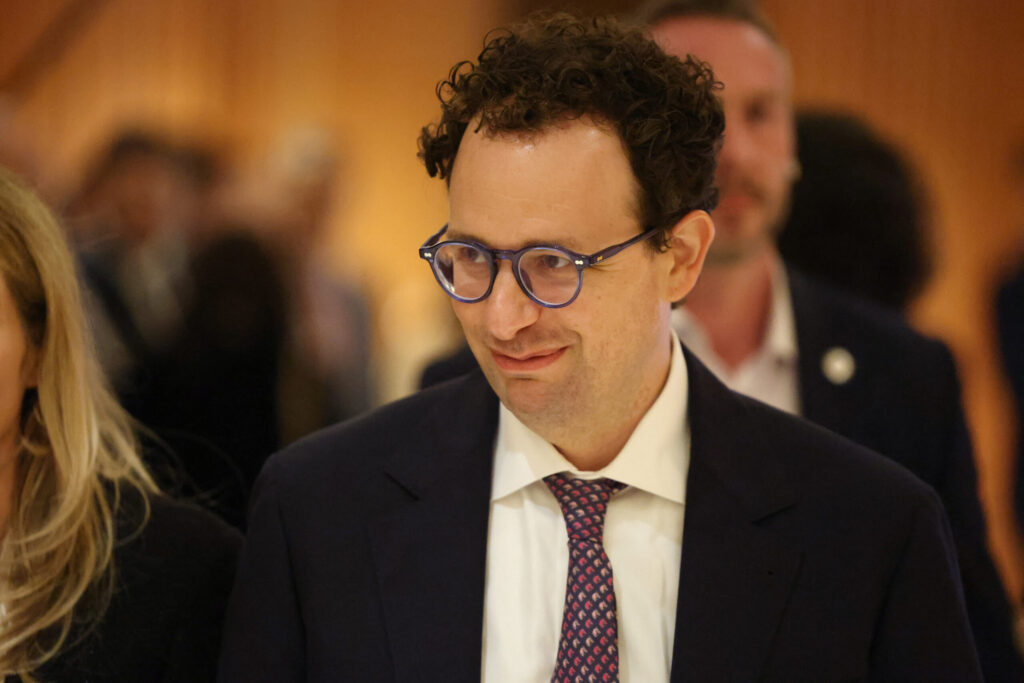 2
2 3
3
Riley Walz, a software engineer celebrated for his innovative and often provocative online stunts, has officially joined OpenAI. The strategic hire, confirmed by an OpenAI spokesperson, signals a significant deepening of the leading artificial intelligence company’s exploration into novel methods for human-AI interaction. Walz’s unique blend of technical prowess, creative ingenuity, and a knack for challenging societal norms through digital projects positions him at the forefront of OpenAI’s efforts to redefine how individuals engage with advanced AI systems. His recruitment underscores a broader industry trend where companies are increasingly looking beyond conventional interfaces to unlock the full potential of artificial intelligence, seeking out talent capable of envisioning and prototyping radically new user experiences. This development is expected to inject a distinctive, user-centric, and perhaps even disruptive perspective into OpenAI’s ongoing research endeavors, highlighting a growing emphasis on intuitive and impactful human-AI collaboration.
Walz has cultivated a reputation as "Silicon Valley’s jester," a moniker he earned through a series of viral web projects that cleverly blend technical sophistication with pointed social commentary. His work often involves leveraging publicly available data or existing digital paradigms to expose underlying societal dynamics or challenge institutional practices. These projects are not merely technical feats; they function as digital provocations, designed to spark conversation, raise awareness, and often, to entertain while informing. This approach has distinguished Walz in a crowded tech landscape, marking him as an engineer who is not only capable of building complex systems but also of imbuing them with a critical, often humorous, and undeniably impactful message. His ability to create accessible, interactive web experiences resonating with broad audiences underscores his understanding of human psychology and digital ecosystems, skills now invaluable to a company striving for universally beneficial and intuitive AI.
Among Walz’s most notable and controversial creations is "Jmail." This audacious project allowed users to explore a database of Jeffrey Epstein’s emails, ingeniously presented as if they were directly accessing his personal Gmail inbox. The interface meticulously mimicked the familiar aesthetics and functionality of Google’s email service, providing a deeply immersive and unsettling experience. By transforming sensitive, publicly available documents into an interactive, user-friendly format, Walz not only enhanced accessibility but also underscored the potential for digital tools to democratize information access, even for highly sensitive data of public interest. The project ignited widespread discussion regarding data privacy, the ethics of information dissemination, and the role of technology in public accountability, demonstrating Walz’s capacity to build tools that are both technically compelling and socially charged. Jmail served as a stark reminder of the power of context and presentation in how digital information is perceived and consumed.
Another highly publicized initiative by Walz was "Find My Parking Cops." This innovative web application utilized publicly available data to reverse engineer San Francisco’s complex parking ticket system. The tool provided users with real-time or near-real-time information, precisely mapping out where each parking enforcement officer had most recently issued a ticket. The underlying aim of the project was to enhance transparency and potentially empower city residents and visitors by giving them an unprecedented insight into the operational patterns of parking enforcement. It essentially turned official public data, often opaque and difficult to parse, into a user-friendly and actionable resource. The technical challenge involved aggregating disparate data sources and presenting them geographically, showcasing Walz’s expertise in data visualization and system analysis. This project, while seemingly simple, highlighted the potential for civic technology to shed light on bureaucratic processes and offer practical benefits to citizens.
Walz’s distinctive skillset in crafting novel and engaging web experiences will now be deployed within OAI Labs, a relatively nascent but strategically crucial team at OpenAI. This specialized division operates under the leadership of Joanne Jang, a respected figure in AI research. While OAI Labs maintains a high degree of secrecy regarding its specific undertakings, its overarching mandate has been publicly articulated by Jang herself: "inventing and prototyping new interfaces for how people collaborate with AI." This mission perfectly aligns with Walz’s track record of creating intuitive, often groundbreaking, digital interfaces that facilitate unique forms of interaction. His appointment suggests OpenAI’s keen focus on moving beyond traditional text-based or command-line interactions, seeking more natural, seamless, and potentially playful ways for humans to engage with increasingly sophisticated AI. The emphasis on "collaboration" rather than mere "use" signals a shift towards AI as a partner, requiring interfaces that foster genuine synergy.
OpenAI’s decision to bring Walz into its ranks is situated within a fiercely competitive landscape, as the company, alongside tech giants like Google and Anthropic, races to pioneer new and compelling methods for human interaction with AI models. While OpenAI’s flagship product, ChatGPT, has achieved phenomenal success, boasting over 800 million weekly users and effectively mainstreaming conversational AI, the company recognizes the imperative to evolve beyond its current interface paradigms. The quest for "new interfaces" extends beyond aesthetic improvements, aiming to unlock new applications, enhance accessibility, and address diverse user needs of an expanding user base. The current reliance on large language models primarily through text prompts, while powerful, represents just one facet of potential human-AI interaction. OpenAI is keenly eyeing the next generation of AI products, anticipating shifts towards multimodal interactions, more personalized experiences, and perhaps even entirely new sensory engagements.
The urgency for OpenAI to innovate in the interface space is underscored by the rapid adoption of specialized coding agents, such as Claude Code, among millions of developers. These agents are increasingly serving as the primary interface for developers to access and manipulate AI models, demonstrating a clear demand for highly specialized and efficient interaction methods. This trend signals that the future of AI adoption will not be monolithic; rather, it will be characterized by a diverse ecosystem of interfaces tailored to specific tasks, user groups, and contexts. By integrating talent like Walz, who excels at creating intuitive and often unconventional user experiences, OpenAI aims to preemptively develop the foundational technologies and design philosophies that will define these future interactions. The goal is to remain at the vanguard of AI product development, ensuring that OpenAI’s models are not only powerful but also accessible and delightful to use across an ever-widening array of applications.
Walz’s penchant for pushing boundaries through his online stunts has, predictably, led him into conflict with authorities on several occasions. The "Find My Parking Cops" website serves as a prime example of this dynamic. Despite its innovative nature and public utility, the tool’s operational life was remarkably brief, lasting a mere four hours before San Francisco city officials took decisive action. The San Francisco Municipal Transportation Agency (SFMTA) swiftly shut down the live data feed upon which Walz’s application depended. An SFMTA representative justified the shutdown, stating the action was necessary "to ensure employees are able to do their jobs safely and without disruption." This incident highlighted the delicate balance between public data access, governmental control, and the potential for technological tools to disrupt established systems, even when designed with transparency in mind. It underscored the institutional resistance that can arise when citizen-led initiatives leverage public information in ways not originally intended by data custodians.
Beyond official pushback, Walz has also encountered significant public scrutiny and personal threats. A particularly sensitive incident involved his attempt to assist authorities following the tragic shooting death of the CEO of UnitedHealthcare in New York City. Police reported that the suspected killer had fled the scene using a CitiBike, prompting Walz to analyze trip data he had previously scraped for an unrelated project. His intention was to potentially aid the search by identifying patterns or specific routes that could be relevant to the police investigation. However, this act of civic engagement quickly backfired. Walz recounted to The New York Times being labeled a "bootlicker" by individuals online, who also issued threats against his safety. This episode starkly illustrates the complex ethical dilemmas inherent in working with public (or semi-public) data, particularly when it intersects with sensitive real-world events and law enforcement. It also demonstrates the volatile nature of online discourse and the varied, often contradictory, expectations placed upon individuals who possess unique data analysis capabilities. The incident forced Walz to confront the personal and professional risks associated with his data-driven interventions, irrespective of his motivations.
The hiring of Riley Walz by OpenAI represents more than just the addition of a skilled software engineer to a leading AI company. It signifies OpenAI’s deliberate strategy to embrace unconventional approaches and creative problem-solving in its pursuit of advanced AI interfaces. Walz’s history of building viral, socially resonant, and occasionally controversial web projects demonstrates an aptitude for understanding user behavior, harnessing public data, and crafting compelling digital experiences—qualities that are becoming increasingly vital in the evolving landscape of AI. His role in OAI Labs, tasked with inventing new modes of human-AI collaboration, positions him at a critical juncture in the development of artificial intelligence. As AI models become more powerful and pervasive, the manner in which humans interact with them will dictate their utility, their societal impact, and their ultimate success. Walz’s unique perspective, informed by both technical innovation and a keen awareness of social dynamics, is expected to play a crucial role in shaping these future interactions, potentially leading to breakthroughs that redefine the boundaries of human-computer partnership. Walz’s journey from "Silicon Valley’s jester" to a key figure in OpenAI’s interface research underscores the growing recognition that AI’s future is as much about human experience and interaction design as algorithmic sophistication.