 11
11 1
1 2
2 3
3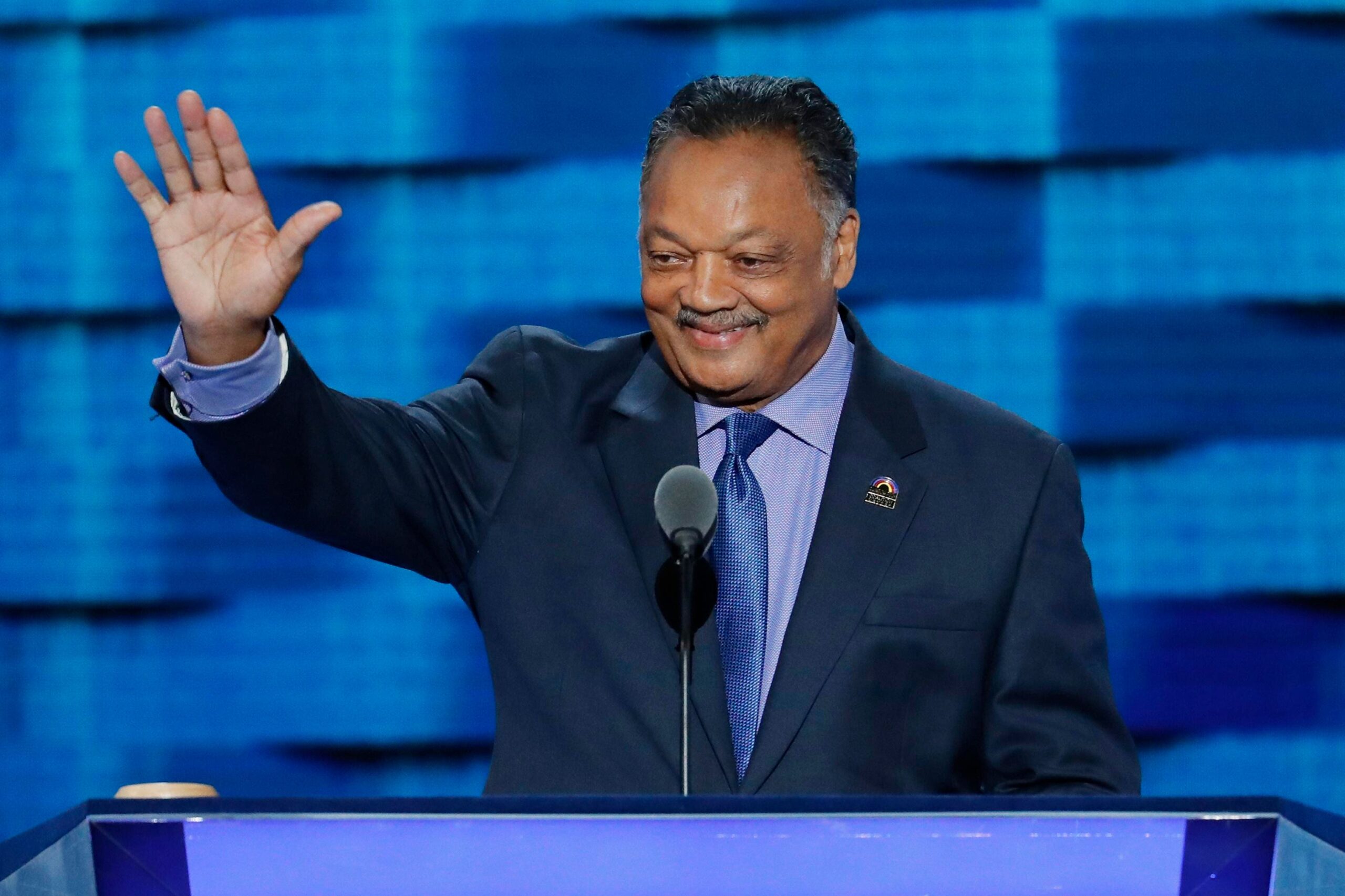
Civil rights leader Rev. Jesse Jackson Sr., a close associate of Dr. Martin Luther King Jr. who made two historic runs in the 1980s to become the Democratic Party’s presidential nominee, died on Tuesday at the age of 84. His passing prompted an outpouring of tributes from his family and a broad spectrum of political figures, including President Donald Trump and past presidents Bill Clinton, Joe Biden, and Barack Obama, all praising his long and impactful influence on American politics and society.
The Jackson family announced his passing in a heartfelt post on social media, stating, “It is with profound sadness that we announce the passing of Civil Rights leader… the Honorable Reverend Jesse Louis Jackson, Sr.” The statement confirmed that Jackson “died peacefully on Tuesday morning, surrounded by his family.” The family emphasized his lifelong commitment to service, declaring, "Our father was a servant leader – not only to our family, but to the oppressed, the voiceless, and the overlooked around the world." They added that Jackson’s "unwavering belief in justice, equality, and love uplifted millions, and we ask you to honor his memory by continuing the fight for the values he lived by."
Born Jesse Louis Burns in Greenville, South Carolina, on October 8, 1941, Jackson later adopted his stepfather’s surname. He attended North Carolina Agricultural and Technical State University before transferring to Chicago Theological Seminary, though he left before earning his master’s degree to dedicate himself fully to the burgeoning civil rights movement. He was ordained a Baptist minister in 1968. Jackson rose to prominence as a protégé of Dr. Martin Luther King Jr., joining the Southern Christian Leadership Conference (SCLC) in 1965. He played a crucial role in the Chicago Freedom Movement and directed Operation Breadbasket, an SCLC initiative focused on improving economic conditions for Black communities. Jackson was famously present with Dr. King at the Lorraine Motel in Memphis, Tennessee, on April 4, 1968, when King was assassinated. This proximity to the movement’s pivotal moments solidified his standing as a prominent voice in the fight for racial equality.
Following King’s death, Jackson continued his activism, founding Operation PUSH (People United to Save Humanity) in 1971, which later evolved into the Rainbow/PUSH Coalition in 1996. This organization became a key platform for advocating for civil rights, social justice, and economic empowerment for marginalized communities. His leadership extended beyond domestic issues, as he became a notable figure in international diplomacy. Throughout the 1980s and 1990s, Jackson undertook several high-profile missions, negotiating the release of American hostages and prisoners in various countries, including Syria, Cuba, and Iraq, demonstrating his unique ability to bridge divides and engage with global leaders. His anti-apartheid activism was also significant, advocating for sanctions against the South African regime and supporting the struggle for liberation.
Jackson’s political aspirations took center stage in the 1980s. He first sought the Democratic presidential nomination in 1984, becoming only the second Black candidate to run for president from a major party, following Shirley Chisholm’s groundbreaking 1972 campaign. His 1984 campaign, built around the "Rainbow Coalition," a diverse alliance of African Americans, Hispanics, poor whites, farmers, feminists, and environmentalists, garnered 3.2 million votes in the primaries, representing about 18.2% of the total vote. This placed him third among all candidates and significantly increased Black voter registration and participation.
He ran again in 1988, mounting an even more formidable challenge. That year, he won primaries and caucuses in 13 states and secured nearly 30% of the votes, finishing second only to Michael Dukakis. His "Keep Hope Alive" speech at the 1988 Democratic National Convention resonated deeply, articulating a vision of inclusivity and economic justice for all Americans. Jackson’s two presidential campaigns were transformative, proving the viability of a Black candidate for the nation’s highest office and forcing the Democratic Party to address a broader range of social and economic issues. His campaigns laid crucial groundwork for future minority candidates, including President Barack Obama, whose 2008 victory ultimately surpassed Jackson’s historic runs as the most successful by an African American candidate.

Tributes poured in from across the political spectrum following news of his death. Rev. Al Sharpton, a prominent civil rights activist and media personality who considered Jackson his mentor, expressed profound grief. "Today, I lost the man who first called me into purpose when I was just twelve years old. And our nation lost one of its greatest moral voices," Sharpton said in a statement. He added, "The Reverend Dr. Jesse Louis Jackson was not simply a civil rights leader; he was a movement unto himself."
Several former presidents also offered their condolences. Former President Joe Biden called Jackson "a man of God and of the people," while Bill Clinton stated that Jackson "never stopped working for a better America with brighter tomorrows." Former Vice President Kamala Harris posted on social media, describing Jackson as a "selfless leader, mentor, and friend to me and so many others," recalling that she drove a car with a "Jesse Jackson for President" bumper sticker while in law school, underscoring his early impact on her political consciousness. New York City Mayor Zohran Mamdani lauded Jackson, saying, "he marched, he ran, he organized and he preached justice without apology," and Sen. Raphael Warnock, D-Ga., declared, "America has lost one of its great moral voices."
The responses from former presidents Donald Trump and Barack Obama highlighted the complex nature of Jackson’s relationships within the political landscape. Trump eulogized Jackson as a civil rights leader, sharing his personal connection. "I knew him well, long before becoming President. He was a good man, with lots of personality, grit, and ‘street smarts’," Trump said in a post on Truth Social Tuesday morning. He later shared photos of himself alongside Jackson at past events. Their relationship had a notable history; Jackson had previously praised Trump for his work with minority businesses in the 1990s and even opened an office in Trump’s Wall Street building during that decade. However, their relationship soured during Trump’s presidency, with Jackson frequently criticizing the president over his rhetoric on race issues. Despite this, Trump claimed Jackson supported some of his first term’s policies, including criminal justice reform and support for historically black colleges and universities. Trump further stated, "Jesse was a force of nature like few others before him," and controversially insisted that Jackson "had much to do with the Election, without acknowledgment or credit, of Barack Hussein Obama, a man who Jesse could not stand."
While there is little evidence to support Trump’s claim about Jackson’s supposed animosity towards Obama influencing his election, the relationship between Jackson and Obama was notably distant for years. Jackson was famously caught on a hot mic before a television interview during the 2008 presidential campaign, seemingly criticizing Obama for "talking down to black people on his faith based." Jackson later apologized for the remark, calling himself a "long-standing supporter" of Obama. He also heaped praise on Obama after his 2008 victory, saying Obama emerged "as this larger than life figure who can be trusted, who brings about hope and who now helps redeem America from all the assorted past about race."
Obama, in his own eulogy for Jackson, posted on social media, calling him a "true giant" and recounting his family’s personal connection to the activist. "Michelle got her first glimpse of political organizing at the Jacksons’ kitchen table when she was a teenager. And in his two historic runs for president, he laid the foundation for my own campaign to the highest office in the land," Obama said, directly acknowledging Jackson’s pioneering role. The former president did not address Trump’s accusation made earlier the same day regarding Jackson’s feelings towards him.
In his later years, Jackson faced significant health challenges. In 2017, he announced he had been diagnosed with Parkinson’s disease. He largely stepped back from direct leadership roles in 2021, passing the presidency of the Rainbow/PUSH Coalition to Rev. Frederick D. Haynes III.
Rev. Jesse Jackson Sr. is survived by his wife, Jacqueline, his six children—Santita, Jesse Jr., Jonathan, Yusef, Jacqueline, and Ashley—and numerous grandchildren. His legacy as a relentless advocate for civil rights, a groundbreaking political figure, and a voice for the marginalized will continue to resonate deeply within American history and the ongoing pursuit of justice and equality.