 11
11 1
1 2
2 3
3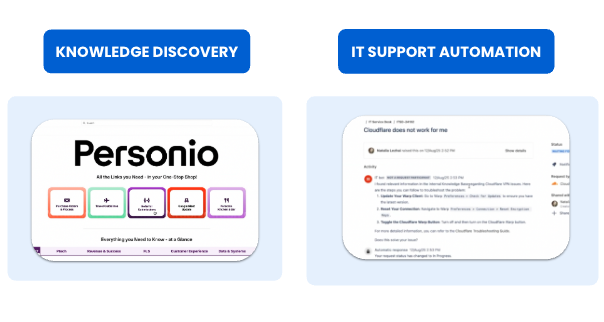
In an era where modern enterprises are increasingly pressured by rapid technological shifts and fluctuating market demands, the internal architecture of a company often becomes its greatest bottleneck. Personio, a prominent German-based HR software provider, recently addressed this challenge by overhauling its internal collaboration framework. As the company scaled toward its ambitious goal of improving the working lives of four million people by 2026, its internal infrastructure struggled to keep pace with a workforce that had grown to nearly 2,000 employees. The solution involved a comprehensive transition to the Atlassian Teamwork Collection, a unified suite designed to reduce friction, enhance security, and drive productivity through a centralized digital backbone.
The operational tension Personio faced is a common phenomenon in high-growth technology firms. Externally, the organization was required to demonstrate agility, creativity, and rapid adaptation to serve its expanding customer base. Internally, however, the company was grappling with fragmented systems and disconnected workflows that threatened to undermine its mission. The "integration debt" accumulated during years of organic growth had resulted in a patchwork of tools that functioned in isolation rather than as a cohesive ecosystem. This fragmentation was not merely a matter of convenience; it represented a systemic risk to the company’s ability to scale with confidence and maintain its position as a market leader against increasingly agile, AI-empowered competitors.
Before the transformation, Personio’s internal environment was characterized by what Natalia Lezhai, a Senior Atlassian Expert at the company, described as a "creatively organized" but unsustainable system. Upon joining the firm, Lezhai discovered that the collaboration stack had evolved without centralized oversight, leading to a situation where the company had over 300 system administrators. This lack of standardization meant that different departments were utilizing disparate platforms for similar tasks. Knowledge was scattered across Google Drive, Slack, Notion, and Miro, creating information silos that made it nearly impossible for employees to find reliable, up-to-date data.
The consequences of this fragmentation were significant. Tool redundancy led to wasted licensing costs, while a lack of governance resulted in data loss and audit difficulties. Although Personio does not operate in a heavily regulated industry like finance or healthcare, it still maintains rigorous compliance standards that were difficult to uphold in a decentralized environment. Security teams lacked visibility into how sensitive content was being shared, and "Shadow IT"—the use of unauthorized personal accounts for professional work—posed a constant threat. Public sharing of sensitive internal documentation was a recurring risk because enterprise-level controls were absent in many of the point solutions being used by individual teams.
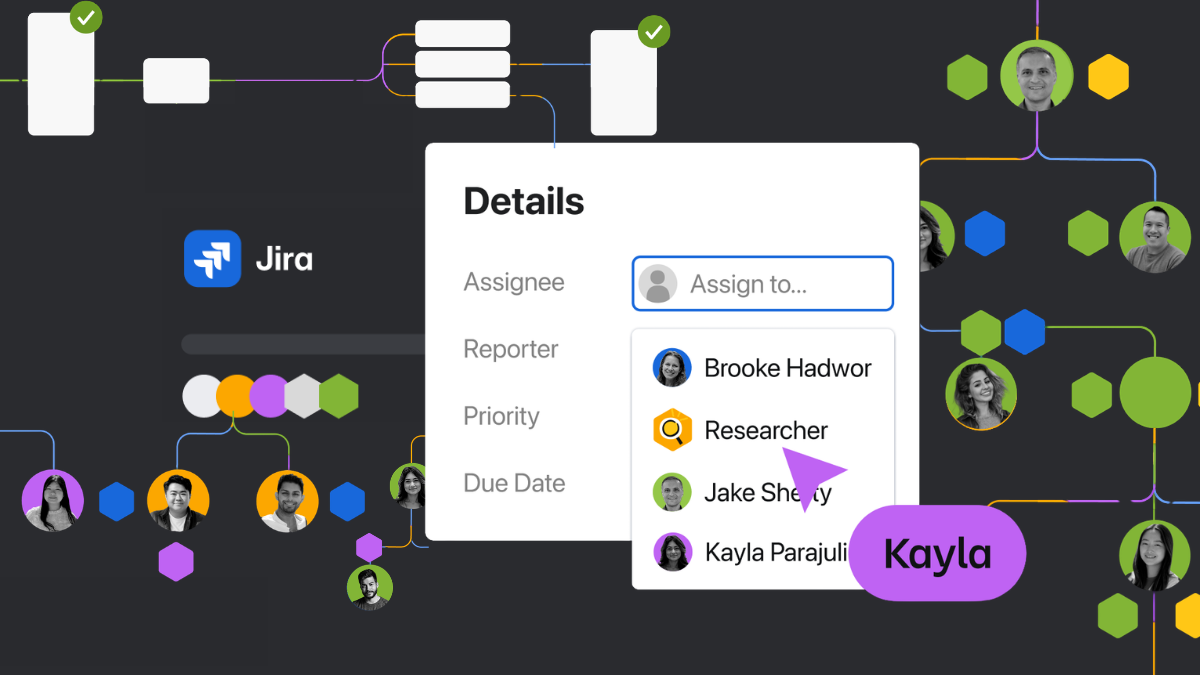
To resolve these issues, Personio shifted away from standalone applications and adopted the Atlassian Teamwork Collection. This integrated stack brings together Jira, Confluence, and Loom, all powered by Rovo, Atlassian’s specialized AI agent. The strategy was built on the principle of consolidation, starting with the phasing out of Notion and the migration of all collaborative content to Confluence. Furthermore, the company began replacing specialized whiteboarding tools with Confluence whiteboards, which allowed teams to keep their visual brainstorming sessions directly linked to their project documentation and task management systems.
A cornerstone of this new strategy was the creation of the "Personio Hub" within Confluence. This served as a unified company knowledge center, replacing the previous "Personio Wiki" which had become cluttered and unreliable. The new hub utilized consistent templates, repeatable navigation patterns, and a strict ownership model. By ensuring that every page had a designated owner responsible for its accuracy, Personio restored trust in its internal documentation. To further streamline the employee experience, the IT team developed a central landing page that acted as a "single home for work," providing a unified starting point for accessing all Atlassian products and core workflows.
The integration of Jira and Confluence allowed Personio to standardize its operational workflows across various departments, including the People Workplace, IT, and Legal teams. For instance, the Legal department implemented service desks that handle both internal and external requests using sophisticated permission schemes to protect sensitive data. Meanwhile, project tracking and Objective and Key Results (OKRs) were centralized through Atlassian Goals and Projects, ensuring that every team’s efforts were aligned with the broader corporate strategy. This level of connectivity ensured that knowledge management was not a passive activity but a dynamic part of the daily operational flow.

The introduction of Rovo, Atlassian’s AI-powered assistant, marked a significant leap in productivity for Personio. By unifying its data foundation, the company was able to leverage AI to provide natural language answers to employee queries, backed by the latest Confluence content. This moved beyond simple search functions; Rovo could synthesize information from across the platform, providing contextually relevant updates and identifying clear ownership for specific topics. The IT team even developed a Tier 1 support agent using Rovo to automate routine requests such as password resets and access issues. When documentation was found to be missing or incomplete, the AI would automatically create a subtask for Tier 2 support, ensuring that gaps in the company’s knowledge base were systematically closed.
The impact of AI extended to individual productivity as well. In one notable instance, a platform engineer used Rovo to aggregate six months of data from Jira tickets, GitHub pull requests, and Confluence pages to generate a draft for a performance review. A task that would traditionally require several hours of manual data gathering was completed in a fraction of the time. As the quality of documentation continues to improve, the impact of AI is expected to compound, allowing employees to delegate increasingly complex repetitive tasks to automated agents and focus on higher-value strategic work.
Another transformative element of Personio’s strategy was the adoption of Loom to foster an asynchronous culture. Under the guiding principle that "if it can be async, it will be async," the company moved away from unnecessary live meetings. Instead of scheduling calls for every update, employees began using Loom to record video briefings that could be viewed at the recipient’s convenience. These videos were then embedded into Confluence pages, providing a rich, multi-modal documentation experience. Loom AI further enhanced this by generating written transcripts and summaries of the videos, catering to different learning and consumption styles without requiring additional effort from the creator.
The transition to Loom also addressed the aforementioned security concerns. By moving from individual free accounts to an enterprise-governed model, Personio’s security teams gained the ability to audit sharing patterns and enforce privacy policies. Centralized account management ensured that sensitive video content was no longer at risk of being lost or exposed when an employee left the company. What was once a source of Shadow IT risk became a secure, governed enabler of modern communication.
While Personio’s digital transformation is an ongoing process, the results to date have been substantial. The company has successfully reduced internal friction, improved its security posture, and established a scalable foundation for future growth. By consolidating its tools, Personio has not only saved on licensing costs but has also significantly improved the "findability" of information, which is a critical driver of employee satisfaction and efficiency.
The Personio case study offers four practical lessons for other modern organizations. First, documentation is the primary driver of tool adoption; teams will only use systems they fully understand and can navigate easily. Second, content hygiene is essential for building trust; if employees cannot rely on the accuracy of the information they find, they will revert to inefficient side channels. Third, data must be unified to unlock the full potential of AI; without a clean and connected data foundation, AI tools cannot provide the contextually rich answers required for true productivity gains. Finally, the integration of video through tools like Loom provides a "show, don’t just tell" capability that enhances understanding and supports diverse working styles.
Ultimately, Personio’s journey demonstrates that successful digital transformation begins with the fundamentals of organization and standardization. By building a unified collaboration stack and maintaining rigorous data standards, the company has positioned itself to navigate the complexities of the modern business landscape with speed and confidence. The Atlassian Teamwork Collection has provided the necessary framework for Personio to transform its internal challenges into a competitive advantage, ensuring that as the company grows, its systems remain a catalyst for innovation rather than a barrier to progress.