 11
11 1
1 2
2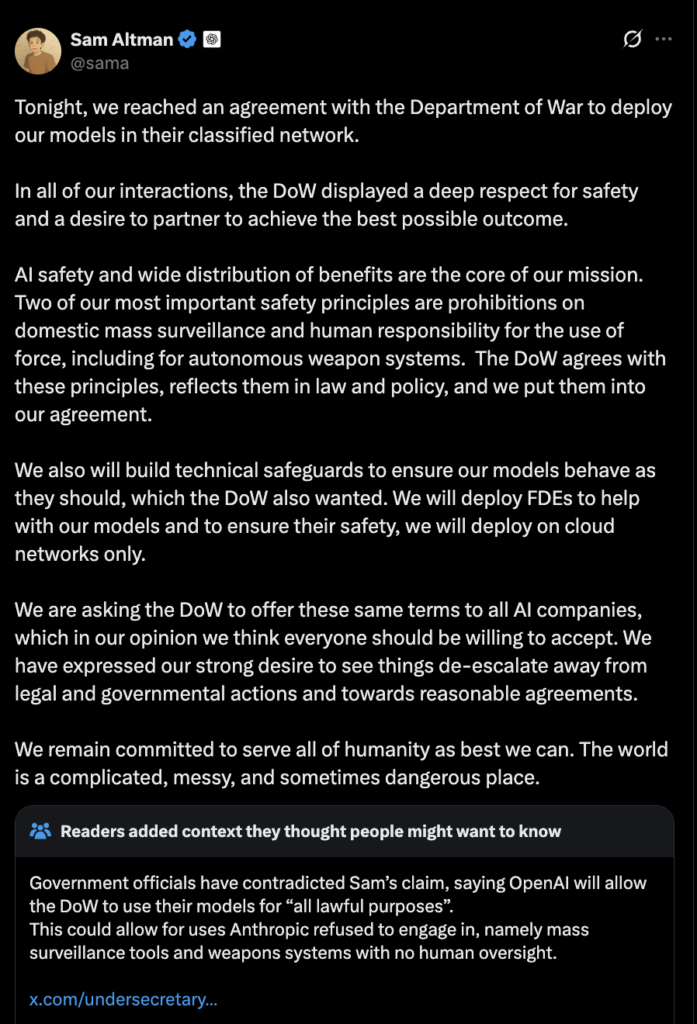 3
3
In a striking display of competitive maneuvering and evolving monetization strategies within the artificial intelligence landscape, OpenAI officially announced the rollout of advertisements on its popular ChatGPT platform on Monday, a mere day after its rival, Anthropic, aired commercials during the Super Bowl that subtly critiqued the very concept of ads appearing within AI chatbots.
Anthropic, the creator of the Claude AI assistant, utilized its Super Bowl advertising slots to highlight the potential user discomfort associated with generative AI responses that might include product pitches. While the ads did not explicitly name OpenAI or ChatGPT, their message was a clear commentary on the emerging trend of integrating advertising into conversational AI interfaces. The commercials humorously depicted scenarios where users seeking straightforward answers received unsolicited commercial messages, underscoring the perceived intrusion and potential dilution of user trust.
However, the timing of OpenAI’s announcement proved to be a swift countermove. On Monday afternoon, OpenAI took to X (formerly Twitter) to confirm the launch of a pilot program for ads within ChatGPT. The company stated, "We’re starting to roll out a test for ads in ChatGPT today to a subset of free and Go users in the U.S." OpenAI emphasized that these advertisements are designed not to influence ChatGPT’s responses and will be clearly labeled as sponsored content, appearing visually distinct from the AI’s generated answers. The stated goal behind this initiative, as articulated by OpenAI, is to "give everyone access to ChatGPT for free with fewer limits, while protecting the trust they place in it for important and personal tasks."
Further elaborating on the strategic decision, Vijaye Raji, OpenAI’s Chief Technology Officer, shared a detailed message on LinkedIn. Raji announced the commencement of ads testing in the U.S., acknowledging that the product is still in its nascent stages. He indicated that as OpenAI scales up the ad rollout and integrates advertising partners, the company anticipates a significant learning process that will drive continuous improvements. Raji reaffirmed OpenAI’s commitment to its "ads principles," which he suggested aim to set a new industry standard. He also extended gratitude to the early launch partners and provided links for those interested in learning more about advertising on ChatGPT or exploring career opportunities within OpenAI’s Monetization team.

The controversy ignited by Anthropic’s Super Bowl ads was palpable. The ads featured scenarios designed to evoke a sense of unease. One ad, titled "Can I get a six pack quickly?", humorously depicted a user asking for fitness advice, only to be met with a sales pitch for a specific protein shake. Another ad, "How can I communicate better with my mom?", presented a user seeking relationship advice and receiving a product advertisement instead. The tagline for these commercials was stark: "Ads are coming to AI. But not to Claude." This direct messaging was widely interpreted as a pointed jab at OpenAI’s impending advertising strategy.
In response to Anthropic’s campaign, OpenAI CEO Sam Altman acknowledged the humor in the ads but characterized them as "clearly dishonest" in a post on X. This exchange highlights the escalating rivalry and the diverging philosophies regarding the monetization of advanced AI technologies. While Anthropic positioned itself as a guardian of the user experience, prioritizing an ad-free environment for its AI assistant, OpenAI opted for a direct approach, aiming to leverage its user base for revenue generation while asserting its commitment to maintaining user trust.
The integration of advertising into AI chatbots represents a significant development in the monetization of artificial intelligence. As AI tools like ChatGPT become increasingly integrated into daily life for information retrieval, task completion, and even personal assistance, the question of how these powerful technologies will be funded becomes paramount. OpenAI’s decision to introduce ads suggests a belief that a hybrid model, combining free access with advertising revenue, is a sustainable path forward. This approach aims to democratize access to advanced AI capabilities, making them available to a broader audience without imposing subscription fees on all users.
However, the move is not without its critics. The concern, as voiced by Anthropic and echoed by many users, is that the introduction of advertisements could compromise the impartiality and trustworthiness of AI responses. The potential for ads to subtly influence or bias the information provided by an AI is a significant ethical consideration. OpenAI’s assurance that ads will not influence ChatGPT’s answers and will be clearly demarcated is a crucial attempt to mitigate these concerns. The success of this strategy will likely depend on the transparency and effectiveness of these safeguards, as well as the continued evolution of user perception and industry standards.
The competitive dynamic between OpenAI and Anthropic, as exemplified by this Super Bowl advertising showdown and subsequent announcement, underscores the rapid pace of innovation and commercialization in the AI sector. Both companies are vying for market share and influence, employing distinct strategies to capture user attention and build sustainable business models. As more AI platforms emerge and mature, the debate over ethical advertising practices, user privacy, and the fundamental nature of AI-human interaction is set to intensify. The launch of ads on ChatGPT marks a pivotal moment, signaling a new era where the integration of commercial interests with advanced artificial intelligence is becoming an increasingly prominent feature of the technological landscape. The industry will be watching closely to see how this unfolds and what implications it holds for the future of AI development and deployment.