 11
11 1
1 2
2 3
3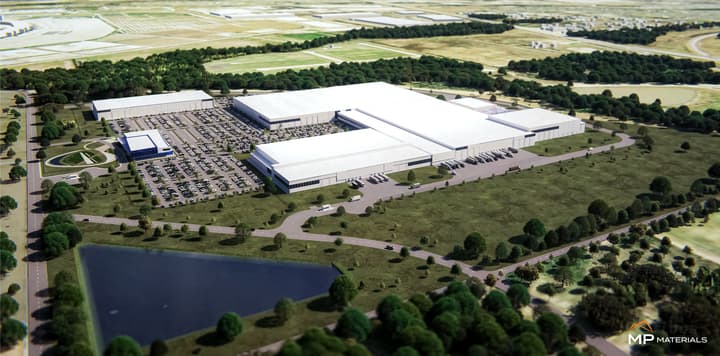
MP Materials has announced its selection of Northlake, Texas, as the site for its ambitious new $1.25 billion rare earth magnet manufacturing campus. This strategic decision comes amid a significant national push to strengthen domestic supply chains for critical metals essential for a wide range of industries, including data centers, defense applications, and consumer electronics. The facility, codenamed "10X," will leverage rare earth raw materials sourced and processed from MP Materials’ existing Mountain Pass mine in California, which stands as the sole commercial-scale rare earths mine in the United States.
Upon reaching full operational capacity, the 10X facility is projected to produce approximately 7,000 metric tons of rare earth magnets per year. This substantial output will elevate MP Materials’ total annual magnet production capacity to 10,000 metric tons. The company already operates a magnet facility in Fort Worth, Texas, which commenced commercial production in 2025. This existing facility boasts an annual capacity of about 3,000 tons and serves prominent customers such as General Motors and Apple.

The global supply chain for critical minerals, particularly rare earths, is currently dominated by China, which controls over 90% of the processing, separation capacity, and magnet manufacturing. This near-monopoly was highlighted last year when China reportedly weaponized its rare earth exports by imposing curbs, thereby exposing critical vulnerabilities within the global supply chain for these essential materials.
In 2025, U.S. imports of rare earth magnets saw a significant decrease, dropping to approximately 6,000 tons, largely attributed to export controls. The establishment of MP Materials’ new 10X factory holds the potential to diminish direct import reliance for the United States. However, it is important to note that when considering imports of finished products that incorporate rare earth magnets – such as automobiles and smartphones – the overall U.S. demand for these materials is considerably higher.
The U.S. government, particularly under the Trump administration, has implemented a series of initiatives aimed at bolstering domestic mining and manufacturing capabilities. In a significant move last year, the Department of Defense invested $400 million in MP Materials, acquiring a substantial stake in the company. Concurrently, the Defense Department guaranteed a minimum purchase price of $110 per kilogram for neodymium-praseodymium oxide, a key component in magnet production, for a period of ten years. Under the terms of this agreement, the entire output of the 10X facility is currently committed to the Pentagon for a decade. While this commitment is in place, there remains potential for commercial customers to utilize the materials produced at the facility, subject to the agreement of the Department of Defense.

MP Materials founder and CEO, James Litinsky, emphasized the strategic importance of this development, stating, "We are advancing key objectives under our public-private partnership with the Department of War and accelerating America’s rare earth and magnet independence with an uncompromising focus on speed, execution, and delivery."
The Northlake manufacturing facility is anticipated to commence production in 2028. Its establishment is expected to generate approximately 1,500 direct jobs in manufacturing and engineering roles at the site.
Senator Ted Cruz (R-Texas) underscored the national security implications of reducing reliance on China for critical minerals. In a statement, he remarked, "The Chinese Communist Party represents the most acute national security threat to the United States, yet we remain dependent on the CCP for critical minerals. MP Materials is building the infrastructure needed to undo that dependence and bolster American national security." This sentiment reflects a broader bipartisan consensus regarding the strategic imperative of securing domestic supply chains for materials vital to national defense and economic prosperity. The development of the 10X facility in Northlake represents a significant step towards achieving this objective, fostering job creation and enhancing U.S. technological and industrial independence.