 11
11 1
1 2
2 3
3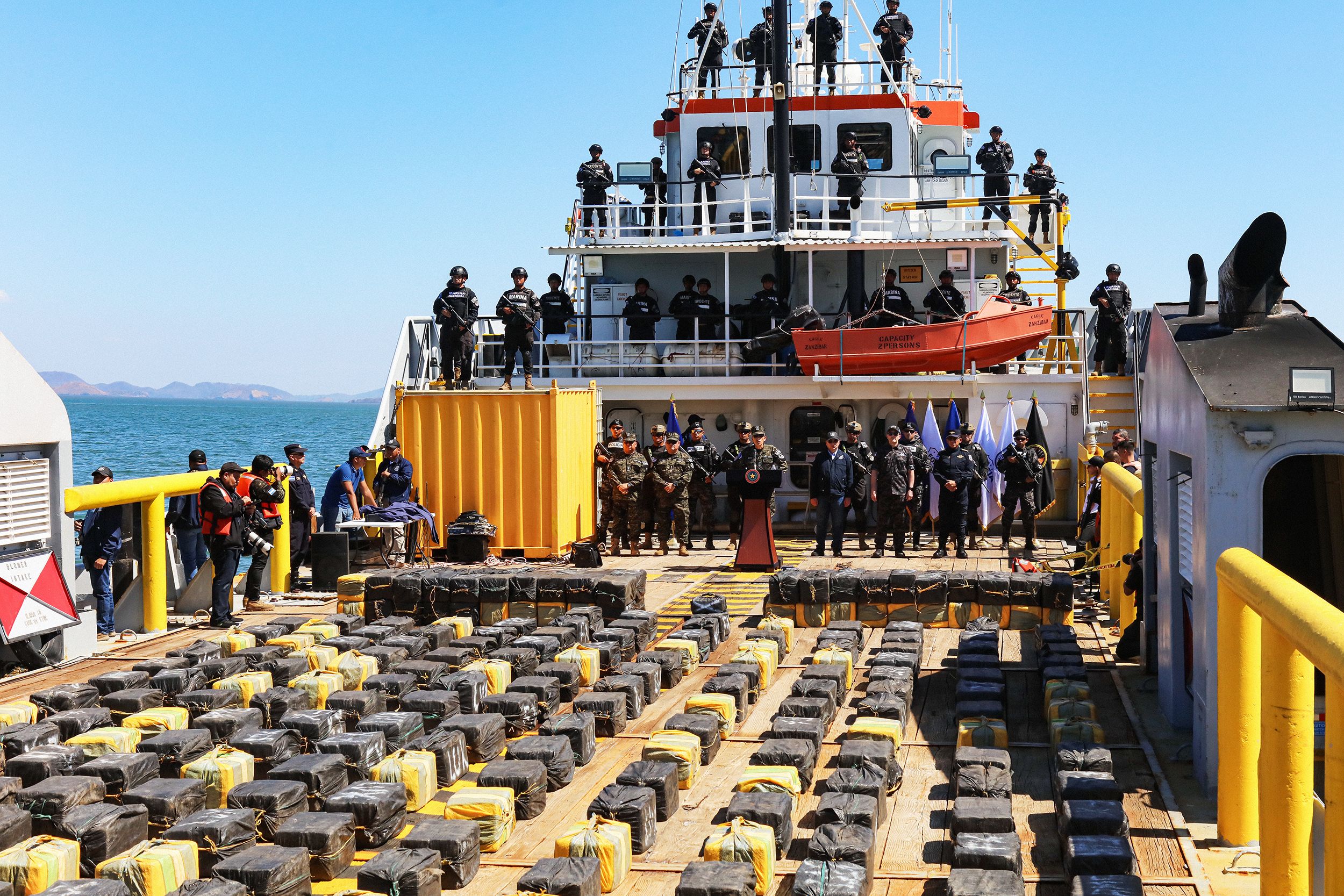
The Mexican Navy announced on Thursday a significant interdiction in its ongoing efforts to combat maritime trafficking of illicit substances across the Pacific Ocean, seizing a semi-submersible vessel carrying nearly four tons of cocaine. This operation, which resulted in the confiscation of 179 packages of the drug, marks a substantial blow to transnational criminal organizations and underscores the persistent challenges faced by authorities in the region. The incident also highlights the parallel and often controversial measures being taken by the United States, which has engaged in a series of deadly attacks against suspected drug vessels in the Caribbean.
Omar García Harfuch, Mexico’s Secretary of Security, confirmed the details of the seizure in a post on X, identifying the intercepted vessel as a "narco-submarine." The sophisticated, low-profile craft was located and interdicted in Mexican waters, specifically near the crucial port city of Manzanillo, situated in the state of Colima. Following the successful operation, three individuals were apprehended on suspicion of their involvement with the extensive cocaine shipment. These arrests are integral to disrupting the operational capabilities and supply chains of the cartels responsible for such large-scale illicit trade.
The Mexican Navy, officially known as Semar (Secretaría de Marina), provided further details regarding the complex operation that led to the capture of the semi-submersible. The mission leveraged a multi-faceted approach, deploying a comprehensive array of naval assets. These included an ocean patrol vessel, which served as the primary command and control platform, complemented by two fixed-wing aircraft for broad area surveillance and two rotary-wing aircraft for closer inspection and rapid response. Additionally, two interceptor boats were crucial for the final interdiction of the elusive vessel. The success of this operation was significantly bolstered by international cooperation, with Semar receiving critical intelligence support from the US Northern Command and the Joint Interagency Task Force. This collaborative intelligence sharing proved instrumental in accurately locating the target at sea, demonstrating the vital role of cross-border partnerships in confronting organized crime.
Secretary Harfuch emphasized that this particular seizure is part of a broader, highly successful week for Mexican anti-narcotics efforts. Over the past seven days, various operations have collectively resulted in the confiscation of approximately 10 tons of cocaine. Harfuch underscored the profound impact of these interdictions, stating that they represent "a direct and multimillion-dollar blow to the financial structures of organized crime." He further articulated the societal benefit, explaining that by preventing these vast quantities of drugs from reaching their intended markets, authorities are effectively "preventing millions of doses from reaching the streets and protecting the safety of Mexican families." This statement highlights not only the economic disruption but also the public health and safety implications of such seizures.
For at least the past year, Semar has been diligently monitoring a sophisticated transnational network that exploits specific maritime routes for the trafficking of narcotics and other illicit goods. These routes, notoriously known as "La Gorgona" and "El Desierto," originate primarily from Ecuador and Colombia, two key cocaine-producing nations. The journey involves strategic waypoints that allow traffickers to evade detection, including the remote Galápagos Islands and Clipperton Island, before ultimately reaching Mexican shores. Key landing zones in Mexico include areas like Punta Tejupán in Michoacán. An in-depth investigation published by N+ Focus has shed light on the ultimate destination of these vast shipments: the lucrative US market, which drives much of the demand for these illicit substances.
Criminal organizations employ a variety of maritime vessels to conduct their illicit trade, each designed to maximize stealth and evade surveillance. These include high-speed boats capable of outrunning patrol vessels, as well as increasingly sophisticated submarines and semi-submersibles. The latter, often ingeniously homemade from materials like fiberglass, are particularly challenging to detect due to their low profile, which allows them to travel partially submerged and present a minimal radar signature. This technological cat-and-mouse game between cartels and naval forces underscores the evolving nature of drug trafficking. Semar’s relentless monitoring and enforcement operations have yielded substantial results in recent years. Between 2023 and early 2025, these efforts led to the seizure of more than 111 tons of cocaine, the interdiction of 223 illegal maritime vessels, and the arrest of 476 suspected traffickers. The nationalities of those arrested reflect the transnational scope of these networks, including individuals from Ecuador, Mexico, Colombia, and various Central American countries.
The United States government has consistently exerted pressure on Mexico to intensify its campaign against drug trafficking. This pressure reached a significant peak last year when the Trump administration utilized the alarming increase in the trafficking of synthetic drugs, particularly fentanyl, as a justification for imposing tariffs on Mexican imports. This move highlighted the geopolitical and economic dimensions of the drug war, demonstrating how drug control issues can influence broader international relations.
In response to both domestic challenges and international pressure, Mexican President Claudia Sheinbaum has announced a more stringent strategy against the powerful cartels. Her plan includes a significant increase in surveillance along maritime routes and at border crossings, aimed at disrupting the flow of drugs and illicit goods. Furthermore, Sheinbaum’s administration has committed to accelerating the extradition of dozens of individuals convicted of drug trafficking offenses to the United States, a move designed to dismantle cartel leadership and demonstrate cooperation with US law enforcement.
Concurrently, during his previous term, US President Donald Trump launched an exceptionally aggressive campaign of direct confrontation against organized crime, extending even into international waters. According to a report by The New York Times, Trump issued a directive instructing the Pentagon to utilize military assets against Latin American cartels, which he designated as terrorist organizations. This represented a radical shift in his administration’s approach to anti-narcotics efforts, moving beyond traditional law enforcement roles.
Trump’s decree was designed to establish a new legal framework that would permit the conduct of both maritime and land military operations in foreign territory. This policy marked a profound departure in US security strategy, effectively assigning to the military functions that had traditionally been the exclusive purview of law enforcement agencies. The move sparked considerable debate regarding international law, national sovereignty, and the appropriate scope of military engagement in combating non-state actors.
This aggressive policy quickly led to direct military action. The first confirmed US attack on a vessel that, according to the Trump administration, was transporting drugs from Venezuela to the United States, occurred on September 2 in the international waters of the southern Caribbean Sea. This incident tragically resulted in the deaths of 11 individuals, who were allegedly linked to the notorious Tren de Aragua gang. Since that initial engagement, dozens of similar attacks have been recorded by US forces in both the Caribbean and the Pacific, targeting suspected drug trafficking vessels. These operations have led to an estimated death toll of approximately 145 people, underscoring the lethal nature of this new phase in the international fight against drug cartels.
The ongoing battle against drug trafficking in the Pacific and Caribbean remains a complex and dangerous endeavor, requiring sophisticated intelligence, advanced naval capabilities, and robust international cooperation. The latest seizure by the Mexican Navy is a testament to the persistent efforts to disrupt these criminal networks, even as both Mexico and the United States continue to refine their strategies in this critical fight.