 11
11 1
1 2
2 3
3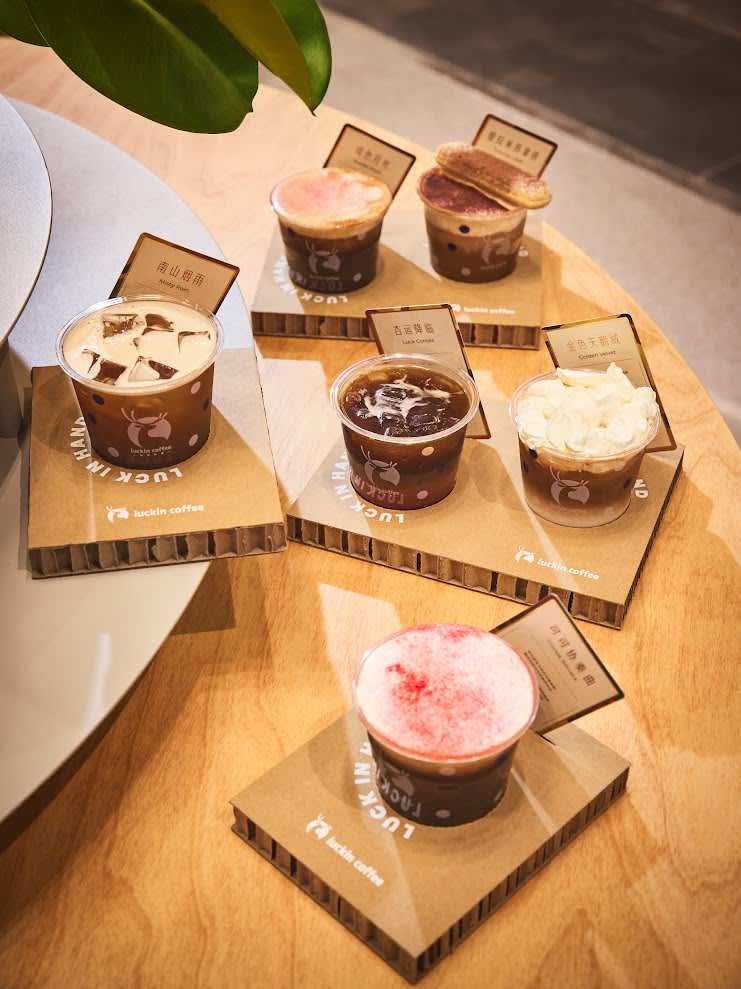
BEIJING – Chinese coffee giant Luckin Coffee has officially entered the premium beverage market with the opening of its first flagship store in Shenzhen, a bold move directly challenging Starbucks’ high-end Reserve roastery chain. This strategic pivot marks a significant departure from Luckin’s original business model of offering budget-priced coffee kiosks, a strategy that had previously allowed it to surpass Starbucks in the number of storefronts across China. The launch of this premium offering comes at a time when Starbucks is divesting a significant portion of its struggling China operations to a local investment firm, signaling Luckin’s robust recovery from the 2020 fraud allegations that led to its delisting from the Nasdaq.
The two-floor Luckin Coffee Origin Flagship, situated in Shenzhen near Hong Kong, officially opened its doors on Sunday. Unlike Luckin’s typical offerings, which usually range from $1 to $2 for an Americano or latte, the new flagship store features slightly elevated prices for a curated selection of pour-over and cold brew coffee drinks. Customers can select from a variety of beans sourced from Brazil, Ethiopia, and China’s Yunnan province, embracing the "origin" theme that has become popular among premium coffee brands like Starbucks. Furthermore, the store is introducing specialty drinks, such as a "tiramisu latte" adorned with a pastry, according to user posts on the Chinese social media platform Xiaohongshu. Since its soft launch on January 20, the store has reportedly seen wait times of one to three hours, indicating strong customer interest.
The 420-square-meter (4,521 square feet) flagship store underscores the escalating competition within China’s burgeoning coffee market. In 2017, Starbucks strategically chose Shanghai for its second Reserve Roastery "megastore," a premium concept store that had debuted in Seattle three years prior. As coffee consumption has surged in China, a historically tea-drinking nation, Starbucks has faced intense competition from a diverse range of players, including boutique cafes and chains like Cotti Coffee and Manner, which often offer beverages at significantly lower price points.

Luckin Coffee has demonstrated strong financial performance, reporting revenue of $1.55 billion for the three months ending September 30, 2025. This figure represents a nearly 48% increase compared to the same period a year earlier. These revenues are specifically from the company’s self-operated stores, which constitute over half of Luckin’s total locations in China and the majority of its international presence. The new Shenzhen flagship marks Luckin’s 30,000th store, contributing to a global total of 29,214 stores reported as of September 30.
In contrast, Starbucks operates just over 8,000 stores in China and approximately 16,900 stores in the United States, its largest market. For the quarter ending September 28, Starbucks reported a 6% year-on-year increase in net revenue from China, reaching $831.6 million. While comparable same-store sales, a key industry metric, stood at a modest 2% for that period, they improved to 7% for the quarter ending December 28. Starbucks has not yet disclosed China net revenue for its most recent quarter. The company is expected to finalize a deal in the spring to sell a 60% stake in its China business to Boyu Capital, retaining a 40% interest. This transaction, announced in November, valued Starbucks’ China business at $13 billion, inclusive of future licensing fees. As of Thursday, Luckin, whose shares are traded over-the-counter in the U.S., held a market value of approximately $10.46 billion.
Re-listing and Expansion Plans
Late last year, Luckin’s CEO, Jinyi Guo, indicated plans for the company to re-list in the United States, though a specific timeline has not been provided. Founded in late 2017, Luckin achieved a valuation of $2.9 billion within 18 months and was listed on the Nasdaq in May 2019. However, approximately a year later, the company disclosed that a significant portion of its 2019 sales had been fabricated, leading to the delisting of its stock. Despite these challenges, Luckin continued to operate many of its stores, retaining its brand name and logo.

The company has also actively engaged consumers through a series of strategic collaborations, partnering with premium spirits brand Moutai, the popular Minions cartoon characters, and the highly successful video game "Black Myth: Wukong" shortly after its surge in popularity. Mingchao Xiao, founder of Zhimeng Trends Consulting, highlighted Luckin’s success in cultivating a substantial base of private user traffic through its smartphone ordering app. This direct-to-consumer model, where customers select and pay for drinks via the app, bypasses traditional counter service. Xiao observes that China’s coffee market is undergoing rapid transformation, with young consumers increasingly seeking novel experiences and emotional fulfillment, which can be facilitated through cross-industry brand collaborations.
Mirroring the global ambitions of many Chinese companies, Luckin is also expanding its international footprint. Last summer, the company opened its first U.S. stores in New York City, with its tenth store in the city debuting on February 6. Luckin also operates 68 stores in Singapore, having entered the market nearly three years ago, and maintains 45 jointly operated locations in Malaysia.