 11
11
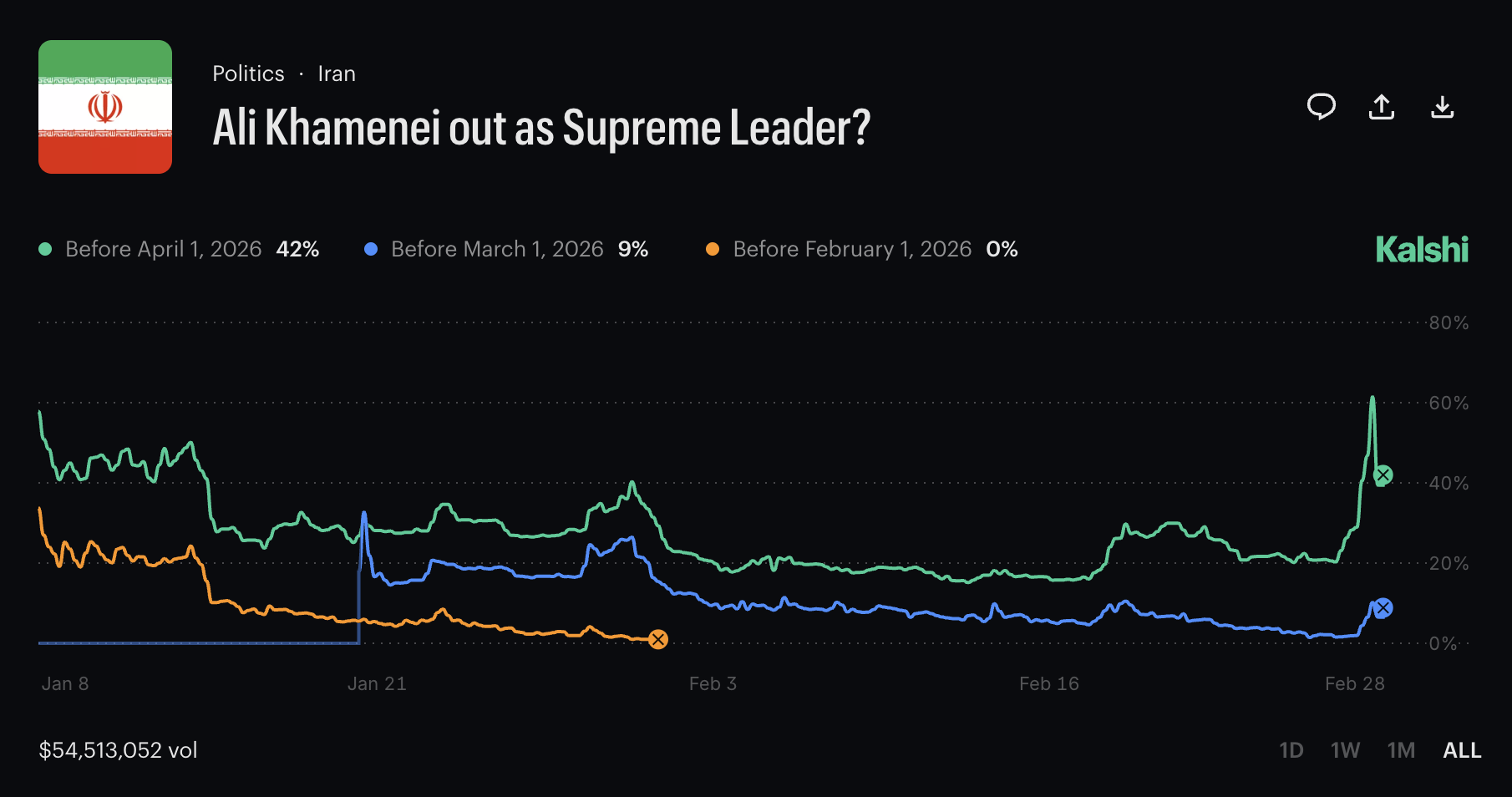
Prediction market platform Kalshi has voided certain positions on its "Ali Khamenei out as Supreme Leader" market following the confirmed death of Iran’s Supreme Leader Ayatollah Ali Khamenei. Tarek Mansour, co-founder of Kalshi, explained the platform’s decision in a post on X, stating that Kalshi does not list markets directly tied to death and designs rules to prevent individuals from profiting from such events.
"We don’t list markets directly tied to death. When there are markets where potential outcomes involve death, we design the rules to prevent people from profiting from death. That is what we did here," Mansour stated.
Iranian state media reported the death of Ayatollah Ali Khamenei early Sunday, following an attack reportedly launched by Israel and the United States the previous day.

In response to the situation, Kalshi is reimbursing all fees associated with the "Ali Khamenei out as Supreme Leader" market. Traders who held positions open before Khamenei’s death will be compensated based on the "last-traded price before his death." Furthermore, users who opened positions after the confirmation of Khamenei’s death have been reimbursed the difference between the higher price they paid for entry and the last traded price.
A spokesperson for Kalshi confirmed to Cointelegraph that the platform’s policy against "death markets" is well-established and has been in place for a significant period. The platform reiterated this policy on Saturday. Mansour emphasized that the stipulations regarding death carveouts were clearly outlined in the market’s rules. However, this decision did not go unnoticed by users, with some expressing their dissatisfaction online and accusing Kalshi of limiting potential profits.
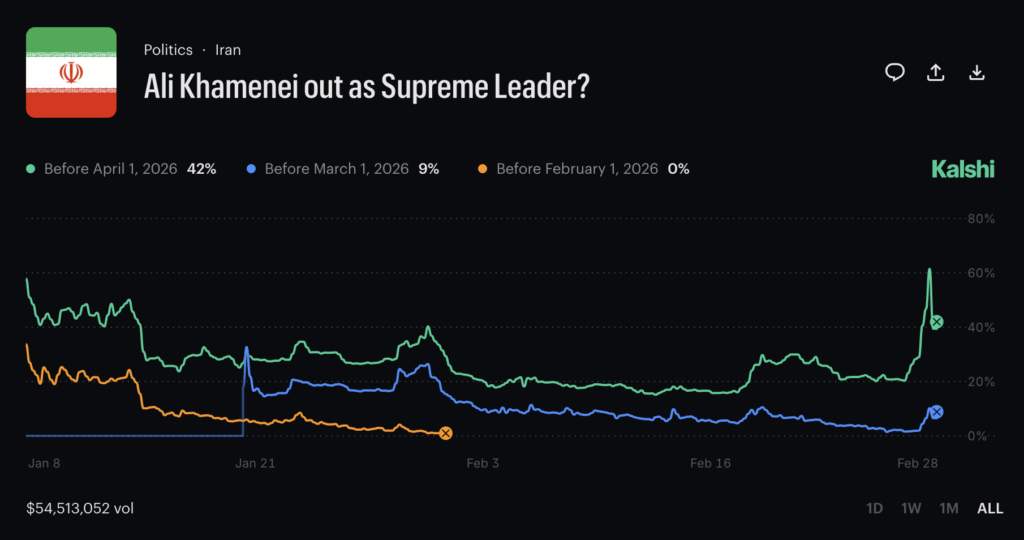
The prediction market for the ouster of the Iranian Supreme Leader, as displayed on Kalshi, shows the market in question.
This incident occurs amidst a backdrop of heightened scrutiny regarding potential insider trading on prediction market platforms, particularly in the context of geopolitical tensions. In February, six traders on rival prediction market Polymarket reportedly netted approximately $1 million by betting on the likelihood of the United States initiating a strike on Iran before the end of that month.

An investigation into these trades revealed that all six wallets were created in February and primarily focused on markets related to a strike on Iran. Notably, some of these positions were filled hours before the initial explosions were heard over the Iranian capital of Tehran, according to reports from Bloomberg. These trading patterns raised significant suspicion of insider trading activity among on-chain investigators and analysts.
The situation also draws parallels to past events. In January, U.S. President Donald Trump announced the arrest of an individual who had allegedly leaked information related to a raid and capture of former Venezuelan President Nicolás Maduro. This announcement fueled speculation from on-chain analysis platform Lookonchain, suggesting that the leaker referenced by Trump might have been connected to winning bets on Polymarket placed shortly before the U.S. raid in Caracas.
The clarity and enforcement of Kalshi’s policies, especially concerning markets with outcomes involving sensitive events like the death of a prominent figure, highlight the complex ethical considerations inherent in prediction markets. While the platform aims to operate within established rules designed to prevent exploitation, user reactions underscore the ongoing debate about market transparency, profit potential, and the responsible design of financial instruments that touch upon significant global events.
Cointelegraph remains committed to independent, transparent journalism. This news article has been produced in accordance with Cointelegraph’s Editorial Policy, aiming to provide accurate and timely information. Readers are encouraged to verify information independently.