 11
11 1
1 2
2 3
3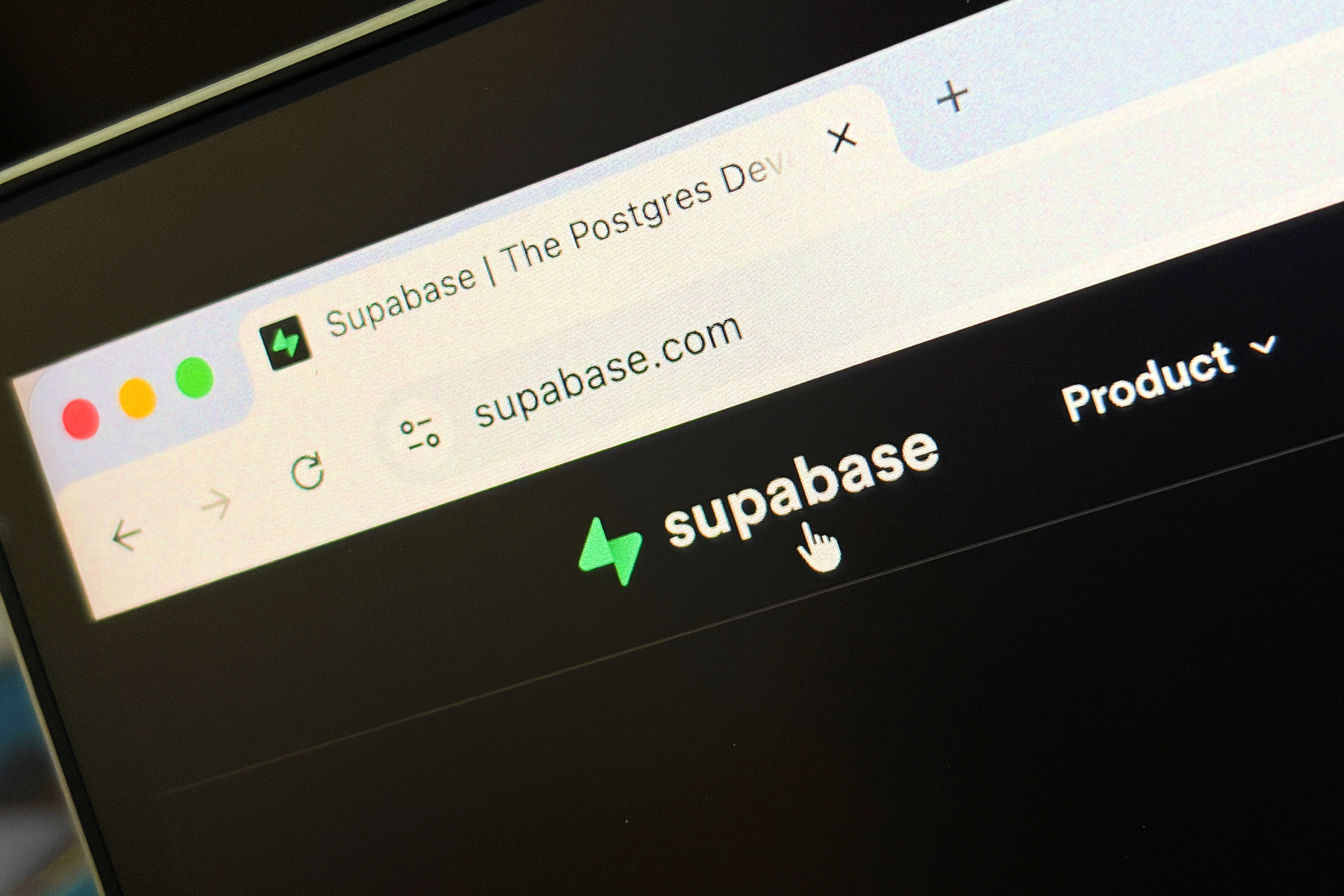
The directive to block Supabase was issued on February 24, 2026, under Section 69A of India’s Information Technology Act, according to a source familiar with the matter who spoke with TechCrunch. This provision grants the Indian government extensive powers to restrict public access to online content deemed necessary in the interest of India’s sovereignty and integrity, defense, security of the state, friendly relations with foreign states or public order, or for preventing incitement to the commission of any cognizable offence relating to these matters. Crucially, orders issued under Section 69A typically do not require public disclosure of the reasons for the blocking, contributing to the opacity surrounding such actions.
The Indian government has not yet publicly disclosed the specific reason behind the blocking order. Consequently, it remains unclear whether the action is linked to a cybersecurity concern, a copyright complaint, or an entirely different issue. Furthermore, the duration for which these restrictions will remain in place is also unknown, leaving developers and businesses in a state of uncertainty.
Access to Supabase for users in India has been notably inconsistent over the past several days. The San Francisco-based company publicly acknowledged the disruptions on its social media channels starting Wednesday, February 25, 2026. Initially, reports of restrictions emerged primarily from users on Reliance Industries’ JioFiber network. However, as the situation evolved, users across multiple other internet service providers (ISPs) and telecom networks, including ACT Fibernet and Bharti Airtel, began reporting similar problems. In a notable move on Friday, Supabase directly tagged India’s IT minister, Ashwini Vaishnaw, in a social media post, appealing for his intervention to restore access. Although the company later removed this specific message, a subsequent update confirmed that access to the site remained blocked for many users across the country.
Supabase reiterated its commitment to resolving the issue, stating in a tweet on February 27, 2026, "We understand many users in India continue to be blocked from accessing Supabase. We acknowledge the difficulties this is causing for our users there. Supabase continues to follow up through all available channels to resolve this issue. We continue to advise affected customers…"
The impact of these blocks has been immediate and significant for the Indian developer community. An Indian founder, who requested anonymity due to concerns about potential repercussions from the government, informed TechCrunch that their platform had stopped registering new user sign-ups from India over the preceding two to three days. Similarly, a technology consultant working with local startups, also speaking on condition of anonymity, reported being unable to reliably access Supabase for critical development and production purposes. This disruption affects various essential aspects of app development, including database management, API creation, authentication services, and the hosting of backend infrastructure, all of which are core offerings of the Supabase platform.
In an attempt to mitigate the access issues, Supabase suggested workarounds such as switching DNS settings or utilizing a Virtual Private Network (VPN). VPNs reroute internet traffic through servers in different geographical locations, thereby bypassing local internet restrictions. While technically viable, the anonymous founder highlighted that such steps are generally not practical or feasible for the vast majority of end-users due to technical complexity, potential costs, and, in some contexts, legal ambiguities surrounding VPN usage. This renders the workarounds largely ineffective for maintaining broad access to the platform.

TechCrunch independently verified the inaccessibility of supabase.co at the time of publication. The platform remained unreachable on ACT Fibernet, JioFiber, and Airtel connections tested in New Delhi. However, two users on ACT Fibernet in Bengaluru reported that they were still able to access the service, indicating that the implementation of the blocking order might be uneven or geographically inconsistent across India. It is important to note that while the core developer infrastructure and supabase.co domain were affected, Supabase’s main marketing website (supabase.com) surprisingly remained accessible in India, creating a paradoxical situation where users could browse information about the service but not utilize its underlying tools.
India represents a crucial market for Supabase, accounting for approximately 9% of its global traffic, making it the platform’s fourth-largest source of visits. Data from Similarweb reveals that Supabase’s global traffic surged by more than 111% year-over-year, reaching about 4.2 million visits in January 2026. In India specifically, visits to Supabase rose by an impressive 179% to roughly 365,000 during the same period, slightly outperforming the 168.5% increase seen in the U.S., where visits reached about 627,000. This data underscores the potential significant fallout for India’s burgeoning developer ecosystem and for Supabase’s global growth trajectory.
This incident also brings into sharper focus broader concerns regarding India’s website blocking regime, which has often been criticized for its lack of transparency and potential for arbitrary application. Raman Jit Singh Chima, the Asia Pacific policy director at Access Now, a non-profit organization advocating for digital rights, emphasized the grave consequences of such actions. "This is a simple fact that has grave consequences for developers and others," Chima told TechCrunch. "You don’t know where you can safely run projects without the danger that something might happen where it gets blocked, and suddenly you’re scrambling to find a way." The unpredictable nature of these blocks creates an unstable environment for innovation and digital entrepreneurship.
India has a history of implementing broad website blocking measures that have drawn international criticism. In 2014, authorities briefly restricted access to the popular developer platform GitHub, along with other services like Vimeo, Pastebin, and Weebly, during a security investigation. More recently, in 2023, users on certain Indian networks reported that a key GitHub content domain had been blocked by some ISPs, according to earlier reports, demonstrating a recurring pattern of disruptions to critical developer tools.
Founded in 2020 by CEO Paul Copplestone and CTO Ant Wilson, Supabase has positioned itself as an open-source alternative to Google’s Firebase, built upon the robust PostgreSQL database. The startup has rapidly gained traction, particularly amid rising interest in "vibe coding" tools and the acceleration of AI-driven app development. "Vibe coding" refers to developer tools that enhance the coding experience through features like real-time collaboration, intuitive interfaces, and integrated AI assistance, making development faster and more enjoyable. This market appeal has fueled substantial financial growth for Supabase, which has raised approximately $380 million across three funding rounds since September 2024, elevating its valuation to an impressive $5 billion.
Inquiries sent by TechCrunch to India’s Ministry of Electronics and IT, as well as to major telecom providers including ACT Fibernet, Bharti Airtel, and Reliance Jio, regarding the blocking order and its rationale, did not elicit any response. Similarly, Supabase co-founders Paul Copplestone and Ant Wilson also did not respond to requests for comment, leaving many questions unanswered about the specifics of the situation and the path forward.