 11
11 1
1 2
2 3
3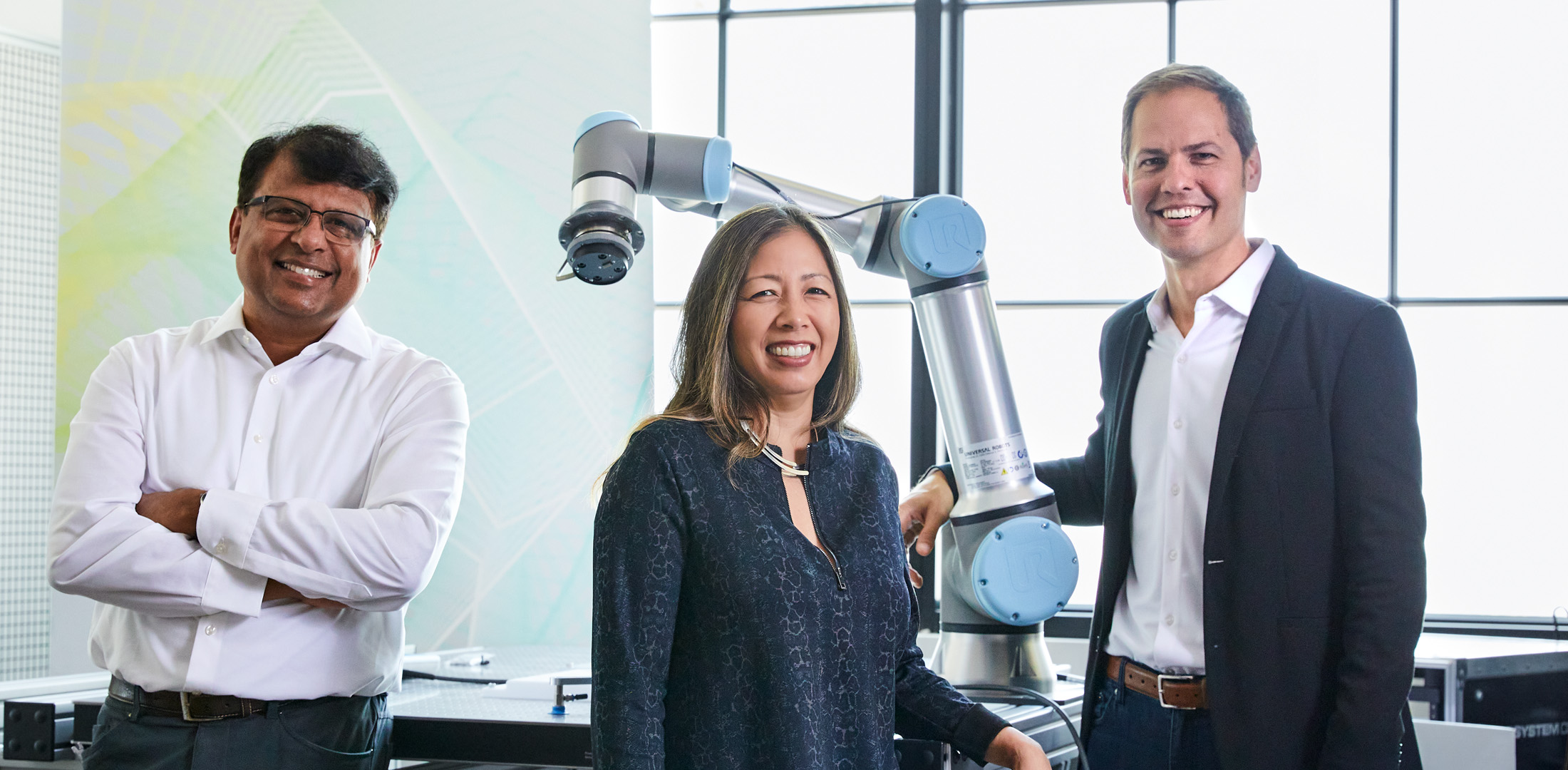
Google is significantly advancing its foray into physical artificial intelligence, bringing its robotics software platform, Intrinsic, into closer collaboration with its core AI and cloud divisions. This strategic realignment sees Intrinsic, an Alphabet-owned company dedicated to making industrial robots more accessible through advanced AI models and software, officially joining Google. The announcement, made on Wednesday, signals a concerted effort by Alphabet to consolidate its formidable AI capabilities to accelerate innovation in the rapidly evolving field of physical AI.
Under this new structure, Intrinsic will maintain its identity as a distinct entity within Google. However, its operations will be deeply intertwined with those of Google DeepMind, the company’s leading AI research lab, and it will gain direct access to Google’s powerful Gemini AI models and extensive cloud services. This integration is poised to supercharge Intrinsic’s mission to democratize robotics, leveraging Google’s immense computational resources and AI expertise to overcome long-standing barriers in industrial automation. Alphabet, in line with its typical policy for such internal realignments, refrained from disclosing specific financial details regarding funding or any internal purchase price associated with this move.
Intrinsic’s journey to this pivotal integration has been a dynamic one, marked by innovation, strategic growth, and adaptation. The company "graduated" into an independent, Alphabet-owned entity in 2021, following five years of intensive development within Alphabet’s secretive X division. Known for incubating "moonshot" projects with the potential for disruptive technological advancements, X has previously spun out other notable ventures, including Waymo, Alphabet’s autonomous driving technology company, and Wing, its drone delivery service. Intrinsic’s origin within X underscored its ambitious goal: to fundamentally transform industrial automation by making robots easier to program and deploy, thereby unlocking new efficiencies and capabilities for manufacturers worldwide.
Since its spinout, Intrinsic has been led by Wendy Tan White, who assumed the role of CEO in 2021. Her leadership has guided the company through a period of rapid expansion and strategic maneuvers designed to build a comprehensive platform for physical AI. Just months after establishing its independence, Intrinsic made a significant move in April 2022 by acquiring Vicarious, a fellow robotics software firm. While the specific terms of the acquisition were not disclosed, Vicarious had garnered substantial investment, raising approximately $250 million from prominent venture capitalists and tech luminaries, including Amazon founder Jeff Bezos. This acquisition brought valuable intellectual property and talent into Intrinsic, bolstering its capabilities in areas like general-purpose AI for robotics.
The expansion continued swiftly. A few months after the Vicarious acquisition, Intrinsic further solidified its technological foundation by acquiring several for-profit divisions of Open Robotics. Open Robotics is a renowned non-profit organization instrumental in developing foundational hardware and software platforms for the global robotics industry, including the widely adopted Robot Operating System (ROS) and Gazebo simulator. This acquisition provided Intrinsic with critical tools and expertise in open-source robotics, further strengthening its ability to build accessible and powerful robotics development platforms.
Despite this aggressive growth strategy and ambitious vision, Intrinsic, like many tech companies, faced economic headwinds. In January 2023, the company underwent a restructuring that unfortunately included laying off 20% of its workforce. This decision, while challenging, likely aimed to streamline operations and refocus resources on core priorities, ensuring the company’s long-term viability and mission alignment.
Emerging from this period, Intrinsic demonstrated its resilience and commitment to its mission by announcing its inaugural product, Flowstate, just a few months later. Launched in May 2023, Flowstate is a sophisticated software platform specifically designed for developing and deploying robotics workflows. Crucially, it was engineered with an intuitive interface and abstraction layers to cater to developers who may not possess deep, specialized robotics expertise. This approach directly aligns with Intrinsic’s overarching mission to lower the barrier to entry for robotics, enabling a broader spectrum of businesses and engineers to harness the power of automation.
Since the introduction of Flowstate, Intrinsic has continuously refined its core technology. The company has dedicated significant efforts to enhancing its simulation capabilities, a critical component for testing and optimizing robot behavior in virtual environments before physical deployment. These improvements allow for faster iteration and safer development processes. A notable milestone in this ongoing development was the release of its Intrinsic Vision AI model in late 2025. This advanced vision system is designed to provide robots with enhanced perception capabilities, allowing them to interpret and interact with their surroundings more intelligently and precisely, which is fundamental for complex industrial tasks.
Further solidifying its market presence and future trajectory, Intrinsic entered into a significant joint venture with electronics manufacturing giant Foxconn in October 2025. This partnership is a testament to Intrinsic’s practical application in real-world industrial settings. The collaboration entails the two companies working hand-in-hand to develop general-purpose intelligent robots specifically aimed at transforming the electronics manufacturing process. The ultimate goal of this ambitious undertaking is nothing less than full factory automation, envisioning a future where advanced AI-powered robots handle intricate assembly, quality control, and logistics tasks with unprecedented efficiency and flexibility.
Now, with its closer integration into Google, Intrinsic is poised to accelerate these goals, leveraging the unparalleled AI prowess and infrastructure of its parent company. Wendy Tan White articulated the profound implications of this synergy in a company blog post, stating, "Combined with Google’s incredible AI and infrastructure, we’re going to unlock the promise of physical AI for a much broader set of manufacturing businesses and developers. This will fundamentally shift production, from its economics to operations, and enable truly advanced manufacturing." Her statement underscores the belief that Google’s resources will not just incrementally improve Intrinsic’s offerings but will catalyze a transformative shift in the industrial landscape.
This strategic move by Google is not an isolated event but rather a clear indicator of a broader industry trend. Many influential tech leaders view physical AI as the next frontier for technological advancement and monetization. Visionaries such as Nvidia’s CEO Jensen Huang and Qualcomm’s CEO Cristiano Amon have consistently highlighted the immense potential of physical AI – where artificial intelligence moves beyond software and digital interfaces to interact directly with the physical world through robots and autonomous systems. They argue that as AI models become more sophisticated, their application in tangible, real-world scenarios, particularly in manufacturing, logistics, and everyday environments, represents the natural evolution and a massive growth opportunity for the entire technology sector.
The integration of Intrinsic within Google’s ecosystem, therefore, positions the tech giant to play a leading role in this impending revolution. By combining Intrinsic’s specialized expertise in robotics software and its mission for accessibility with Google DeepMind’s cutting-edge AI research, the power of Gemini models, and the scalability of Google Cloud, the company is assembling a formidable arsenal. This convergence aims to overcome the complexities traditionally associated with industrial robotics, making advanced automation not just a possibility for large corporations but a viable and scalable solution for a much wider array of businesses and developers worldwide. The anticipated outcome is a fundamental reshaping of global production, from its underlying economics to its operational methodologies, ushering in an era of truly advanced and intelligent manufacturing. Industry observers will be keenly watching the progress of this integrated effort, especially as the TechCrunch event in Boston on June 9, 2026, draws closer, potentially offering further insights into the future of physical AI.