 11
11 1
1 2
2 3
3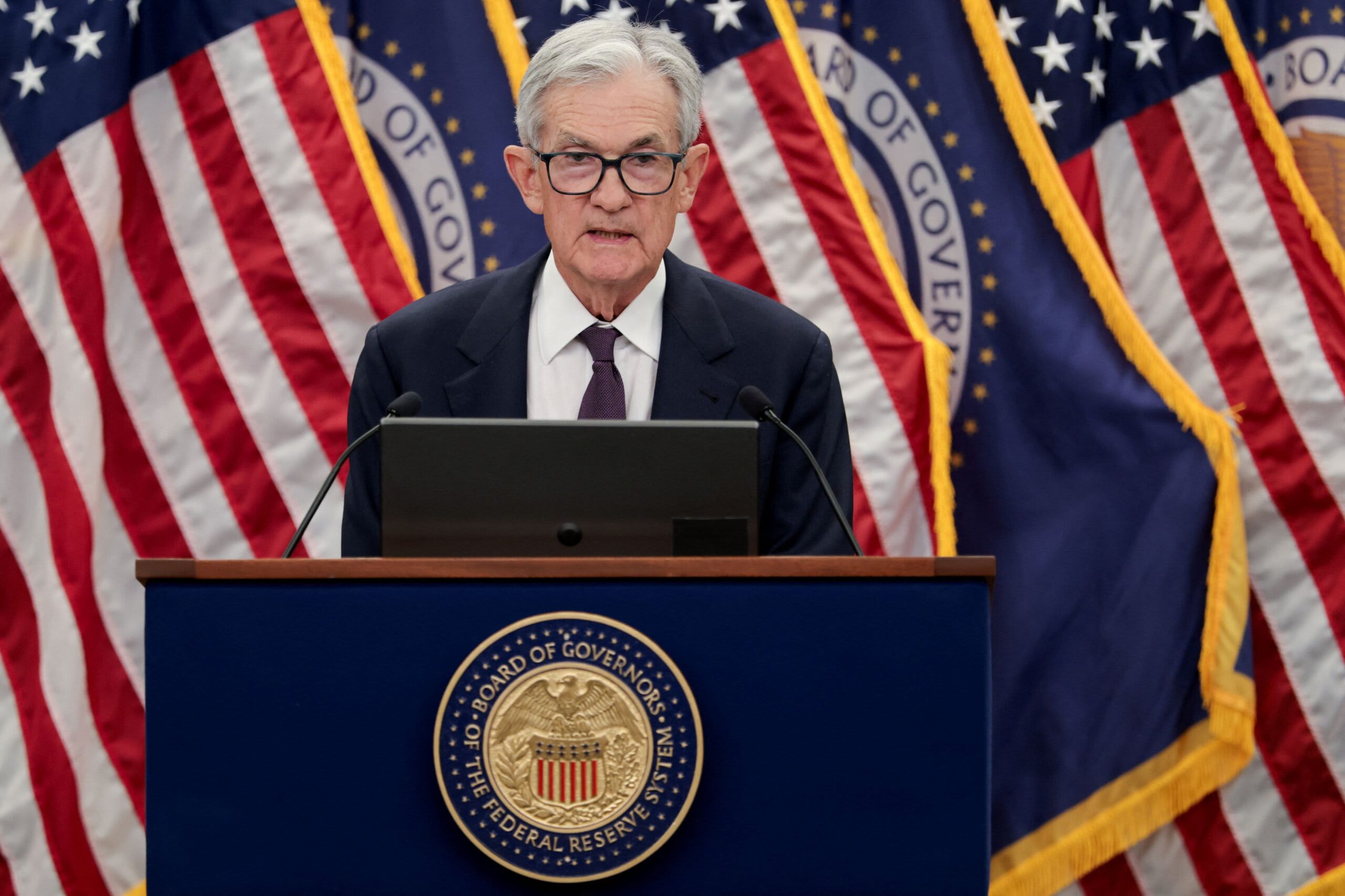
Divided Federal Reserve officials at their January meeting indicated that further interest rate cuts should be paused for now and could resume later in the year only if inflation cooperates. While the decision to hold the central bank’s benchmark rate steady at its current range of 3.5%-3.75% was largely met with approval, the path ahead appeared less certain, with members conflicted between the dual mandates of fighting inflation and supporting the labor market, according to minutes released Wednesday from the January 27-28 Federal Open Market Committee (FOMC) meeting.
"In considering the outlook for monetary policy, several participants commented that further downward adjustments to the target range for the federal funds rate would likely be appropriate if inflation were to decline in line with their expectations," the meeting summary stated. However, a significant divergence of opinion emerged regarding the timing and conditions for future rate adjustments. A notable contingent of participants expressed a preference to "hold the policy rate steady for some time as the Committee carefully assesses incoming data," with a substantial number judging that "additional policy easing may not be warranted until there was clear indication that the progress of disinflation was firmly back on track."
More strikingly, some officials even entertained the possibility of future interest rate hikes, advocating for the post-meeting statement to more accurately reflect "a two-sided description of the Committee’s future interest rate decisions." This would have acknowledged "the possibility that upward adjustments to the target range for the federal funds rate could be appropriate if inflation remains at above-target levels." This sentiment underscores a growing concern among some policymakers that inflation could prove more persistent than initially anticipated.
The Fed had previously implemented three consecutive quarter-percentage-point rate cuts in September, October, and December of the previous year, bringing the federal funds rate to its current target range. The January meeting marked a significant shift in tone, reflecting a more cautious and divided approach to monetary policy.
The composition of the FOMC voting cast at this meeting included a new set of regional presidents. At least two of these new voting members, Lorie Logan of the Dallas Fed and Beth Hammack of the Cleveland Fed, have publicly articulated a stance favoring an indefinite pause in rate cuts. Both have emphasized their view that inflation remains a significant threat and should be the primary focus of current monetary policy. While all 19 governors and regional presidents participate in the discussions, only 12 hold voting power on policy decisions.
This ideological split within the Fed could potentially deepen with the confirmation of former Governor Kevin Warsh as the next central bank chair. Warsh has historically advocated for lower interest rates, a position also reportedly shared by current Governors Stephen Miran and Christopher Waller. Both Miran and Waller are noted to have voted against the January decision, expressing a preference for an additional quarter-point cut. The term of current Chair Jerome Powell is set to conclude in May, adding another layer of uncertainty to the future direction of monetary policy.

The meeting minutes, which do not identify individual participants, employed a range of descriptive terms such as "some," "a few," and "many" to characterize the varying viewpoints. Notably, the minutes also featured two rare references to "a vast majority," suggesting a broader consensus on certain aspects of the economic outlook.
Generally, participants anticipated a decline in inflation throughout the year, although "the pace and timing of this decline remained uncertain." They acknowledged the impact of tariffs on prices, expecting this influence to diminish as the year progresses. However, a significant caution was voiced by "most participants," who "cautioned that progress toward the Committee’s 2 percent objective might be slower and more uneven than generally expected and judged that the risk of inflation running persistently above the Committee’s objective was meaningful." This suggests that while disinflation is expected, the path forward is viewed as potentially bumpy and subject to upside inflation risks.
In response to these evolving economic conditions, the FOMC did adjust some language in its post-meeting statement. The changes indicated that the risks to both inflation and the labor market had moved "more closely into balance," a subtle but significant softening of previous concerns regarding the employment situation.
Since the January meeting, labor market data has presented a mixed picture. While some indications point to a further slowdown in private sector job creation, with meager growth concentrated in the health-care sector, the unemployment rate unexpectedly dipped to 4.3% in January, and nonfarm payroll growth exceeded expectations.
On the inflation front, the Fed’s preferred measure, the personal consumption expenditures (PCE) price index, has remained stubbornly around the 3% mark. However, a recent report indicated that the consumer price index (CPI), excluding volatile food and energy prices, reached its lowest level in nearly five years, offering a glimmer of hope for a sustained disinflationary trend.
Market expectations, as reflected by futures traders, suggest the most probable timing for the next interest rate cut is in June, with further reductions anticipated in September or October, according to the CME Group’s FedWatch gauge. This forward-looking sentiment underscores the market’s anticipation of a gradual easing of monetary policy, contingent on continued progress in taming inflation.