 11
11 1
1 2
2 3
3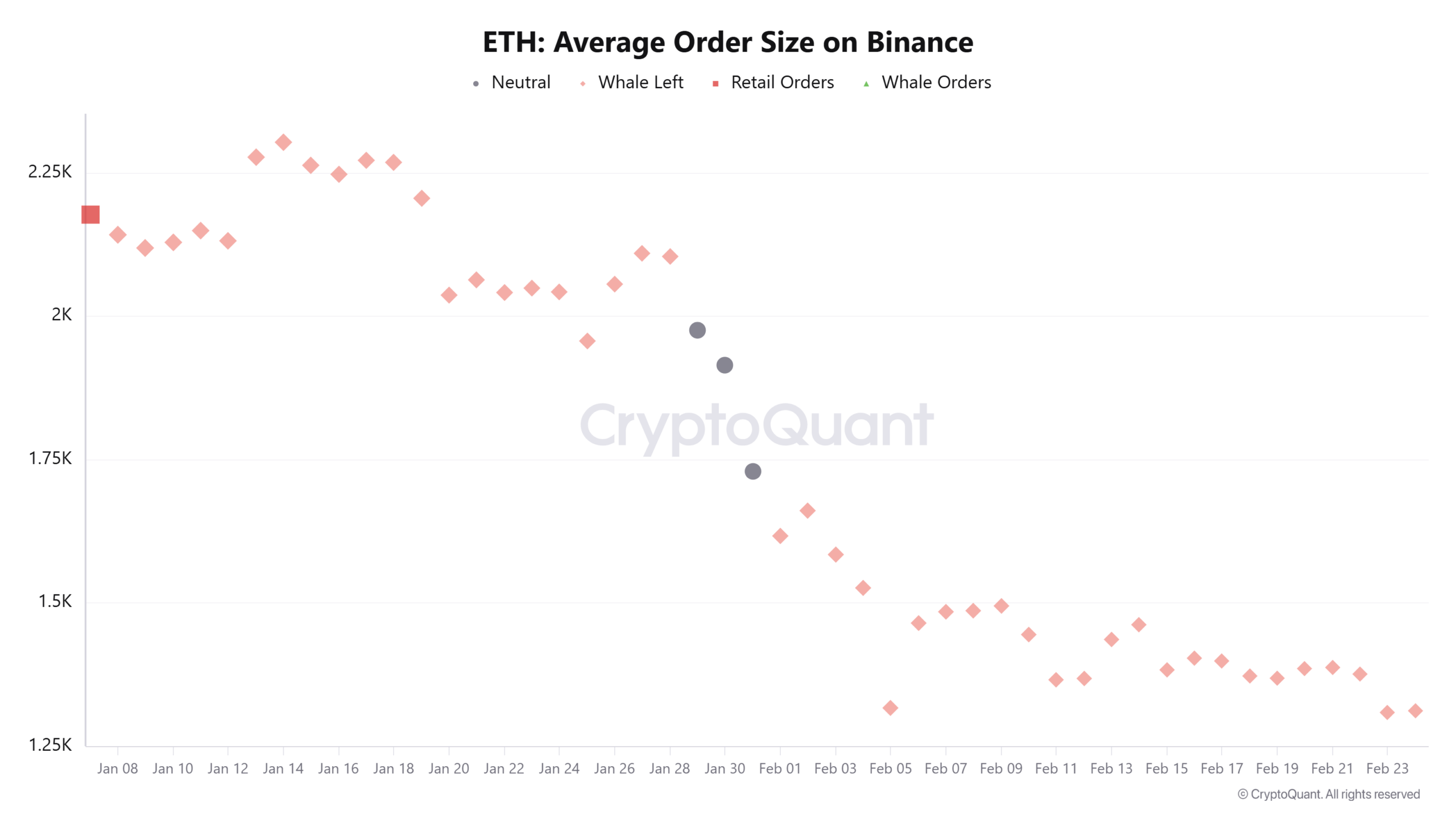
Activity from large Ether (ETH) holders on a major cryptocurrency exchange has significantly decreased since the beginning of 2026. Over the past 45 days, approximately 2 million ETH has been traded in substantial transactions, indicating a notable slowdown in whale participation. This development coincides with Ether’s ongoing struggle, as it is currently experiencing its worst weekly losing streak since 2022. The confluence of reduced exchange flow from large players and data from the futures market regarding liquidations is shaping investor sentiment and influencing expectations for both the short-term and long-term price trajectory of Ether within the broader cryptocurrency market.
Analysis of data from CryptoQuant reveals a marked decline in the average size of ETH whale sell orders executed on Binance. In recent weeks, this average has fallen to approximately 1,350 ETH, a considerable decrease from the roughly 2,250 ETH observed in early January. Factoring in an estimated daily volume of 15 to 35 whale-sized transactions, the cumulative gross sell-side turnover since January 8th is estimated to be between 1.8 and 2 million ETH over the last 45 days. At an assumed average price of $2,400 per ETH, this volume translates to a substantial gross traded value of approximately $4.3 billion to $4.8 billion in large-order executions. It is important to note that this figure represents gross traded volume and not confirmed net outflows, as a portion of these transactions may be attributed to hedging strategies or liquidity provision within the derivatives market.

Crypto analyst Darkfost has commented on this trend, suggesting that the reduction in average order size signifies a "gradual disengagement" by major market participants. According to Darkfost, while smaller traders are maintaining their usual transaction volumes, larger players are actively reducing their direct involvement with the order books. This shift has led to a temporary thinning of market depth, meaning that with fewer large orders resting on the books, Ether’s ability to absorb significant price imbalances in the short term is diminished.
In parallel to the changes in exchange flows, data on ETH accumulation addresses paints a contrasting picture. Throughout February, these addresses collectively added over 2.5 million ETH to their holdings, even as the price of Ether saw a decline of approximately 20%. The total holdings of these accumulation addresses have now risen to 26.7 million ETH, up from 22 million at the start of 2026. This steady increase in accumulation suggests that underlying demand for Ether remains robust, despite the apparent reticence of large traders on exchanges.
Ether is currently navigating its sixth consecutive week of losses, a period of sustained downward price movement that marks the longest uninterrupted weekly decline since the significant drawdown observed between March 2022 and June 2022, which spanned 10 weeks. That earlier period of losses occurred within the context of a broader bear market and ultimately preceded a cycle bottom before prices began to stabilize. While the current pullback is not as extensive as the 2022 downturn, the persistent weekly losses highlight sustained selling pressure and a weakening momentum on higher timeframes.

Historical market cycle data indicates that if the current decline persists, a significant weekly demand zone between $1,384 and $1,691 could come into focus. This price range previously acted as a key accumulation area during the initial stages of the rally in 2023, suggesting it may attract buying interest once again if prices fall to those levels.
Further insights can be gleaned from futures market liquidation data. Analysis from Coinglass reveals that over $2 billion in short positions are concentrated around the $2,000 mark. This cluster of short liquidations creates a significant liquidity pocket that could potentially act as a near-term magnet for Ether’s price, drawing it towards that level. Conversely, on the downside, approximately $682 million in long positions are at risk if Ether were to fall to $1,600. This indicates a comparatively thinner liquidity pool on the downside compared to the upside liquidation cluster.
Crypto trader RickUntZ has expressed a view that a V-shaped rebound from current levels remains a possibility, citing indicators of underlying demand within the existing market structure. For the immediate future, however, the data suggests that the $2,000 liquidation band represents the next key resistance level that Ether must overcome.

The Ethereum Foundation has recently commenced staking its ETH holdings, a development that occurs amidst ongoing concerns regarding client diversity within the Ethereum network. This move by the foundation may have implications for network security and decentralization, although its direct impact on short-term price action is yet to be determined.
This article does not constitute investment advice or recommendations. All investments and trading activities carry inherent risks, and readers are advised to conduct their own thorough research before making any decisions. While efforts are made to ensure the accuracy and timeliness of information presented, Cointelegraph does not guarantee the completeness or reliability of any data within this article. This report may contain forward-looking statements subject to various risks and uncertainties. Cointelegraph disclaims liability for any losses or damages incurred due to reliance on the information provided herein.