 11
11 1
1 2
2 3
3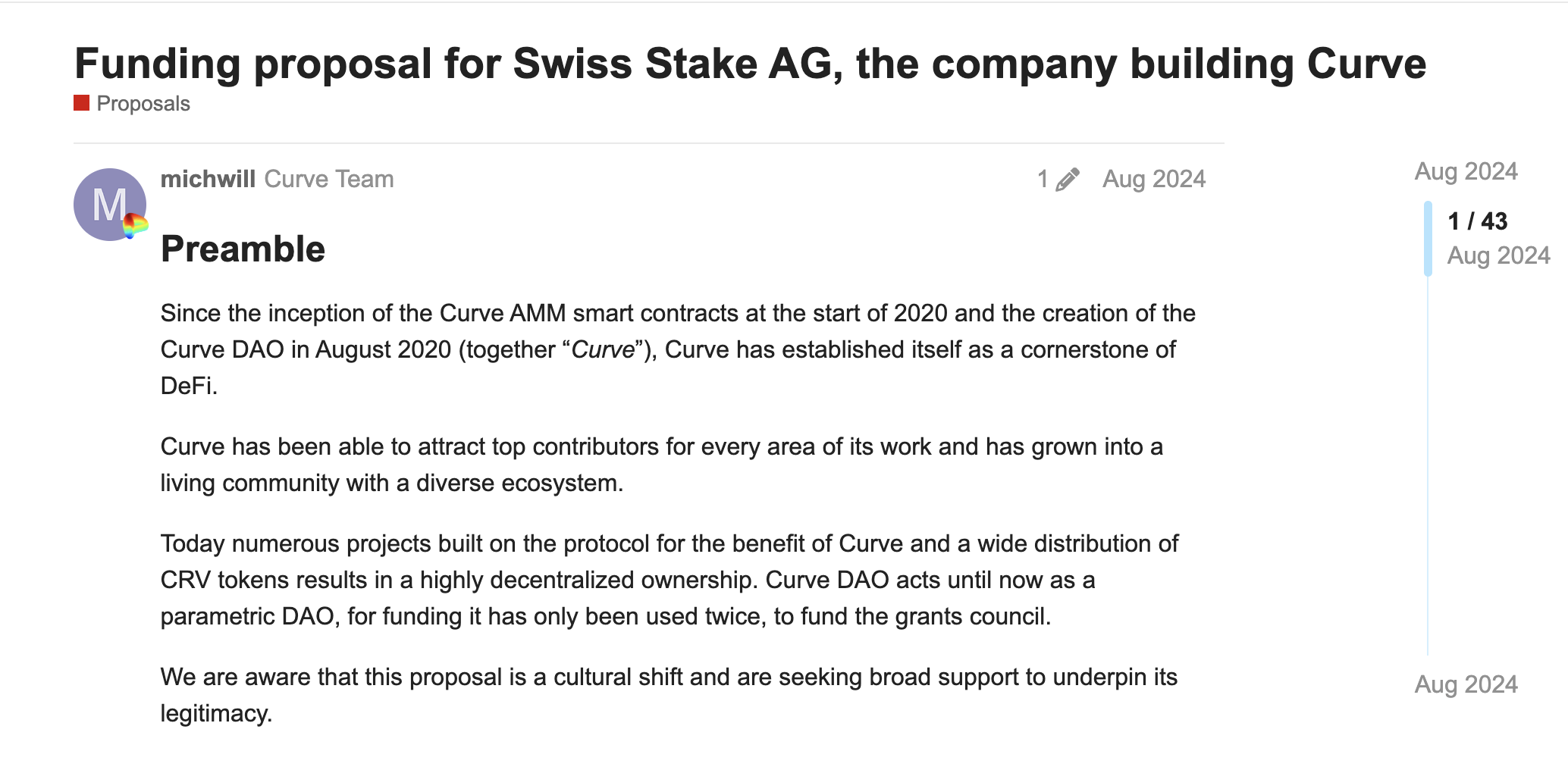
Disagreements within a decentralized autonomous organization (DAO) are not a sign of dysfunction, but rather a key indicator of a healthy and engaged community, according to Dr. Michael Egorov, the founder of the prominent decentralized finance (DeFi) platform Curve Finance. DAOs, by their very nature, represent a novel organizational paradigm, relying on smart contracts to automate operational functions and collective member voting to govern on-chain protocols. Egorov’s perspective, shared in a recent interview with Cointelegraph, highlights the inherent value of debate and dissent in the maturation of these decentralized structures.
Egorov pointed to two recent significant events within the DAO space – a 2024 governance proposal concerning the Curve DAO and a recent dispute within the Aave DAO – as prime examples illustrating the vital role of disagreements in maintaining the vitality and effectiveness of these organizations. He elaborated on this crucial point, stating, "If everyone automatically agrees on something, it feels like people just don’t really care. They vote for whatever comes in, or they don’t participate at all. The first sign of that would be governance apathy, like when people are not voting at all." This sentiment underscores the risk of complacency in decentralized governance, where a lack of active participation can lead to a concentration of power and a departure from the core principles of decentralization.
The earlier Curve DAO matter Egorov referenced involved a significant 2024 governance proposal that sought to allocate a grant of approximately $6.3 million (valued at the time) to Swiss Stake AG, the primary development company responsible for the Curve Finance protocol. This proposal, intended to fund ongoing development and innovation, encountered considerable pushback from a substantial segment of the Curve DAO membership. The robust debate and opposition demonstrated that the community was actively scrutinizing proposals, engaging in critical analysis, and voicing their concerns, a characteristic Egorov views as a positive sign.
The initial proposal, while sparking significant discussion, was subsequently revised and resubmitted in December 2025. This amended proposal, designed to address the concerns raised by the community, garnered a remarkably high level of engagement, with over 80% of DAO members participating in the vote. This increased turnout and the successful revision of the proposal further validate Egorov’s assertion that healthy disagreement can lead to more robust and community-aligned outcomes.
To contextualize the importance of such engagement, Egorov referenced an analysis conducted by blockchain development company LamprosTech in the previous year. This analysis revealed a concerning trend across the broader DAO landscape, noting that "Voter turnout in most DAOs rarely passes 15%, concentrating decision-making power in the hands of a small, active group." The significantly higher turnout for the revised Curve proposal stands in stark contrast to this broader trend, indicating a more engaged and invested community. Egorov attributes this sustained engagement, in part, to the structure of Curve token ownership, where token holders are incentivized to lock up their tokens for extended periods, thereby fostering a long-term governance perspective.
Egorov views DAOs as a fundamentally new model for human organization, distinct from traditional corporate structures or nation-states, yet incorporating elements of both. He likens them to a form of sovereign entity, complete with diverse "political parties" – represented by different factions and viewpoints within the DAO – that actively debate and advocate for various approaches to governing the protocol. This internal discourse, he argues, is essential for the adaptive and resilient functioning of decentralized systems.
The Aave DAO dispute, which erupted in December 2025, provides another compelling illustration of these governance dynamics and the complex challenges inherent in on-chain governance, particularly concerning intellectual property rights. The dispute arose between Aave Labs, the core development company behind Aave products, and the Aave DAO itself, concerning the distribution of fees generated from Aave’s integration with the DeFi exchange aggregator CoW Swap.

Members of the Aave DAO expressed significant criticism regarding the decision for fees from this integration to be directed solely to a wallet controlled by Aave Labs. This generated a heated debate over the rightful ownership and control of intellectual property and revenue streams generated within the decentralized platform. The community’s pushback led to the submission of a proposal aimed at transferring control of Aave’s brand assets and intellectual property to the DAO. However, this proposal ultimately failed to pass, highlighting the complexities and potential for contentious outcomes even within a seemingly engaged community.
Egorov also touched upon the broader legal and structural challenges faced by DAOs in interacting with the traditional world. He stated that DAOs often struggle to engage with real-world assets and legal frameworks without established legal structures, such as business entities or bank accounts. The issue of DAO control over intellectual property, as seen in the Aave dispute, is a recurring governance challenge. While DAOs are exceptionally well-suited for governing on-chain assets and protocols, Egorov suggests that experimenting with DAOs for off-chain elements presents greater complexities, and in some instances, centralized companies may remain a more practical solution for managing such structures.
The path towards mitigating governance disputes, Egorov believes, lies in the legal recognition of DAOs. If DAOs were legally recognized entities, capable of owning business entities and operating bank accounts, it could significantly streamline their interactions with the traditional financial system and potentially alleviate many of the governance conflicts that arise from their current legal ambiguity. He noted that the legal system is still playing catch-up with the rapid advancements in blockchain technology and decentralized organizational structures. The evolution of legal frameworks to accommodate DAOs is crucial for their long-term stability and their ability to fully realize their potential as a transformative model for organization and governance in the digital age.