 11
11 1
1 2
2 3
3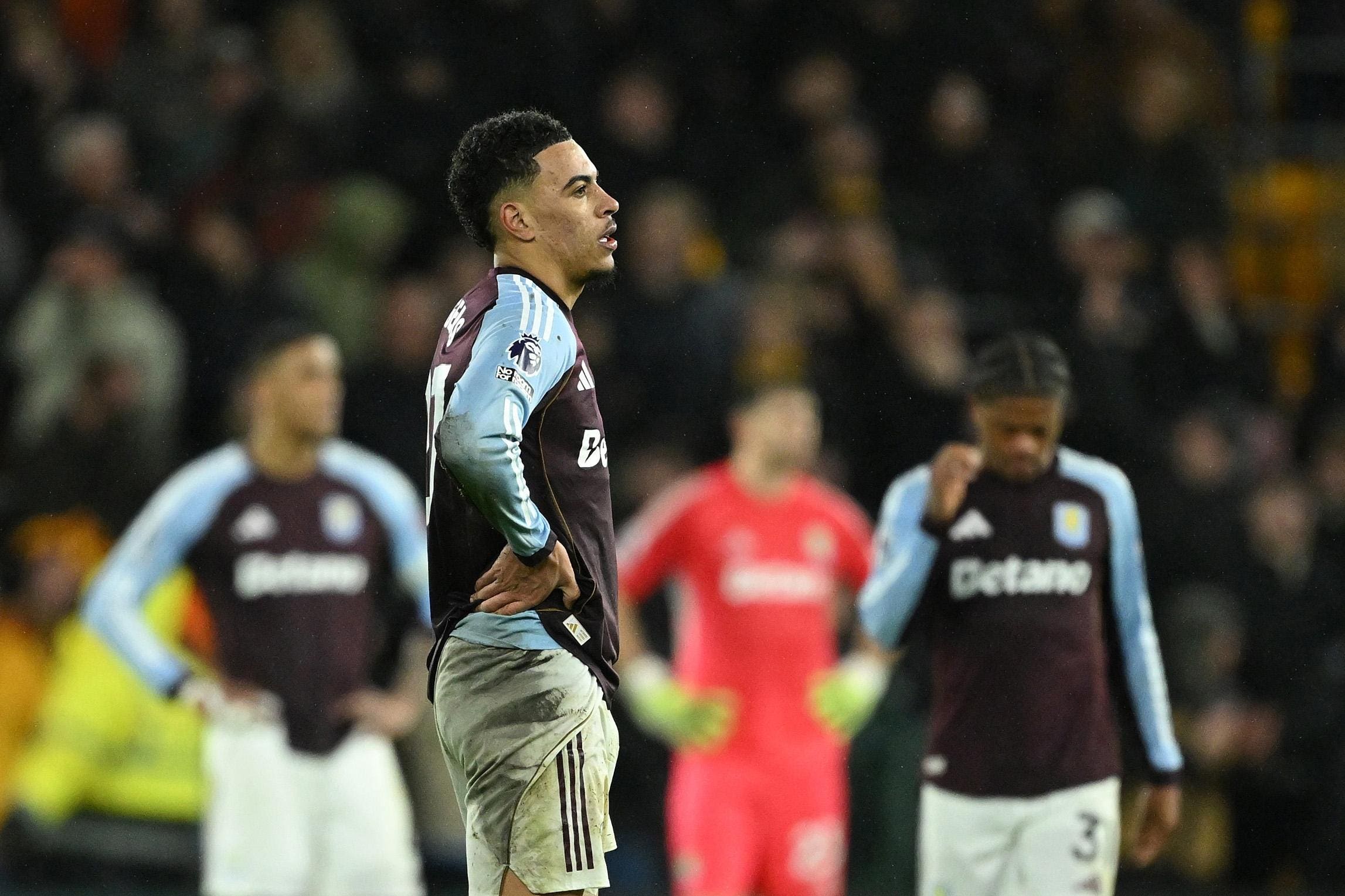
The narrative surrounding Aston Villa’s audacious pursuit of the Premier League title experienced a dramatic recalibration, with many arguing that the dream began to unravel not on the pitch, but metaphorically, within the confines of the Emirates Stadium locker room back in December. This pivotal moment marked a significant turning point in a season that has been nothing short of a rollercoaster for the Birmingham club and its fervent fanbase.
Leading up to their crucial December clash against Arsenal, Aston Villa was riding an unprecedented wave of success. Under the shrewd management of Unai Emery, the team had forged an enviable reputation, boasting a club-record 11-match winning streak across all competitions. This remarkable run had not only seen them ascend to third place in the Premier League table but had also positioned them perilously close to the then-first-placed Gunners. The footballing world was abuzz with speculation, as Villa, once considered an outside bet for European qualification, now found themselves firmly in the conversation for the ultimate domestic prize. Arsenal, acutely aware of Villa’s formidable form, knew they were facing a side brimming with confidence and intent.
Just a few weeks prior to this high-stakes encounter, Aston Villa had already laid down a significant marker by defeating Arsenal 2-1 in the reverse fixture at Villa Park. That dramatic last-minute goal, which ultimately sealed the victory, was seen as a crucial blow in shaping the early stages of the title race and undeniably added an extra layer of psychological weight to the upcoming Emirates meeting. Villa arrived in North London not just as challengers, but as a team that had already proven their mettle against the league leaders.
For the initial 45 minutes of the game at the Emirates, there were palpable signs that Villa might once again defy expectations and cause a significant upset. Striker Ollie Watkins, who had returned to the starting lineup after a brief spell on the bench, found himself repeatedly exploiting gaps in the Arsenal backline. His runs in behind the defence created several promising opportunities, putting the Gunners’ rearguard under considerable pressure. However, despite his persistent efforts, Watkins’ decision-making in the final third lacked the clinical edge required, and Villa ultimately failed to capitalize on these crucial early chances.
This inability to convert promising situations would prove to be immensely costly. In the second half, the game’s dynamic shifted decisively when Arsenal broke the deadlock following a costly mistake by Villa’s usually reliable goalkeeper, Emiliano Martínez. This error opened the floodgates, and three further goals swiftly followed, compounding Villa’s woes. The brutal 4-1 defeat served as a harsh wake-up call, shattering the nascent dreams of a title challenge that had begun to blossom among the supporters. The result was more than just a loss; it marked a definitive turning point, signaling a new, more pragmatic phase for both the team and its passionate fanbase.
In the immediate aftermath of the crushing defeat, manager Unai Emery, ever the pragmatist, was keen to offer a balanced perspective on what his team had achieved up to that point. His post-game comments underscored his philosophical approach to the season. "So, so proud of everything we are doing," Emery stated, emphasizing the collective effort. "So, so proud with the players, how we achieved, until now, 39 points, and how we are being ambitious and as well realistic."
Emery continued to articulate his vision, highlighting the team’s ongoing development: "We are realising every match we are playing, how we can exploit our potential and how we can get and set our target each match. The league is the most difficult league in the world and there are 17 contenders at the beginning of the season to be in the top seven, and then we are trying always to beat some of them. Until now, we are doing [that], but the challenge we have is clear: try to keep the same consistency, the same demands we have, being ambitious with our supporters… and of course try to support the players and give the players the energy we need." His words, while acknowledging the setback, subtly aimed to temper the burgeoning expectations while still fostering a sense of ambition within the squad.
Given these shifting circumstances and the heightened public discourse, Emery frequently found himself in the unusual position of having to actively play down talk of a title challenge on multiple occasions. He meticulously attempted to strike a delicate balance between fueling ambition within his squad and managing the often-unrealistic expectations of the supporters and media. This approach became a hallmark of his management style during Villa’s remarkable ascent.

However, the definitive end to the title dream was arguably cemented later in the season. At the end of February 2026, Aston Villa suffered a shocking defeat to Wolverhampton Wanderers, the Premier League’s bottom club, in a match held at Molineux. The image of Morgan Rogers of Aston Villa looking dejected after this loss on February 27, 2026, became an emblem of the team’s dashed hopes. After this unexpected setback, Emery admitted with candor that while the title had once been a conceivable target, it was now unequivocally unrealistic.
"We are losing the opportunity to win the title in the Premier League, two months ago we were competing with Arsenal and Manchester City, you were asking me about it," Emery reflected post-match, his tone tinged with a blend of frustration and realism. "Someone, even myself, may say ‘maybe we can’. Some supporters, maybe they were dreaming it. Now we are not with the possibility to fight for the Premier League, some can feel frustrated, even myself because I have my dreams."
The manager then provided a stark timeline of his own evolving expectations throughout the turbulent season. "In September I was worried and the objective was to stay in the Premier League. In December I was so happy and excited to get the top-five position and achieve the Champions League. One month ago I was dreaming about maybe winning the Premier League. Now we are in the average to be in the top five." He also acknowledged the intensifying competition from other traditional powerhouses: "Liverpool, Chelsea, Manchester United, they are trying to get to us, for them it is a priority to get into the Champions League." This statement underscored the relentless nature of the Premier League and the constant pressure from clubs with significant resources and historical pedigree.
As Emery himself suggested, the season had truly been a rollercoaster ride for Aston Villa fans. It began with a period of uncertainty and struggle, only for the team to embark on a remarkable and unforeseen turn of form that ignited an improbable title tilt, making the entire journey unpredictable from its very outset.
Yet, it is crucial to remember that, as was repeatedly highlighted by astute pundits and analysts even during the club’s remarkable winning streak, the underlying statistical numbers consistently indicated that the side would eventually experience a dip in form. These experts often pointed to the significant number of long-range efforts Villa had successfully converted, explaining that such goals are statistically harder to maintain and convert consistently, especially when analyzed through the lens of the expected goals (xG) metric. Expected goals measures the probability of a shot resulting in a goal based on various factors such as shot location, body part, and type of assist. Villa’s high conversion rate from low-xG chances was seen as an outlier that was unlikely to be sustained.
Such analytical scrutiny, while rooted in data, understandably grated on the players who were actively defying those statistics on the pitch. One such player, Morgan Rogers, who had notably rifled home several impressive long-range goals during Villa’s purple patch, expressed his frustration with the perceived undermining of their achievements. "It feels like a crime – I’m scoring and xG is putting me down," he reportedly remarked, capturing the sentiment of many players who felt their skill and deliberate tactics were being overlooked. Rogers further revealed that these long-range attempts were not merely opportunistic, but a deliberate tactical instruction: "The manager always said to our midfielders last season, ‘I’m still waiting for goals from the edge of the box’." This insight underscored that Villa’s approach was a conscious strategy, not just a series of fortunate strikes.
However, as unexciting as the cold, hard facts of statistics might be for emotionally invested fans, the truth is that those underlying numbers have, in recent weeks, caught up with Aston Villa. This convergence of performance with statistical prediction serves to underline the critical importance of advanced metrics and data analysis to the broader picture of modern football, demonstrating that sustained overperformance against xG is an anomaly rather than a new norm.
With this newfound context and a more grounded understanding of their capabilities and the relentless demands of the Premier League, the pertinent question now facing Unai Emery and his squad is whether they possess the mental fortitude, tactical discipline, and physical resilience to maintain their position at the upper echelons of the table, particularly in the race for coveted European qualification spots. The title dream may have faded, but the challenge to secure a place among Europe’s elite remains fiercely alive.