 11
11 1
1 2
2 3
3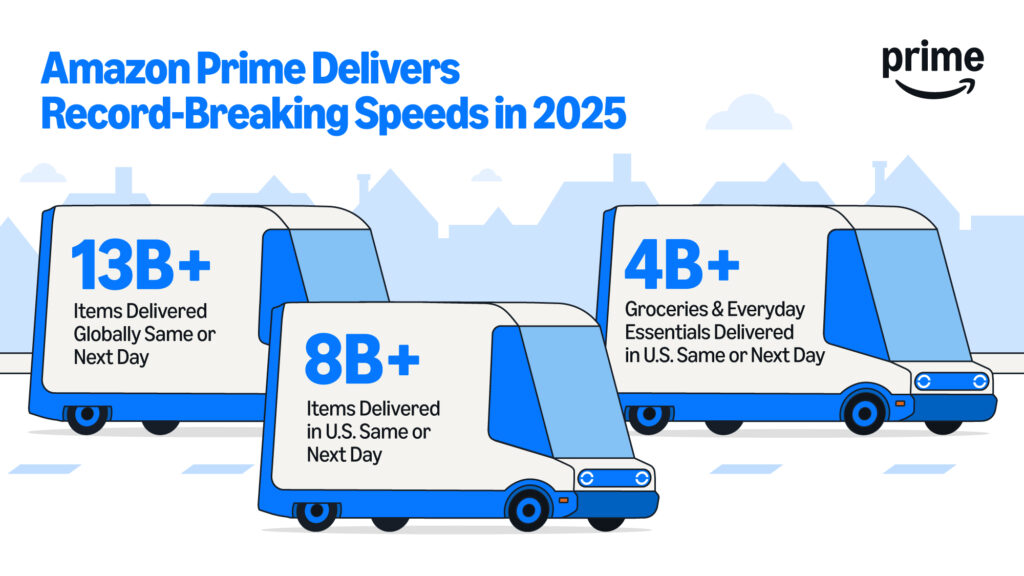
Amazon has announced a significant expansion of its Prime delivery services, highlighting record-breaking speeds and an unprecedented reach into rural communities. In 2025, Prime members in the United States received over 8 billion items through same-day or next-day delivery, marking a substantial increase of more than 30% compared to the previous year. This rapid delivery service translated into tangible savings for members, with an estimated average of $550 saved per member on fast, free delivery last year alone, a figure nearly four times the annual cost of a Prime membership.
On a global scale, Amazon’s commitment to swift delivery was even more pronounced. The company reported that over 13 billion items were delivered same or next day worldwide in 2025. This achievement was detailed in a press release issued by Amazon on February 3rd, underscoring the company’s ongoing investment in its logistical infrastructure and delivery capabilities.
A key area of expansion highlighted by Amazon is its enhanced reach into more rural areas. The company has extended its Prime Same-Day and Next-Day Delivery services to over 4,000 smaller cities, towns, and rural areas across 44 states. This expansion was facilitated through a strategic transformation of existing rural delivery stations. These facilities have been repurposed into hybrid hubs, designed to serve multiple functions and efficiently manage deliveries in less densely populated regions.
This innovative approach to rural delivery is underpinned by a substantial investment of $4 billion by Amazon into its rural delivery network. The company stated that this investment has made a wide assortment of products, including essential everyday items such as coffee, paper towels, and batteries, available for Prime Same-Day and Next-Day Delivery in many areas for the first time.

The impact of this enhanced delivery capability in rural areas has been significant. The ability for customers to receive everyday essentials within hours has proven to be increasingly popular, with these items now constituting 49 of the top 50 most-repurchased products in these regions. The customer response has been overwhelmingly positive, as evidenced by the near doubling of the average number of monthly Same-Day customers in rural areas during 2025 compared to the year prior.
Amazon also drew a direct comparison between its Prime delivery service and traditional large retail chains. The company asserted that millions of items are available for Prime delivery as fast as the same day in the US, a selection that is "up to 40 times the selection of a typical big box retail store." This statement emphasizes the breadth of product availability and the speed of delivery that Amazon offers through its Prime membership.
While Amazon’s Prime service continues to grow and evolve, it operates within a competitive landscape. Notably, Walmart launched its own membership program, Walmart+, in September 2020, introducing a similar model that aims to provide customers with benefits including fast, free delivery and other perks. The ongoing competition in the e-commerce and delivery space continues to drive innovation and investment from major players in the industry.
The company’s investment in its delivery network extends beyond just speed and selection. Amazon has also focused on optimizing its logistics to ensure reliability and efficiency. This includes the development of advanced sorting centers, the deployment of a vast fleet of delivery vehicles, and the utilization of cutting-edge technology to manage inventory and delivery routes. The goal is to minimize delivery times while maintaining a high standard of service, even in challenging geographical areas.
The expansion into rural areas is particularly noteworthy. Historically, providing rapid delivery services to remote locations has been a logistical hurdle for many companies due to factors such as lower population density, longer travel distances, and less developed infrastructure. Amazon’s strategy of transforming existing facilities into hybrid hubs suggests a creative solution to overcome these challenges. By consolidating functions and leveraging existing resources, the company appears to be finding ways to make same-day and next-day delivery economically viable and operationally efficient in these markets.

The emphasis on everyday essentials being a key driver of repeat purchases in rural areas indicates a shift in consumer behavior and expectations. As Prime delivery becomes more accessible and reliable in these communities, residents are increasingly relying on online platforms for their regular shopping needs. This trend not only benefits Amazon by increasing customer loyalty and purchase frequency but also provides significant convenience for rural consumers who may have limited access to a wide variety of brick-and-mortar stores.
The comparison to big box retail stores also highlights a fundamental shift in the retail landscape. Traditional retailers have long relied on large physical store footprints to offer a wide selection of products. Amazon’s claim suggests that its online platform, coupled with its sophisticated delivery network, can now offer a comparable or even superior selection, delivered directly to customers’ doors with remarkable speed. This competitive advantage is a key component of Amazon’s strategy to attract and retain Prime members.
The success of Prime delivery is intricately linked to Amazon’s overall e-commerce strategy. By offering fast and free delivery as a core benefit of Prime membership, Amazon incentivizes customers to consolidate their shopping on its platform. This increased customer engagement translates into higher sales volumes, which in turn allows Amazon to further invest in its logistics and technology, creating a virtuous cycle of growth and improvement.
Looking ahead, the continued expansion and enhancement of Prime delivery services are likely to remain a top priority for Amazon. As consumer expectations for speed and convenience continue to rise, the company’s ability to deliver on these demands will be crucial to maintaining its market leadership. The ongoing investment in rural delivery infrastructure and the pursuit of new logistical innovations signal Amazon’s commitment to reaching an ever-wider customer base with its fast and efficient delivery services. The company’s ability to consistently meet and exceed delivery expectations will be a key determinant of its future success in the dynamic and competitive e-commerce market.