 11
11
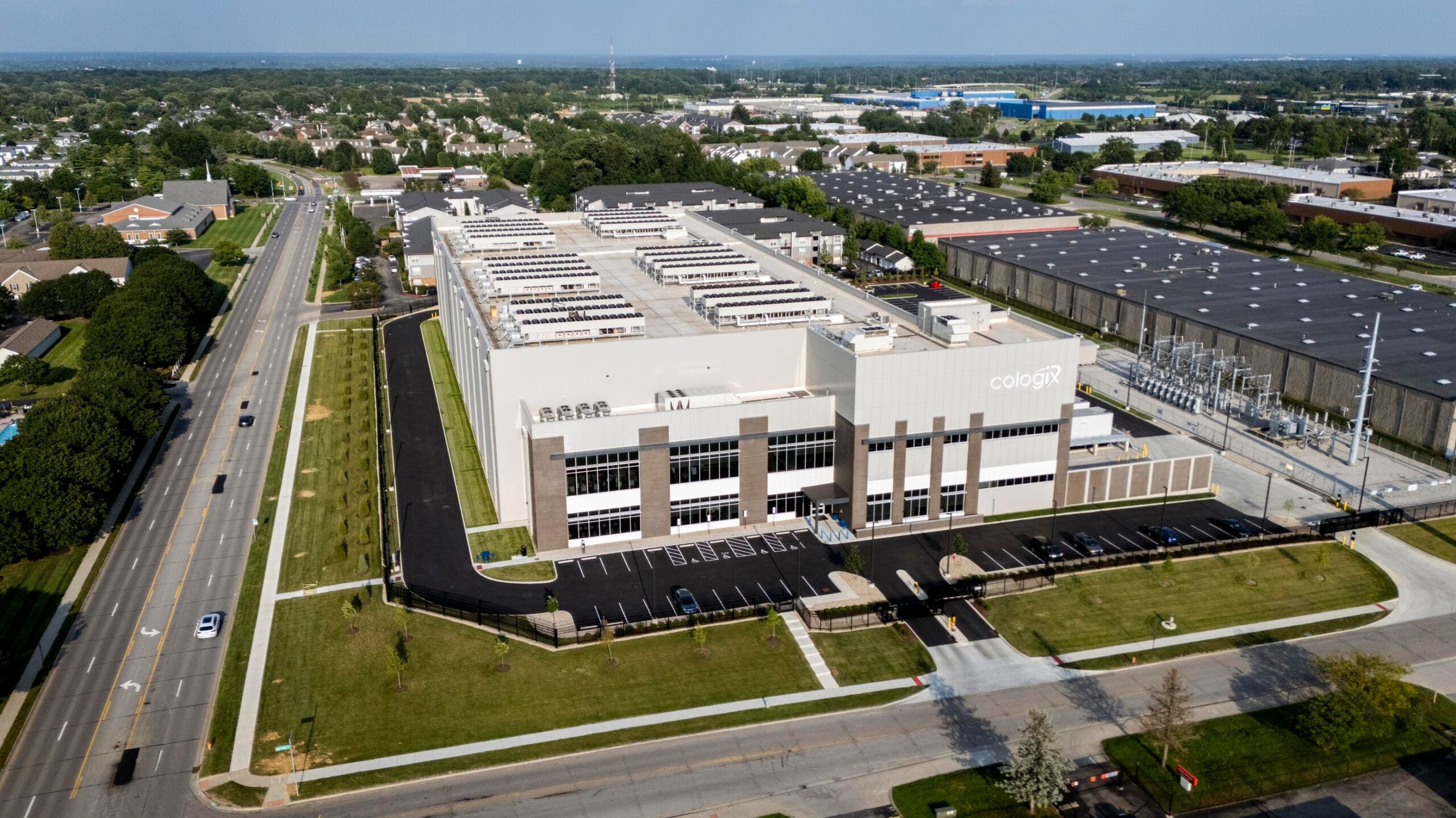
Artificial intelligence is rapidly reshaping the global energy landscape, compelling utility operators and policymakers into urgent collaboration to address a looming energy dilemma: how to manage the escalating electricity demand from a proliferating network of data centers. This surge in consumption is creating a fundamental contradiction between political objectives and market realities, impacting everything from consumer electricity bills to national security.
The heart of the challenge lies in the insatiable energy appetite of AI data centers. Take, for instance, the COL4 AI-ready data center in Columbus, Ohio. Captured in an aerial view on July 24, 2025, this facility spans an impressive 256,000 square feet and is equipped with 50 megawatts (MW) of power across three data halls. Strategically located on a seven-acre campus at the convergence point of long-haul and regional carrier fiber networks, COL4 exemplifies the scale of modern AI infrastructure. Such centers are crucial for training and operating sophisticated AI models, tasks that demand immense electricity, compounded by the need for advanced cooling systems to prevent overheating. These energy-intensive operations are raising concerns among consumers and industry analysts that new AI data centers are directly hiking up electricity rates. To encourage development, the Ohio Tax Credit Authority has offered significant sales tax exemptions and incentives for new AI data centers in the state, highlighting the dual pressure of fostering technological growth while managing its energy footprint.
This burgeoning demand clashes with a significant political divergence. The Trump Administration advocates for traditional baseload fuels like coal, natural gas, and nuclear power to spearhead energy production. However, the modern grid, especially when facing rapid demand spikes, "screams for speed," as experts note. This translates to a need for resources that can be brought online quickly and cost-effectively to keep prices down, primarily solar and wind energy—the very resources that constitute the vast majority of projects currently awaiting interconnection to the grid.
"We have an administration hostile to clean energy: when you have rising demand, and you are not allowing the supply to increase, prices are going to go up. And right now, the administration is restricting new supply—the most quickly available new energy. The natural gas supply chain is constrained. The interconnection queues are full of solar and energy storage," stated Sean Gallagher, senior vice president of policy for the Solar Energy Industries Association (SEIA), during a symposium at the Intersolar and Energy Storage North America conference in San Diego. His comments underscore the bottleneck created by policy decisions that favor slower-to-deploy energy sources over agile renewables.
Solar power, in particular, remains among the cheapest sources of electricity. According to the Energy Information Administration (EIA), unsubsidized utility-scale solar—encompassing costs from construction to operation and decommissioning, known as ‘levelized costs’—is often less expensive than fossil fuels. Despite this economic advantage, regulatory hurdles and political opposition continue to impede its widespread deployment.
The consequence of this policy-demand mismatch is effectively a "data center tax" on consumers. AI’s escalating energy demands, coupled with the administration’s stance on blocking fast-build renewables, are exerting upward pressure on electricity bills. Average family electricity costs have already been climbing, reflecting the inherent expenses of maintaining grid stability during peak periods, such as summer heatwaves. The full operationalization of these new data centers is anticipated to exacerbate this pressure significantly. Analysts project that this capacity spike could add 10–20% to the average electricity bill in the 13 states comprising the PJM Interconnection—a regional grid serving approximately 65 million people across the Mid-Atlantic, Midwest, and parts of the South.
Utilities are currently engaged in a race to build infrastructure to meet a projected 90,000 megawatts of peak-load growth through 2030 within the PJM region alone. However, this aggressive build-out carries a risk: if technological advancements lead to more efficient microchips that drastically reduce AI’s energy footprint, customers could be left with the burden of "stranded costs"—expenses tied to expensive infrastructure built for demand that never fully materialized.
This predicament is further compounded by the Trump administration’s overtly adversarial stance toward green energy. On Day One of a potential second term, Donald Trump has signaled his intention to issue an executive order freezing onshore and offshore wind energy projects. Echoing this sentiment, the Department of the Interior has already officially paused construction on five major offshore wind projects, citing them as a national security risk. Industry analysts estimate that these combined efforts could jeopardize 6 gigawatts of utility-scale power, creating substantial uncertainty for investors and developers. Trump’s public rhetoric, often articulated on platforms like Truth Social, where he refers to wind and solar as a "scam" and claims states relying on "WINDMILLS and SOLAR" face "RECORD BREAKING INCREASES IN ELECTRICITY AND ENERGY COSTS," profoundly shapes federal permitting decisions, funding priorities, and investor confidence across the entire energy sector.
A Generation Gap In The Making
The push for traditional energy sources, juxtaposed with the rapid deployment of AI data centers, is creating a dangerous "generation gap" in power supply. Trump’s call for fast-tracking large, 24/7 power plants, while seemingly a solution, overlooks the reality that such facilities typically take 5 to 10 years to construct. In stark contrast, data centers are coming online within 24 months. This mismatch between when new power is critically needed and when the administration’s preferred sources can actually deliver it poses a significant threat to grid reliability and economic stability.
The PJM Capacity Auction vividly illustrates this impending crisis. This auction functions as a massive "insurance premium" that customers pay to ensure the lights stay on during periods of peak demand. Imagine the electricity grid as a stadium, rarely at full capacity. However, during events like the Super Bowl—representing peak demand—every seat is taken. The "capacity market" is what consumers pay to keep those "extra seats" built and maintained, even when they’re mostly empty.
In a year-end auction that sent shockwaves through the industry, PJM’s capacity prices hit a record ceiling of $333.44 per megawatt-day—a staggering 12-fold increase from just two years prior. The region found itself short of more than 6,600 megawatts of available capacity, highlighting the severity of the supply crunch. Before this crisis, that same ‘seat’ cost approximately $28. Concurrently, data centers are demanding huge blocks of power, prompting PJM to revise its peak demand forecast upward by more than 5,200 megawatts. Critically, utilities do not absorb these heightened costs; they pass them directly through to homeowners and businesses, creating a direct impact on household budgets and operational expenses for companies.
The financial implications of this energy crunch have not gone unnoticed. In December 2025, the U.S. Senate Banking Committee launched an investigation into how Wall Street is "cashing in" on the AI boom. In a series of letters addressed to investment giants BlackRock and Blackstone, Senators Elizabeth Warren, Bernie Sanders, and Richard Blumenthal specifically targeted the "golden age" of utility acquisitions by private equity firms. They argued that private equity’s increasing control of the grid risks turning the AI revolution into a substantial wealth transfer from everyday ratepayers to institutional investors, exacerbating affordability concerns.

"Affordability is really the watchword of the day, and we are really hammering that home, including an engagement with the administration," commented JC Sandberg, chief policy officer of American Clean Power, at the solar industry event. This sentiment reflects a broader recalibration in the national energy discussion. In the current political climate, the discourse has shifted from climate change to the more immediate and tangible concerns of affordability, reliability, and resilience. When electricity demand surges and prices climb, the most persuasive argument becomes cost stability and the ability to keep the lights on.
"Our goal is 100% clean energy. Period. But it is not what we are talking about right now. Rates are going up. The rate of increase is outpacing inflation, and state leaders in red and blue states are feeling the heat," emphasized Heather O’Neill, CEO of Advanced Energy United, during the same discussion. This pivot underscores the practical realities faced by politicians and consumers alike.
Is Restraining Renewables Wise?
While renewables are not a "silver bullet"—they require significant investment in storage and transmission expansion, and system integration adds complexity—they represent the fastest arrow in the energy quiver for rapid deployment. The more pertinent question in the current demand cycle is not merely which resource boasts the lowest levelized cost on paper, but which portfolio can deliver reliable megawatts at scale, quickly enough to prevent price spikes and volatility. In this critical aspect, green energy sources are demonstrably the fastest to market. However, regulatory uncertainty, stemming from conflicting federal policies, severely complicates this equation. Industry estimates suggest that roughly 78 gigawatts of wind and solar projects have been directly affected by federal policy constraints, languishing in permitting queues.
For investors and utilities, such uncertainty raises the cost of capital and significantly slows deployment decisions, leaving critical infrastructure projects in limbo at a time when speed and flexibility matter most. The image of workers installing solar panels atop AltaSea’s research and development facility in Los Angeles on April 21, 2023, symbolizes the potential for rapid, decentralized energy solutions that can bolster resilience and reduce reliance on a centralized grid.
Energy storage, particularly long-duration batteries, is increasingly framed not merely as a climate instrument but as a vital hedge against volatility. By enabling the shifting of excess midday generation from intermittent renewables to evening demand peaks, battery storage reduces reliance on expensive natural gas peaker plants. The good news is that the Electric Power Research Institute (EPRI) predicts the cost of long-duration energy storage will drop by a substantial 47% by 2030, with batteries capable of delivering 8 hours of power—and potentially more—becoming increasingly viable.
"What’s driving that? Scaling new tech. We’re seeing these extreme weather events, and we need to build resiliency. We need storage for these bigger projects to happen," explained Anna Siefken, director of policy and markets for the Long Duration Energy Storage Council, to the conference audience. This highlights the growing recognition of storage as an essential component for a modern, resilient grid.
The Coal Question
The question of coal, while politically charged, remains financially straightforward. The Trump administration has moved to eliminate the "Endangerment Finding"—the 2009 EPA determination that greenhouse gases endanger public health and welfare. Eliminating this finding would dismantle the legal foundation for most federal climate regulations, potentially paving the way for a resurgence of coal. However, coal releases roughly twice as much carbon dioxide (CO2) as natural gas when burned, posing significant environmental and health challenges.
Economically, much of the existing coal fleet is more than four decades old. Operations and maintenance costs inevitably rise with age, and environmental-compliance retrofits require substantial capital outlays that must compete with newer, more efficient alternatives. Extending the life of these old assets, while potentially preserving short-term reliability, comes at the opportunity cost of investing in modern, efficient assets. Put simply: keeping old coal plants alive costs money that could be more effectively used to build faster, cheaper, and cleaner alternatives.
In the end, the defining feature of this moment is not ideology but rather the stark realities of load growth and time-to-market. Artificial intelligence, broader electrification trends, and industrial expansion are fundamentally reshaping electricity demand curves. Capital will inevitably flow toward the technologies that can scale most effectively under these conditions. The unresolved question is whether policy will facilitate that scaling—or constrain it at precisely the time flexibility matters most.
The Strategic Cost Of A Stalled Grid
As of February 28, 2026, the global energy landscape has taken on an even more critical dimension. With the launch of Operation Epic Fury—the large U.S.-Israeli air strikes against Iran—the ‘affordability’ of the American power grid has transitioned from a domestic economic issue to a frontline national security concern. As Tehran vows retaliation and the threat of global cyber warfare looms, the U.S. finds itself sitting on a massive, untapped defensive asset: nearly 78 gigawatts of renewable energy projects currently stuck in permitting never-land.
This isn’t merely lost revenue; it represents a profound ‘Strategic Gap.’ A decentralized, renewable-heavy grid is inherently more resilient to cyber intrusions—as seen recently in incidents affecting Poland and Italy. By allowing these critical projects to languish in interconnection queues, the nation is not only spending more on power but is deliberately keeping its energy defenses weak at the very moment the world enters a new era of open conflict and geopolitical instability. The high voltage power lines running along the electrical power grid, as seen in Pembroke Pines, Florida, on May 16, 2024, symbolize a system strained by increasing demand from electricity-hungry data centers and electric vehicles, further exacerbated by severe weather events. The Federal Energy Regulatory Commission’s recent sweeping reform to transmission grid planning is a recognition of this urgent need to improve the nation’s aging power grid, emphasizing that a robust, resilient energy infrastructure is now paramount for both economic prosperity and national security.