 11
 1
 2
 3
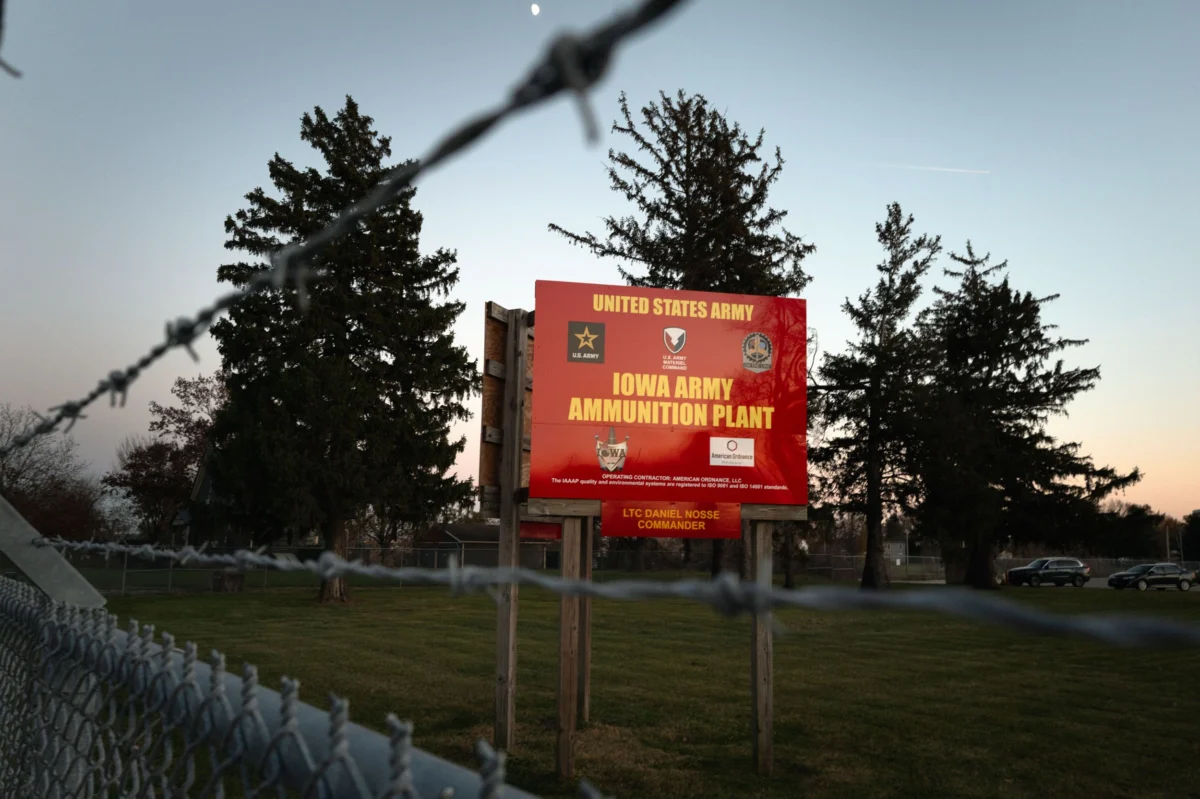
Iowa is on edge as the U.S. Army announced its intention to proceed with the detonation of 9,500 pounds of highly unstable lead azide at the Iowa Army Ammunition Plant (IAAAP) near Middletown on Wednesday, November 22, just a day before the Thanksgiving holiday. This decision comes despite a recent court order blocking the operation, with the Army invoking emergency powers, citing an "immediate risk" of self-detonation as temperatures drop. The planned explosion has ignited a firestorm of controversy, exposing significant communication breakdowns between federal authorities and state and local officials, leaving Iowans grappling with profound uncertainty about potential toxic fallout and safety protocols.
The saga began subtly on October 26, when Charles Massner, the mayor of Mediapolis, Iowa, a town situated approximately 20 miles south of the IAAAP, received an email from the U.S. Army. The message, reviewed by WIRED, vaguely described "an intentional, controlled detonation" of "a quantity of degraded lead azide… in the near future" at the plant. Crucially, the email offered no specific details regarding the detonation’s precise timing, the exact amount of material involved, or any actionable steps public officials should take to protect their communities from potential toxic fallout. Its primary request was for permission to conduct environmental testing on public lands both before and after the event, a request the town council granted during a meeting on November 2.
For weeks, silence followed. Massner recounted that the next communication arrived not as a direct warning or detailed briefing, but through a press release published on the Army’s website early last week, specifically on November 15. This announcement blindsided not only local officials but also state leadership. The press release abruptly declared that the lead azide would be exploded in a matter of days and, alarmingly, included a map depicting a reddish-yellow cloud with a hot pink border, indicating the potential exposure zone from the blast. Mediapolis was squarely within this depicted path. "There was really no communication, so to speak, other than what was on their website," Massner lamented, underscoring the profound lack of proactive engagement.
The shock resonated far beyond Mediapolis. Iowa Governor Kim Reynolds’ office confirmed that they, too, learned of the impending detonation—involving 9,500 pounds of the hazardous material—through the same November 15 press release. This revelation highlighted a systemic failure in inter-governmental communication, leaving the state’s highest office as unprepared as its local counterparts. The suddenness of the announcement, combined with the lack of prior detailed consultation, fueled widespread public anxiety and distrust.
Lead azide (Pb(N₃)₂) is a highly sensitive primary explosive, historically used in detonators and primers due to its extreme instability and ability to initiate larger explosive charges. Its degraded state, as described by the Army, implies that its chemical structure has become even more unstable over time, increasing its sensitivity to shock, friction, or changes in temperature. This heightened instability transforms it from a controlled explosive into an unpredictable and extremely dangerous substance, making its storage and handling perilous. The Iowa Army Ammunition Plant, a sprawling 19,000-acre facility near Middletown, has been a cornerstone of the nation’s defense industrial base for decades, responsible for producing, storing, and demilitarizing various munitions. The presence of such a large quantity of degraded explosive material at this facility presents a significant safety challenge.
The announcement of the Wednesday detonation, coming late Sunday night via an Army social media post, intensified the confusion and frustration. It explicitly stated the Army’s intent to proceed, bypassing a recent court order that had temporarily halted the operation. This move, leveraging emergency powers, created a vacuum of information and left countless Iowans with more questions than answers, particularly with the looming Thanksgiving holiday. The state’s unofficial subreddit became a hub for concerned citizens attempting to coordinate holiday travel and safety plans around an event whose dates had already shifted twice in the past week. The human cost of this uncertainty was palpable; one local official within the potential fallout zone told WIRED on Friday that she was evacuating the area and staying in a hotel with her immunocompromised child, illustrating the immediate, tangible fear gripping communities.
The scientific and public health implications of a lead azide detonation are significant. Peter Thorne, a distinguished professor of environmental health at the University of Iowa and a former chair of the EPA’s Science Advisory Board, found his laboratory "deluged with concerns." From pediatricians worried about their young patients to parents fearing for their children’s health, and even managers of cleaning facilities contemplating staff exposure, the inquiries poured in. Like most Iowans, Thorne’s first awareness of the explosion came from the Army’s November 15 press release. "My first reaction was, They’re going to do what?" he recounted, reflecting the widespread incredulity.
Thorne emphasized the critical health risks associated with lead exposure. When lead azide detonates, it disperses lead particles into the atmosphere, which can then settle on surfaces or be inhaled. Lead is a potent neurotoxin with no known safe level of exposure, especially for young children, whose developing nervous systems are particularly vulnerable. Exposure can lead to developmental delays, learning disabilities, and behavioral problems. While Thorne noted that any lead exposure from this specific explosion is expected to be "quite a bit lower" than exposures in communities plagued by historical industrial pollution, the fundamental principle remains: any lead exposure is a concern. The visual representation on the Army’s map—a "reddish-yellow cloud with a hot pink border" directly over Mediapolis—only amplified these fears, creating an alarming visual of contamination spreading over residential areas.
The 68 barrels of degraded lead azide have been stored at the Middletown site for more than two decades. According to a document released by the Army on November 18, the material was officially classified as hazardous waste in March, prompting officials to explore disposal methods. In a court filing published on Saturday, the Army articulated its rationale for the urgent detonation, asserting an "immediate risk" of the material spontaneously exploding once ambient temperatures drop below 30 degrees Fahrenheit. Lead azide’s sensitivity increases at colder temperatures, making self-detonation a credible threat. Consequently, the Army declared its intent to invoke emergency powers to detonate the barrels by November 24, arguing that "a controlled detonation is by far safer than an uncontrolled explosion." The Army did not immediately respond to questions from WIRED, further contributing to the information vacuum.
Despite the Army’s claim of necessity, questions have been raised about the thoroughness of its consideration of alternative disposal methods. The New York Times reported on Friday that the Army had awarded a contract in late March to a private company specializing in hazardous chemical cleanup to manage the materials onsite. However, this contract was abruptly rescinded two months later. The company informed the Times that the Army provided no reason for its change of mind, only stating through a contracting officer that the decision to pursue detonation "was not based on deficiencies" with the company’s scientific approach. This suggests a sudden, unexplained shift in strategy from a potentially safer, non-explosive cleanup to detonation.
Further insights into the Army’s decision-making process came from a letter sent by the EPA Region 7 administrator to Governor Reynolds on Friday. The letter indicated that the EPA itself only learned of the material’s dangerously degraded state in March. It also listed several disposal strategies the EPA had considered beyond detonation, including chemical cleanup, but noted that such methods also carried inherent risks of accidental explosion. This highlights the complex nature of disposing of such hazardous materials but doesn’t fully explain the sudden pivot to detonation and the subsequent lack of broad public consultation.
While the Army has a history of detonating expired munitions, the scale and public health implications of this particular operation in Iowa appear to be unprecedented. Thorne, drawing on his extensive experience in public health and environmental regulation, delivered a scathing critique of the Army’s communication strategy. He outlined what constitutes a successful public health outreach program: "You have public meetings. You answer questions. You have extensive Q&A and FAQs, and you have people speaking to why this is the only choice, what are the burdens, and some kind of a cost-benefit comparison between the options, and then you roll it out through the media, through social media, through many ways." He concluded unequivocally, "Best practice is not what they’ve done—I think this is closer to worst practice, from a public health perspective."
The Army did conduct some public meetings and communications in late October with officials in Middletown, the immediate vicinity of the explosion, and recommended temporary evacuation measures for some neighborhoods there. However, this direct outreach clearly did not extend to other potentially affected towns like Mediapolis, beyond the initial request for soil testing permissions. While the Army’s November 15 press release eventually included recommended public health measures, its delayed and impersonal dissemination failed to quell the burgeoning public alarm.
For Mayor Massner, the suddenness of the event and the alarming visuals have left an indelible mark on his community. On Friday, he stated his intention to take "standard precautions" and adhere to the Army’s public health recommendations. The situation remains fluid; changing wind forecasts could potentially shift the lead fallout zone, possibly moving Mediapolis out of the directly affected area. Yet, Massner fully grasped the widespread panic. "What people saw was the map they drew, which showed a [red] cloud going over everybody’s head. I don’t think that was the intent of the map," he mused, with a touch of wry humor. "When you see a map covered in red, you’re supposed to run for shelter immediately—your life is in danger."
As Iowans prepare for an unconventional Thanksgiving, the impending detonation of 9,500 pounds of lead azide stands as a stark reminder of the delicate balance between national security operations and public safety. The Army’s urgent need to address a dangerous chemical hazard is undeniable, but its execution has raised serious questions about transparency, accountability, and the fundamental right of communities to be informed and protected from potential environmental and health risks. The unfolding events in Iowa serve as a critical case study in disaster communication, highlighting the profound consequences when public trust is eroded by perceived federal overreach and inadequate engagement.