 11
11
Governments across Europe are grappling with a significant paradox as they strive to accelerate the energy transition: despite ambitious climate goals, many continue to tax electricity at rates significantly higher than the fossil fuels it is intended to replace. This counterintuitive policy choice is actively hindering the widespread adoption of electrified technologies, creating an uphill battle for policymakers, businesses, and consumers alike. A European Commission-commissioned study by Trinomics in 2018 (published 2020) highlighted this disparity, revealing that electricity is taxed at roughly twice the rate of natural gas in the median EU country, and a staggering four and a half times the rate when the bloc’s full tax take is aggregated. This fiscal imbalance casts a long shadow over the continent’s electrification ambitions, even as the urgency to decarbonize intensifies.
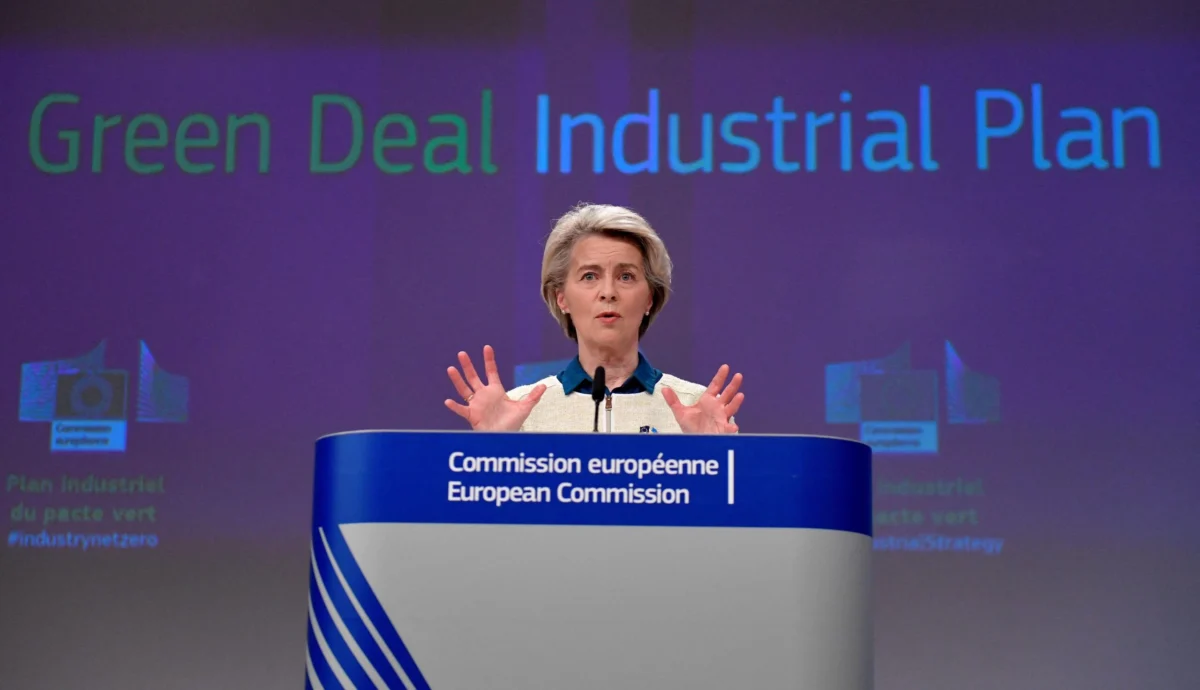
The European Union, under the leadership of Commission President Ursula von der Leyen, has positioned its Green Deal Industrial Plan as a cornerstone of its climate strategy, aiming to foster clean technology and reduce reliance on imported fossil fuels. Yet, three years after the plan’s launch, the Commission’s own findings underscore the internal contradiction. On July 17, 2023, in its comprehensive Electrification Action Plan (COM(2026) 595), the Commission itself explicitly articulated the problem: "taking all taxes into account, electricity is taxed more than gas for final consumers in most Member States, and electricity is on average almost three times more expensive than gas for companies and about two and a half times more expensive for households." This isn’t merely an industry grievance; it has become an official diagnosis from the heart of Brussels.
For a finance ministry official tasked with finding fiscal headroom, or a corporate energy-procurement lead modeling the payback on switching a vehicle fleet or a heating system to electricity, this persistent tax gap is far more than a technical anomaly. It represents a fundamental policy choice, one that has largely remained unexamined since electricity and gas last competed on comparable terms. Rectifying this disparity could fundamentally alter the economics of electrification, making clean technologies more competitive without the need for a single new subsidy or an additional watt of new generation. Conversely, allowing it to persist means that every other lever — from grid buildout initiatives and permitting reforms to corporate sustainability pledges — is working against a tax code that quietly pulls in the opposite direction, undermining the very goals the EU seeks to achieve.
The Fix Is Fiscal, Not Another Subsidy
A prominent voice advocating for this fiscal realignment is the Global Renewables Alliance (GRA), an industry coalition behind the "Electrify Now" campaign. Launched in London on June 23, 2023, with the backing of COP30, COP31, and COP32 presidencies, "Electrify Now" brings together over 100 partner companies with a combined revenue of $1.5 trillion, all publicly demanding that governments accelerate electrification. The European Commission acknowledges "Electrify Now" as a global companion to its own electrification strategy, signaling a consensus on the problem even if the solution remains elusive.
Bruce Douglas, CEO of the Global Renewables Alliance, points directly to the tax code as the primary non-technical barrier to electrification. "Taxation on electricity is two, three, four times what it is on gas in many European countries. And that’s a global phenomenon. So that’s historic, and it needs to change," Douglas stated on July 3. While Douglas speaks for an industry with a vested interest, the subsequent publication of the Commission’s plan, which echoes his concerns, lends significant weight to his argument. The proposed solution is not about introducing new subsidies or embarking on widespread deregulation, but rather a fiscal recalibration that can be revenue-neutral by design.
"Realigning doesn’t mean just removing it," Douglas explained. "You can move it from electricity to general taxation, for example. So the state still gets the money, but it’s from general taxation, not targeted at something that we want to accelerate." This approach involves taxing what a government aims to discourage (fossil fuels) and ceasing to penalize what it wishes to promote (clean electricity). It’s important to note that some components of electricity charges represent cost-recovery for grid infrastructure and renewable energy buildout, rather than pure distortionary taxes. Shifting these to income tax or VAT involves a genuine trade-off, not a "free lunch," and finance ministries often prefer to retain existing, stable revenue lines rather than opening up budget negotiations for new ones. However, for a treasury official, the appeal of a revenue-neutral solution is considerable, as it avoids the need to defend new subsidies in future spending reviews. For a utility CFO, such a shift could instantly improve the economics of transitioning a fleet to electricity, even before a single new turbine is constructed.
Brussels Names the Gap. Finance Ministries Still Own It
The critical question now is whether governments will actually implement this transfer. Europe has seen some early attempts, offering a live test of political will. France, for instance, has introduced its "Plan national d’electrification des usages," aiming to reduce fossil fuels from approximately 60% of final energy consumption to 40% by 2030, nearly doubling electrification funding to €10 billion annually. Yet, even in France, the excise duty on electricity still stands at €33.70 per megawatt-hour against €17.16 for gas, a nearly two-to-one ratio, illustrating the significant distance even committed governments have to travel on tax reform alone. The Netherlands and Belgium have also taken steps to rebalance electricity and gas taxes, and Denmark has cut electricity excise for households using heat pumps, as noted by the Commission. However, these localized efforts have yet to close the substantial EU-wide tax gap.

The Commission’s Electrification Action Plan itself is ambitious on paper but cautious in addressing where the hard money sits. It sets an indicative target of 46% of final energy demand from electricity by 2040, a substantial increase from the currently stagnant 23%, with a 32% reference point for 2030. Achieving this trajectory, the Commission projects, could reduce the EU’s fossil-fuel import bill by up to €260 billion annually by 2040 and slash gas imports by more than 70%. The plan explicitly asks Member States to bring national electricity-to-gas price ratios down to a maximum of 2.5 for households and 2 for industry by 2030. Alongside the Communication, a legislative proposal on network charges includes a provision on the tax differential between electricity and gas. Further, the Commission promises measures to phase out fossil-fuel subsidies, which still amounted to €97 billion in 2024, but these are slated for the post-2030 Energy Union package due in the fourth quarter of this year. The principle is now unequivocally stated: "electricity should not be taxed more than gas."
What the plan conspicuously does not do, however, is rewrite the Energy Taxation Directive. This crucial piece of legislation requires unanimous approval from all 27 finance ministries and has been blocked in Council for years, a testament to the political sensitivity and complexity of energy tax reform. This divergence between high-level ambition and the practical challenges of legislative delivery is precisely where the argument for fiscal reform will be truly tested.
Where Policy Stops Fighting Electricity, Capital Follows
Capital tends to move swiftly and decisively once policy signals become unambiguous, which is why the taxation question holds more weight than it might initially appear. The United Kingdom, for instance, secured over £100 billion in announced private clean-energy investment in less than two years, according to its Department for Energy Security and Net Zero, once auction rules and grid commitments became predictable. Similarly, Spain and Portugal have demonstrated how policy intervention can accelerate the transition by effectively decoupling power prices from gas. In recent periods, gas has set the price in only about 15% of hours in Spain, compared to roughly 89% in Italy. Consequently, Spanish wholesale prices have run approximately 30% below the EU average in the first half of 2023, according to Ember. While Bruce Douglas’s claim of a two-to-four-times cheaper price than Italy might overstate the average, the consistent 30% discount highlights the impact of clear policy signals. Both examples illustrate the same fundamental pattern: where policy ceases to actively work against electrification, investment flows quickly. Taxation remains one of the few significant levers where policy, by default, is still impeding progress.
Grids Are Harder. The Tax Code Is Still Cheaper
While tax distortion presents the sharper and more immediately actionable argument, it is not the only barrier to electrification. Douglas ranks grid capacity as the second major impediment, acknowledging that it is significantly harder to fix on a typical legislative timetable. The International Renewable Energy Agency (IRENA) estimates global grid investment needs at $1.2 trillion per year, yet only approximately $0.5 trillion was invested in 2022. This shortfall has resulted in an estimated 2,500 gigawatts of wind and solar capacity globally being stuck in connection queues, unable to feed power into the system. The European Commission’s plan also identifies this bottleneck, citing grid capacity, connection queues, and under-utilized existing networks as critical challenges.
Here too, the proposed fixes often lean towards administrative rather than budgetary solutions. Douglas suggests reforms to grid connection rules: "At the moment a lot of them have first come, first served, and the first come is not necessarily the best project. It can be first ready, first served. And now there’s even most appropriate first served." A regulator, in principle, could rewrite these queuing rules without needing to wait for a budget cycle or new funding, mirroring the logic of the tax fix. The cheapest barriers left to overcome are often those embedded in existing rulebooks, not in the physics of energy generation or transmission.
The electrification imperative is not confined to Western economies. Ethiopia, for example, has banned fossil-fuel car imports and operates a grid overwhelmingly powered by hydro-electricity. Pakistan, confronted with high power prices and rapidly falling solar costs, has emerged with one of the fastest solar build-out rates globally. Neither country waited for a global consensus on decarbonization; both moved once the economics clearly shifted in electricity’s favor. This encapsulates the broader argument: the technology and the capital are largely ready. What primarily remains in the way is often administrative "paperwork," and tax codes represent some of the oldest and most entrenched paperwork in government.
None of this diminishes the importance of grid capacity, and it would be a misinterpretation to consider Douglas’s ranking as the definitive last word rather than one well-placed industry perspective among several. However, the arithmetic holds regardless of who states it: a tax gap that costs European treasuries nothing to close remains open, and Brussels has now formally incorporated this diagnosis into an official action plan without yet mandating the cure. The true test will not be whether renewable energy can become even cheaper; it will be whether the twenty-seven finance ministries of the European Union can collectively agree to stop taxing the very fuel they profess to want more of, thereby unlocking unprecedented investment and accelerating the continent’s journey towards a sustainable, electrified future.