 11
11
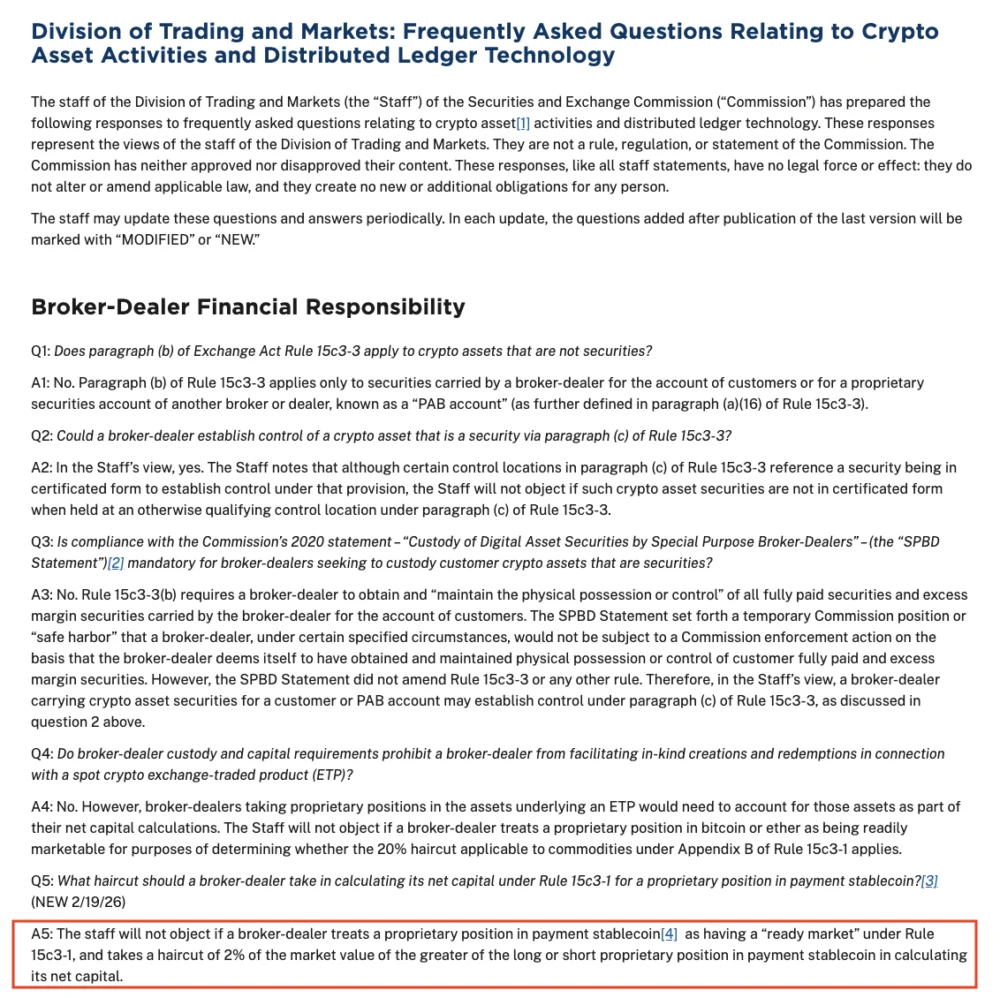
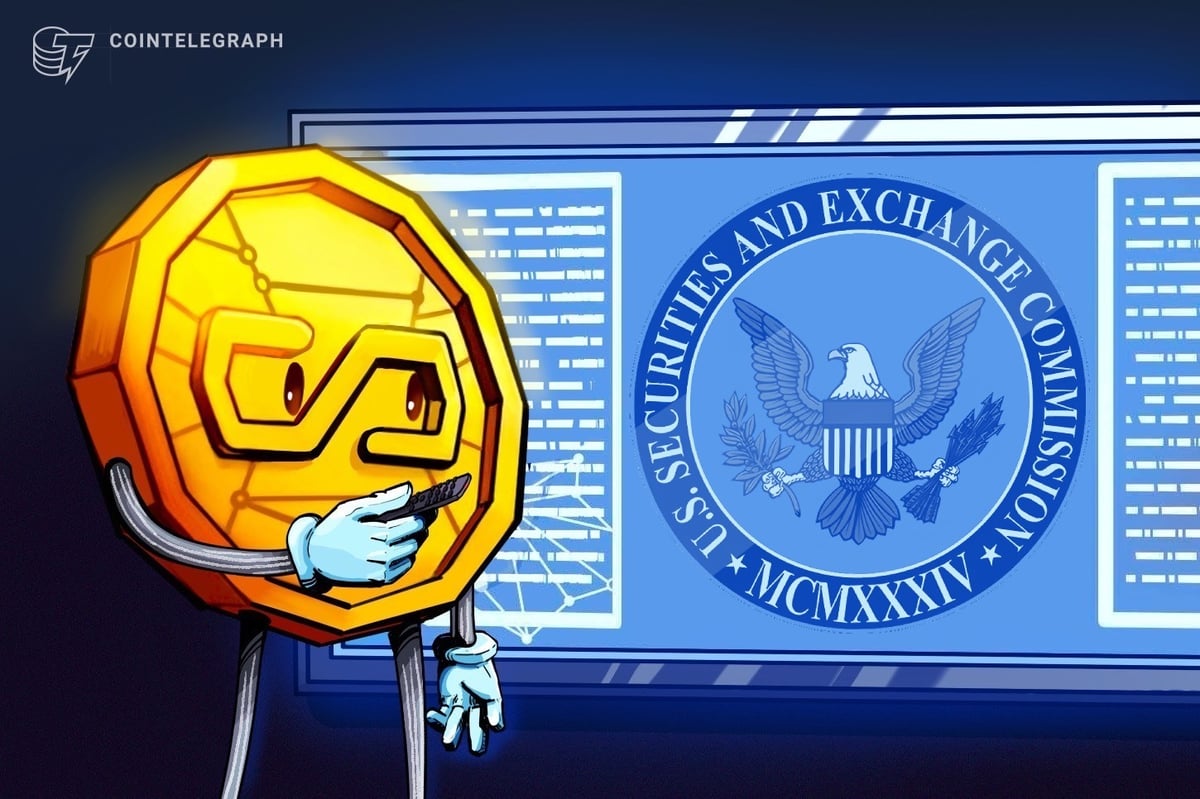
The U.S. Securities and Exchange Commission (SEC) staff has issued a significant clarification, permitting broker-dealers to apply a modest 2% "haircut" to their holdings of dollar-pegged stablecoins without objection. This guidance alleviates previous uncertainty, where broker-dealers faced the prospect of a 100% haircut, effectively excluding these digital assets from their net capital calculations under existing regulations. The clarification was disseminated through a posting on the SEC’s Division of Trading and Markets website, as part of their "Frequently Asked Questions Relating to Crypto Asset Activities and Distributed Ledger Technology."
This development has been met with positive reception from some within the regulatory sphere. SEC Commissioner Hester Peirce, in her commentary, stated that a 100% haircut would have been "unnecessarily punitive given the underlying reserve assets that back payment stablecoins." She further elaborated that stablecoins are "essential to transacting on blockchain rails" and that their more favorable treatment will "make it feasible for broker-dealers to engage in a broader range of business activities relating to tokenized securities and other crypto assets."
The SEC mandates that broker-dealers maintain minimum net capital levels to ensure they can meet their financial obligations and withstand potential losses stemming from market downturns and volatility. The recent clarification signifies a shift in how stablecoins are viewed within this capital framework. By allowing a 2% haircut, the SEC effectively treats these digital assets more akin to traditional low-risk cash equivalents, such as those found in money market funds which invest in U.S. Treasurys and certificates of deposit. For instance, a broker-dealer holding $100 million in stablecoins can now count $98 million towards their net capital requirements, a substantial difference from the previous uncertainty.
Marc Baumann, CEO of crypto intelligence company 51, lauded the SEC staff’s communication as "a big deal," noting that it allows "Wall Street to now actually hold and use stablecoins without destroying their capital ratios." This adjustment is expected to facilitate greater integration of stablecoins into the broader financial ecosystem, particularly within the burgeoning landscape of tokenized securities and other digital assets.
The stablecoin market, while experiencing a minor recent contraction, remains a substantial segment of the cryptocurrency market. It recently saw its market capitalization fall by approximately $6 billion from a December 2025 peak exceeding $300 billion. However, as of recent data, the market cap still stands at a robust $295 billion, demonstrating consistent growth since 2023.
This regulatory clarity emerges against a backdrop of evolving policy and opinion on stablecoins in the United States. A landmark moment for the industry was the signing of the GENIUS stablecoin bill into law by then-President Donald Trump in July 2025. At the time of its enactment, the stablecoin market capitalization was just over $252 billion, and it experienced a notable surge following the bill’s passage. The increasing prominence and utility of stablecoins have also raised discussions about their implications for the dominance of the U.S. dollar in global financial markets.
Despite these advancements and the growing traction of stablecoins, not all U.S. financial officials are fully convinced of their inherent value. Neel Kashkari, President of the Federal Reserve Bank of Minneapolis, has previously expressed skepticism, questioning the unique use cases of stablecoins. He remarked, "I could send any one of you $5 with Venmo, or PayPal, or Zelle, so what is it that this magical stablecoin can do?" His sentiment highlights an ongoing debate regarding the perceived advantages of blockchain-based payment systems over established digital payment networks.

The SEC’s Division of Trading and Markets provides guidance and clarification on various aspects of financial regulation, including those pertaining to crypto assets and distributed ledger technology. Their role is crucial in navigating the complex intersection of traditional finance and emerging digital asset markets. The "Frequently Asked Questions" format allows the commission to address specific industry concerns and provide timely interpretations of existing rules and regulations.
The 2% haircut policy is a practical adjustment that acknowledges the relative stability of regulated dollar-pegged stablecoins, which are typically backed by reserves of fiat currency or highly liquid, low-risk assets. By imposing a small haircut, the SEC maintains a prudential approach to capital requirements while recognizing that these digital assets can function as a liquid store of value and a medium of exchange within the financial system. This contrasts sharply with a 100% haircut, which would imply treating the assets as having zero value for capital purposes, akin to highly speculative or illiquid holdings.
The implications of this clarification extend to the broader adoption of tokenized securities and other blockchain-based financial instruments. As broker-dealers become more comfortable holding and utilizing stablecoins, it is anticipated that this will further catalyze innovation and investment in the digital asset space. The ability to seamlessly integrate stablecoins into trading and settlement processes can reduce friction, enhance efficiency, and potentially lower transaction costs for market participants.
Looking ahead, the regulatory landscape for digital assets in the United States is expected to continue evolving. While the SEC has taken steps to provide clarity on stablecoin treatment for broker-dealers, other areas, such as the classification and regulation of various crypto assets, remain subjects of ongoing discussion and potential future rulemaking. The interplay between technological innovation, market developments, and regulatory frameworks will continue to shape the future of digital finance. The recent SEC staff guidance represents a significant step in harmonizing existing financial regulations with the practical realities of incorporating stablecoins into the operations of regulated financial intermediaries.