11
11
The landscape of mobile app distribution is undergoing a significant transformation, particularly in the European Union and Japan, as new regulations compel Apple to open its ecosystem to alternative app stores. This shift, driven by legislative efforts like the Digital Markets Act (DMA) in the EU and the Mobile Software Competition Act (MSCA) in Japan, aims to dismantle long-standing monopolies and foster a more competitive and innovative app environment for both developers and consumers.

In the European Union, iPhone users now have the unprecedented ability to access alternative app marketplaces, a direct result of the Digital Markets Act. This landmark regulation, specifically designed to address the market power of "gatekeepers" like Apple, seeks to foster increased competition within the app ecosystem. While alternative app marketplaces on iOS devices provide a gateway to a broader selection of applications, they operate under a distinct set of rules compared to Apple’s traditional App Store. Apps distributed through these third-party stores must undergo a notarization process to ensure they meet what Apple describes as "baseline platform integrity standards," primarily focusing on being malware-free. However, each alternative store retains the autonomy to review and approve apps according to its own specific policies. Crucially, these third-party stores are also solely responsible for handling customer support and refund-related matters, relieving Apple of these obligations for apps distributed outside its primary marketplace.
To operate an alternative app marketplace within the EU under the DMA, developers must agree to Apple’s new business terms. A particularly notable and often debated aspect of these terms is the introduction of a Core Technology Fee (CTF) of €0.50. This fee is levied for each first annual install of their marketplace app, even before the typical threshold of 1 million annual installs is met, which applies to other EU apps distributed under Apple’s DMA business terms. This early imposition of the CTF has been a point of concern for many developers considering launching alternative stores.

Despite the complexities and the new fee structures introduced by Apple, a growing number of developers have embraced the opportunity to distribute their applications beyond the confines of Apple’s App Store in the EU. This represents a significant departure from the previous singular distribution model that defined the iOS platform for years.
Beyond the EU, other markets are also exploring and implementing regulations to promote alternative app distribution. Japan, for instance, is another key region where changes are taking effect. In December 2025, Apple announced its compliance with Japan’s Mobile Software Competition Act (MSCA). This legislation grants developers new avenues for distributing apps and processing payments outside of Apple’s App Store, mirroring some of the competitive aims of the DMA. However, the business terms for Japan differ from those in the EU. Developers opting for these new distribution methods in Japan must accept revised terms, which include a reduced App Store commission ranging from 10% to 21%. Additionally, a 5% payment processing fee applies for Apple in-app purchases, a 5% Core Technology Fee is introduced, and a 15% store services commission is charged on web sales made through a link within the app.

The emergence of these alternative app stores signals a new era for iOS users, offering greater choice and potentially fostering a more diverse app landscape. Below is a list of the alternative app stores currently available for iPhone users in these regulated markets:
AltStore PAL (EU)
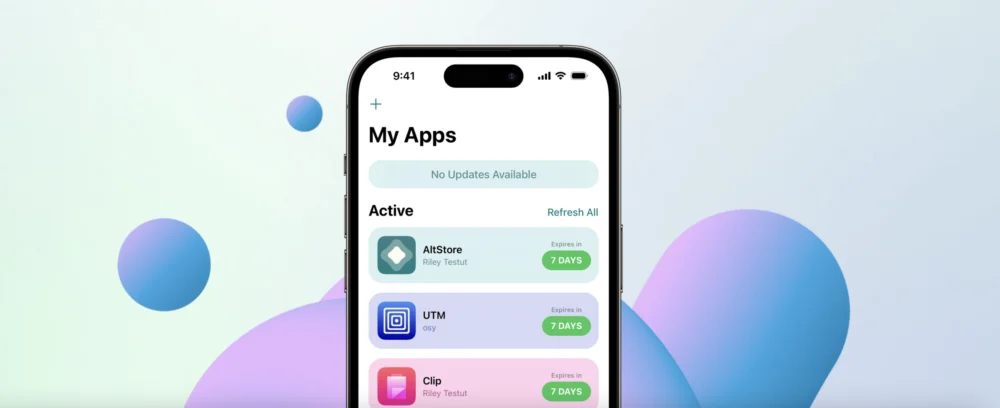
Co-created by developer Riley Testut, known for the Nintendo game emulator app Delta, AltStore PAL stands out as an officially approved alternative app marketplace in the EU. This open-source app store is designed to empower independent developers to distribute their applications alongside those from AltStore’s creators, such as Delta and the clipboard manager app, Clip. A unique characteristic of AltStore PAL is its self-hosting model for apps. Developers download an alternative distribution packet (ADP), upload it to their own server, and then create a "source." Users subsequently add this source to their AltStore to access the developer’s apps. This decentralized approach means that users primarily see apps they have actively chosen to add. Popular apps being added by users to AltStore PAL include UTM, a virtual machine app that enables running Windows and other software on iOS or iPad; OldOS, a faithful re-creation of iOS 4 built in SwiftUI; Kotoba, an iOS dictionary available as a standalone app; torrenting app iTorrent; qBitControl, a qBittorrent remote client for iOS devices; and the social discovery platform PeopleDrop.

Setapp Mobile (EU – closed Feb. 2026)
MacPaw’s Setapp was among the first companies to embrace Apple’s new DMA business terms, establishing an alternative app store specifically for EU users. Setapp, a well-regarded subscription-based service for curated apps on Mac, aimed to replicate this model for iOS. Unfortunately, this venture proved to be short-lived. The company announced its decision to sunset the Setapp Mobile service on February 16, 2026, citing Apple’s "still-evolving" and complex business terms as the primary reason for its closure. Setapp Mobile offered dozens of high-quality, ad-free apps without in-app purchases under a single recurring subscription price. While it boasted a growing collection of applications, it did not feature major apps like Facebook, Uber, or Netflix, focusing instead on a curated selection of productivity and utility tools. The discontinuation of Setapp Mobile highlights the significant challenges and financial hurdles that developers and alternative store operators face navigating Apple’s new, intricate regulatory framework.
Epic Games Store (EU)
Fortnite creator Epic Games launched its alternative iOS app store in the EU in August 2024. This move allows users to download games directly, including Epic’s own flagship title Fortnite, as well as Rocket League Sideswipe and Fall Guys, with more titles expected to follow. Epic Games has also committed to bringing its games to other alternative app stores, demonstrating a broader strategy to diversify distribution. The company is actively supporting AltStore PAL through a grant and plans to offer its games on Aptoide’s iOS store in the EU and ONE Store on Android. This launch is particularly significant as it comes more than four years after Apple removed Fortnite from its App Store due to policy violations, which precipitated Epic’s high-profile legal challenge against Apple’s alleged App Store monopoly. Although U.S. courts did not find Apple guilty of antitrust behavior, the lawsuit did establish a precedent, paving the way for developers to link to their own websites for payment processing with reduced commissions, a concept further reinforced by the DMA.

Aptoide (EU)
Lisbon-based Aptoide, an established open-source solution for app distribution, launched its alternative game store for iPhone users in the EU. Already well-known for providing an alternative to Google Play on Android, Aptoide extends its expertise to the iOS platform. The company emphasizes its commitment to security, stating that it scans all apps to ensure they are safe for download and installation. The iOS version of the Aptoide store initially launched as an invite-only beta in June 2024 before becoming broadly available across the EU. Operating as a free-to-use store, Aptoide does not charge its users to cover the Core Technology Fee payable to Apple. Instead, it implements a commission of 10% to 20% on in-app purchases on iOS, with the percentage varying based on whether the purchase was generated directly through the marketplace. Across all its platforms, including Android, web, car, and TV, Aptoide boasts a catalog of over 1 million apps catering to more than 430 million users globally.
Mobivention Marketplace (EU)
The Mobivention marketplace caters specifically to the B2B sector, offering a specialized alternative app store for companies in the EU. Its primary function is to enable businesses to distribute their internal applications that are used by employees, but which may not be suitable or intended for public release on Apple’s App Store. Beyond this, Mobivention provides development services for customized app marketplaces, allowing companies to create their own branded app stores exclusively for corporate applications. For larger enterprises, Mobivention offers licensing of its underlying technology, providing the flexibility to deeply customize the app marketplace to align with their specific operational needs and branding. This focus on internal, enterprise-specific app distribution addresses a niche but critical need within the corporate environment, offering a secure and controlled channel for proprietary software.

Skich (EU)
Launched in March 2025, Skich introduced an alternative app store for EU users that distinguishes itself through an innovative, Tinder-like interface for app discovery. This unique approach allows users to swipe right to "match" with apps they might enjoy, offering a gamified and engaging way to explore new software. Beyond discovery, Skich also enables users to create personalized playlists of apps and view what applications their friends are currently using. The new store replaced Skich’s existing app and operates on a 15% commission model for all purchases made through the platform. Rather than launching with a full catalog of apps, Skich strategically marketed its platform to developers at the Game Developers Conference (GDC), aiming to attract a diverse range of creators to populate its marketplace.
Onside (EU and Japan)
Onside has emerged as an alternative iOS app store available in both the EU and, as of February 17, 2026, Japan, leveraging the new regulatory frameworks in both regions. The company positions itself as a developer-friendly platform, promising lower rates compared to traditional app stores while maintaining a strong focus on security, including the protection of payment information. For consumers, Onside aims to offer a broad selection of top-tier apps and exclusive titles that may not be found on other marketplaces. Its interface is designed to be familiar, incorporating traditional app store features such as editorial collections, user ratings and reviews, and automatic updates for seamless user experience. Currently, Onside supports bank card payments and Apple Pay, with plans to roll out support for additional payment methods like iDeal and Klarna in the future, further enhancing accessibility for users. The availability of Onside in both key regions underscores the global impact of these new digital market regulations on the mobile app ecosystem.