 11
11
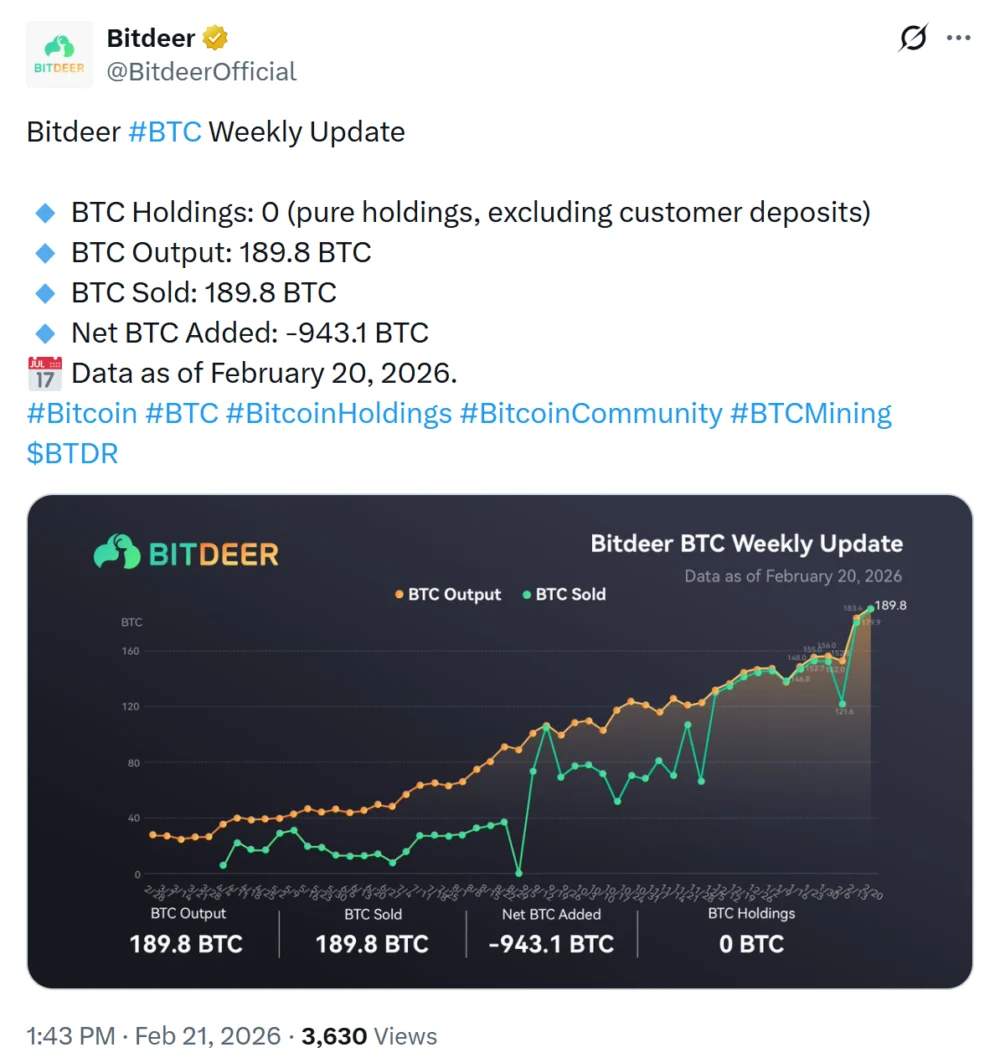
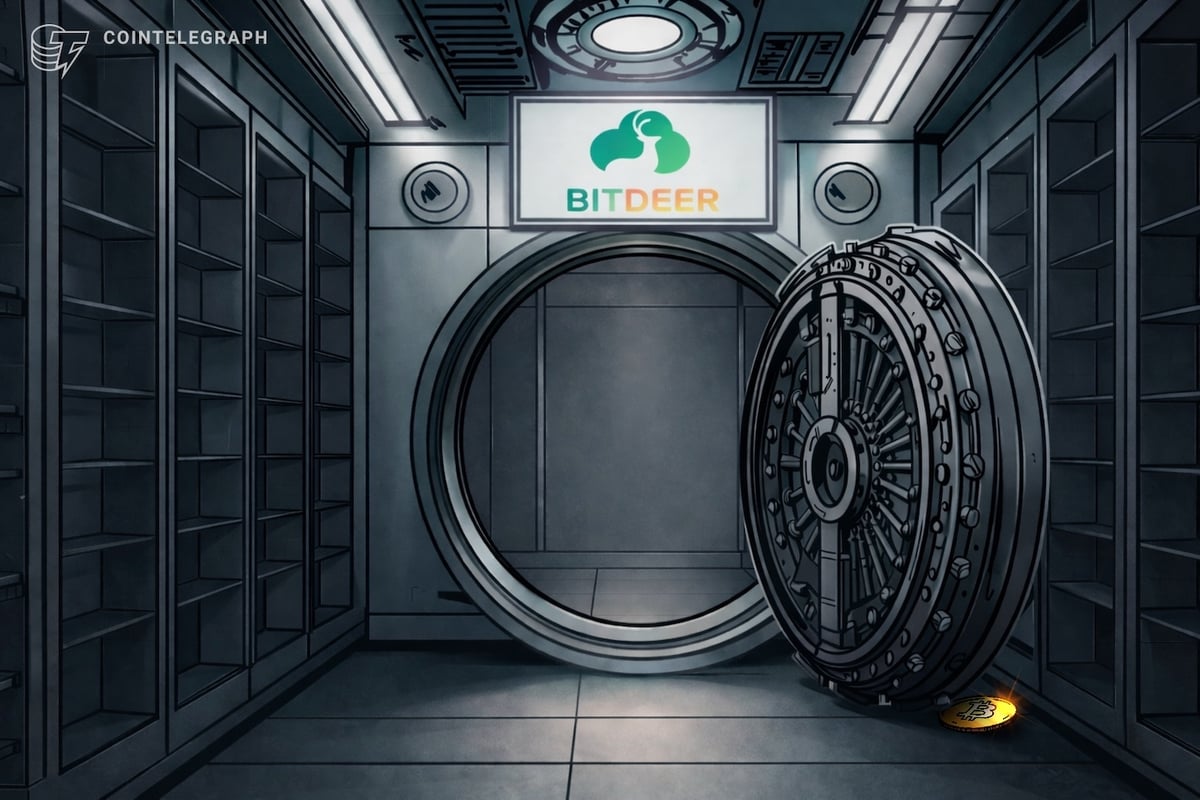
Bitcoin mining firm Bitdeer has announced the complete liquidation of its corporate Bitcoin holdings, bringing its treasury balance to zero. This significant move, disclosed in the company’s latest operational update, marks a notable departure from the common practice of maintaining treasury reserves by Bitcoin miners.
In its most recent weekly report, Bitdeer revealed that its "pure holdings," which exclude customer deposits, have fallen to 0 Bitcoin (BTC). The report detailed that during the specified period, the company produced 189.8 BTC. This newly mined amount was entirely sold, alongside an additional 943.1 BTC that was liquidated from its existing treasury reserves. This complete divestment contrasts with earlier updates. For instance, on February 13, Bitdeer’s report indicated that the miner still held 943.1 BTC. At that time, the company sold 179.9 BTC out of the 183.4 BTC mined that week, a routine practice to cover operational costs, leaving its treasury largely intact despite regular sales of newly mined coins.
While it is a common strategy for mining firms to sell a portion of their Bitcoin production to cover operational expenses such as electricity, hosting, and equipment, maintaining a treasury balance to benefit from Bitcoin’s price appreciation is also prevalent. The complete liquidation of these reserves is therefore less typical within the industry. Cointelegraph reached out to Bitdeer for comment regarding this decision, but had not received a response by the time of publication.
This development comes on the heels of Bitdeer’s announcement of plans to raise $300 million through a convertible senior note offering, with an option to increase the sale by an additional $45 million. This news led to a sharp decline in Bitdeer’s shares on Thursday. The notes, which are due in 2032, will have the flexibility to be converted into company stock, cash, or a combination of both. The company, co-founded by former Bitmain co-founder Jihan Wu, stated that the funds raised are intended to support critical growth initiatives, including data center expansion, advancements in AI cloud services, development of mining hardware, and general corporate needs.
In parallel with these financial maneuvers, Bitdeer has been actively expanding its self-mining operations. This strategic shift has occurred as demand for its mining hardware has softened. The company is increasingly opting to utilize its own mining rigs for Bitcoin production rather than selling them to customers. This move indicates a deeper integration of its mining capabilities for its own benefit.
The broader Bitcoin mining industry is currently experiencing a significant pivot towards artificial intelligence (AI) and high-performance computing (HPC) services. This trend is driven by several factors, including the recent Bitcoin halving event, which reduced mining rewards, and the resulting pressure on profit margins, often referred to as "hashprice."
Illustrating this industry-wide trend, MARA Holdings recently acquired a majority stake in Exaion, a French computing infrastructure firm. This acquisition signals MARA’s deeper engagement in the AI and cloud services sector. The transaction grants MARA a 64% ownership position in MARA France, with the energy company EDF retaining a minority shareholder status and continuing as a customer.
This strategic move by MARA aligns with a broader shift observed across the mining landscape. Many Bitcoin miners are adopting a hybrid business model that complements their core Bitcoin production operations with revenue streams generated from AI and HPC services. Companies such as HIVE, Hut 8, TeraWulf, and IREN are actively repurposing their existing facilities and energy infrastructure to cater to the growing demand for data center services. Simultaneously, firms like CoreWeave have transitioned entirely into becoming providers of AI infrastructure. This diversification strategy aims to create new revenue channels and mitigate the financial pressures associated with fluctuating cryptocurrency markets and the reduced profitability of traditional Bitcoin mining.