 11
11
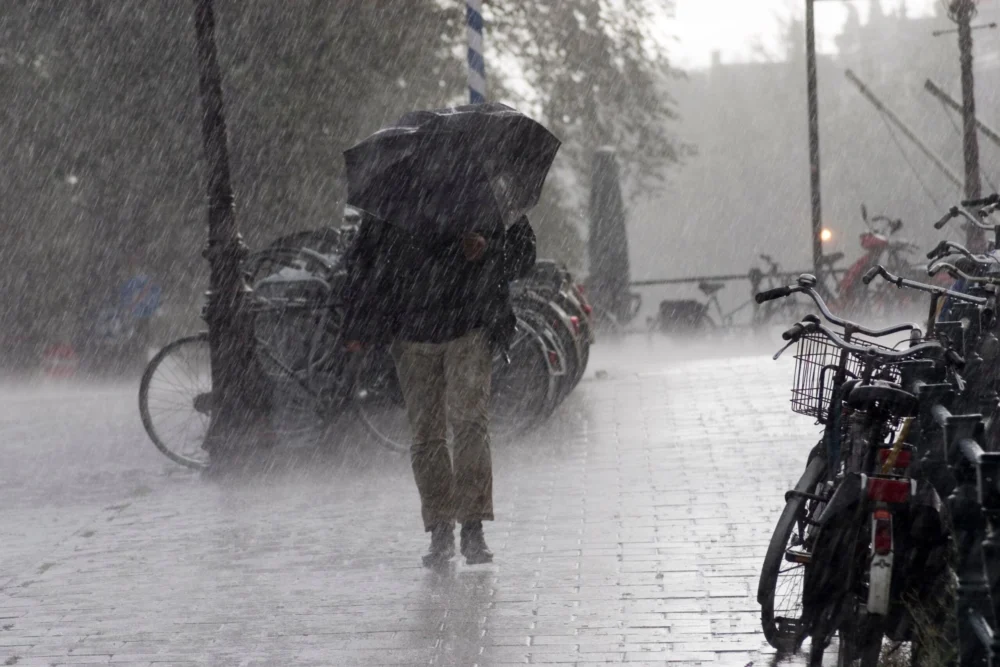
One of the most frequently used methods by meteorologists to communicate the risk of rain is the Probability of Precipitation (PoP) forecast. Despite its widespread application, it consistently ranks among the most misunderstood tools in the entire weather communication toolkit. This persistent challenge begs the question: What makes PoP so inherently difficult for the public, and even some professionals, to grasp accurately?

My personal journey into unraveling the "PoP problem" began over a decade ago, sparked by a memorable incident during a tubing excursion down the Chattahoochee River. As my family and I leisurely floated along, the skies opened, and rain began to fall. An exasperated woman nearby voiced her frustration, declaring the meteorologists "wrong" because the forecast had only indicated "a 20% chance of rain that day." The urge to interject with a simple, "It wasn’t a 0% chance, so what’s the actual problem?" was strong, but I ultimately chose to let the current carry me on, leaving the rhetorical question hanging in the humid air. This incident, however, perfectly encapsulated the fundamental disconnect between how meteorological forecasts are issued and how they are often interpreted by the public.
The confusion surrounding PoP isn’t merely a public perception issue; it extends into the professional meteorological community itself. A revealing 2016 study, published in the esteemed journal Weather and Forecasting, uncovered a surprising variability in how meteorologists define "percent chance of rain." The foundational definition, as articulated in a 1984 National Weather Service document, states: "The probability of precipitation (PoP) forecast conveys the likelihood that measurable precipitation (≥0.01 inches) will occur at any given point in the forecast area within a particular time frame, usually 12 hours." This precise definition, however, has been subject to various interpretations over time. The study concluded that operational and broadcast meteorologists have developed nuanced variations of PoP, influenced by factors such as the expansion of forecasts from single points to broader geographical areas, the integration of model output statistics, and the application across different time periods. This internal divergence within the expert community undoubtedly contributes to the external misunderstanding.

Unlike simpler meteorological variables such as temperature or wind speed, rainfall is characterized by immense variability in both space and time across a given region. This inherent complexity makes categorical forecasts (e.g., "It will rain" or "It will not rain") far less appropriate and often less accurate than probabilistic approaches. A 1980 study, referenced in the Bulletin of the American Meteorological Society, found that while its surveyed public sample generally understood the concept of probabilities, they often misconstrued the specific implications for individual rainfall events. This finding resonates deeply with the common sentiment I hear, often from my own wife, who simply states, "Just tell me if it is going to rain." This perspective highlights a desire for a definitive, binary answer that the complex nature of atmospheric processes often cannot provide with absolute certainty.
Rainfall events manifest in a myriad of ways, differing significantly in their duration, geographical scale, underlying causation, and distribution. Consider the stark contrast between a widespread, multi-state rainfall event triggered by a major hurricane like Helene (as seen in 2024), which saturates vast areas, and an isolated, "pop-up" afternoon thunderstorm that might only drench a single neighborhood or even just a few blocks. As illustrated by weather radar imagery of northern Georgia on a typical Saturday morning (like February 21, 2026, as depicted in the provided graphic), scattered showers and storms mean that while some areas will undoubtedly experience rain, many others will remain dry. This patchy distribution is precisely why a probabilistic approach, which acknowledges the uncertainty and spatial variability, is not just useful but essential.

A key recommendation from the 2016 study by Alan Stewart and his colleagues was the urgent need for a consensus definition of PoP among meteorologists. Furthermore, the study emphasized that while the public does value probabilistic information, focused educational outreach is crucial to bridge the gap in understanding. This very article is motivated by that imperative. However, I believe there’s an even deeper layer to the confusion surrounding probabilistic rain forecasts, one that is intrinsically tied to the fundamental wiring of the human brain.
Throughout my career, I’ve become increasingly fascinated by the intricate intersections of weather and psychology. I have frequently explored how phenomena like motivated reasoning, various cognitive biases, logical fallacies, and other psychological concepts profoundly influence public decision-making concerning weather outcomes. My consistent observation has been that people tend to perceive weather scenarios, and indeed many other aspects of life, through a binary lens.

What does this "binary outcome" perspective entail? Essentially, some individuals form their understanding of events based solely on local impacts. The adage "Everything’s local" applies forcefully here. If a tornado watch is issued, but the tornado ultimately bypasses a person’s immediate community, they might question why the school system "overreacted" by closing. Similarly, if a hurricane track shifts slightly, sparing a town from the worst damage, some residents might complain about the inconvenience and expense of preparing or evacuating, almost as if they are angered by the lack of property damage that would have "justified" their preparations.
Let’s circle back to that 20% chance of rain. Antonio Eubanks, a Data Intelligence Consultant with Hylaine Inc. and a former classmate from Florida State University, offered a profound insight: "Ultimately you as meteorologists trying to convey a message are fighting against brain hard wiring… People confuse possibility with probability." Eubanks’s assessment perfectly encapsulates the core issue. He elaborated, "We want to take something that is probable and make it binary (50/50). When people hear 20% chance the brain rounds down to zero…like 70% rounds up to 100%." This tendency to simplify probabilities into absolute "yes" or "no" outcomes is a significant hurdle for effective communication.

Is this human inclination for "0 or 1," "black or white," or "yes or no" thinking a recognized phenomenon within psychology? Rheeda Walker, a licensed clinical psychologist and professor at Wayne State University, confirms this. "Indeed, many people see the world as either-or. Black and white," she states. Walker, author of the forthcoming book Calm in the Chaos, shared an observation that resonated strongly with me as a climate scientist. When discussing climate change, people often assert, "The climate changes naturally." While it’s true that credible climate scientists are well aware of natural climate variability, this statement often reflects a desire for an "either-or" framing rather than an "and" or "something in the middle" perspective. It’s akin to acknowledging that baseball players naturally hit home runs, but ignoring how performance-enhancing steroids significantly amplified those statistics – a dual reality that many prefer to simplify.
In a 2021 Forbes.com article, I encountered a psychological concept that, while not a perfect analogy, shed light on this binary thinking: "splitting." Psychologist Andrew Hartz defined splitting as "a defense mechanism in which people unconsciously frame ideas, individuals, or groups in all-or-nothing terms (e.g., all-good vs. all-bad or all-powerful vs. 100% powerless)." While splitting is primarily a defense mechanism in interpersonal relationships, its underlying principle—the unconscious simplification of complex realities into extreme, absolute categories—is strikingly relevant to how people process weather probabilities.

Walker further explains, "Some people are wired for all or nothing thinking… Anything else can create fear and anxiety. It’s hard to overcome because such thinking can feel safe." This notion of "safety" offers a compelling explanation for the misinterpretation of PoP. Perhaps, by mentally rounding a 20% chance of rain down to 0%, individuals create a sense of certainty and safety that allows them to proceed with outdoor plans—be it a cookout, an outdoor wedding reception, or a soccer game—without the anxiety of potential disruption. This cognitive shortcut provides comfort, even at the cost of accurately assessing risk. The desire for a definitive answer, rather than embracing the inherent uncertainty of natural phenomena, often overrides a more nuanced understanding of probability.
In conclusion, the widespread misunderstanding of the Probability of Precipitation forecast stems from a complex interplay of factors: the inherent variability of rainfall, the historical evolution and internal definitional differences within the meteorological community, and, perhaps most profoundly, the deep-seated psychological tendency of the human brain to simplify probabilistic information into binary outcomes. To effectively bridge this communication gap, meteorologists must continue to strive for definitional consensus and refine their communication strategies. Simultaneously, targeted public education campaigns are essential to foster a greater appreciation for the nuance of probabilistic forecasts. By understanding both the scientific underpinnings of PoP and the psychological lenses through which it is perceived, we can collectively enhance weather literacy and empower individuals to make more informed decisions in the face of nature’s inherent uncertainties.