 11
11
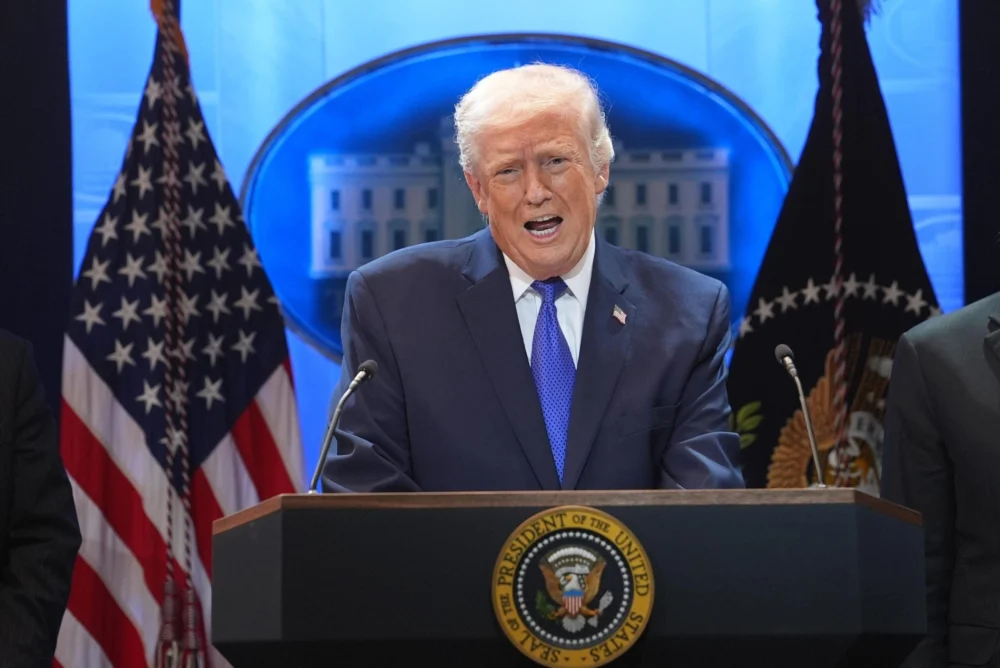
The Trump administration is now compelled to devise new strategies for imposing tariffs after the Supreme Court, in a significant 6-3 ruling on Friday, struck down President Donald Trump’s sweeping “Liberation Day” duties as unlawful. While President Trump swiftly announced “alternatives,” including a 10% global tariff he intends to sign into effect, these new measures are anticipated to carry more restrictions and be less comprehensive than the original levies invalidated by the high court. The ruling represents a substantial legal setback for a cornerstone of the administration’s economic policy and shifts the landscape of presidential power in trade matters.
The Supreme Court’s decision centered on the legality of the “Liberation Day” tariffs, which had imposed duties ranging from 10% to 50% on imports from nearly all countries. The court determined that the president lacked the authority to implement such broad tariffs under the International Emergency Economic Powers Act (IEEPA). IEEPA, a statute designed to grant presidents emergency powers to impose economic sanctions during declared national emergencies, was deemed by the justices to be an inappropriate legal basis for wide-ranging trade tariffs. The 6-3 majority opinion underscored that while IEEPA allows for some economic sanctions, its scope does not extend to the kind of general tariff imposition the Trump administration had enacted.
This landmark ruling means that Trump can no longer utilize IEEPA to impose tariffs, a law he had previously invoked not only for the “Liberation Day” tariffs but also for other duties on certain imports from Canada, Mexico, and China. Despite this significant curtailment of executive power, President Trump affirmed his commitment to using "other alternatives" at his disposal. He announced his intention to sign a new global 10% tariff into effect, citing Section 122 of the Trade Act of 1974 as the legal basis.
Section 122 of the Trade Act of 1974 provides presidents with the authority to impose tariffs of up to 15% for a duration of up to 150 days, specifically to address trade imbalances. While this offers the Trump administration a pathway to maintain some form of broad tariffs, these new measures will be inherently more temporary and lower in magnitude compared to the invalidated IEEPA tariffs. An estimate from the Tax Foundation in November indicated that 10% tariffs imposed under Section 122 would only replace approximately 56% of the revenue generated by the IEEPA tariffs over a 150-day period. This financial discrepancy highlights the more limited scope and impact of the new tariff regime.
Beyond the global 10% tariff, the administration also has the option to impose more targeted tariffs on specific industries or countries. However, these more precise measures typically involve lengthier implementation processes and would result in a piecemeal approach, a stark contrast to the sweeping nature of the “Liberation Day” duties. The exact details of these potential new tariffs and their timeline for implementation, beyond the announced 10% global rate, remain uncertain, leaving businesses and trading partners awaiting clarity.
Trade attorney Patrick Childress, a former counsel at the Office of the U.S. Trade Representative, commented on the situation in November, stating, "The U.S. Government has the authority it needs to try to recreate the IEEPA tariff regime if it chooses to do so," though he cautioned that the process would "take some time." This highlights the administrative and legal complexities now facing the administration as it navigates alternative statutory frameworks.

The Supreme Court’s decision, which followed similar rulings by two lower courts, represents a harsh rebuke to President Trump, who had made tariffs a centerpiece of his economic agenda. The “Liberation Day” tariffs were initially rolled out in April, though their full effect was delayed until August following an initial market reaction that roiled the stock market. In his response to the ruling, President Trump expressed his disappointment, calling the decision "deeply disappointing" and stating he was "ashamed" of the conservative-leaning justices who sided against him. He had previously suggested that a ruling against his tariff policy could pose an "existential threat" to the U.S. economy.
In the wake of the Supreme Court’s ruling, the Trump administration must now strategically deploy other existing trade laws to achieve its tariff objectives. Several key statutes remain available, each with its own specific criteria and procedural requirements:
Section 232 of the Trade Expansion Act of 1962: This law permits the imposition of tariffs against specific imports deemed to pose a threat to national security. President Trump has previously utilized Section 232 to levy duties on sectors such as automobiles, steel, aluminum, and lumber. Importantly, these existing Section 232 tariffs will remain in place and were not affected by Friday’s Supreme Court ruling. However, implementing new Section 232 tariffs requires a thorough investigation process, typically conducted by the Department of Commerce, to determine if imports truly threaten national security. This investigative phase can be time-consuming, making Section 232 a slower mechanism for tariff implementation. The rationale for its application often involves protecting critical domestic industries essential for defense or infrastructure.
Section 301 of the Trade Act of 1974: This statute empowers the president to impose tariffs as a response to unfair trade practices by other countries. President Trump has notably used Section 301 to levy tariffs on Chinese imports in the past, citing issues such as intellectual property theft and forced technology transfer. Similar to Section 232, the implementation of Section 301 tariffs necessitates a detailed investigation, usually conducted by the Office of the U.S. Trade Representative (USTR), to identify and document the alleged unfair trade practices. President Trump hinted on Friday that the administration might launch new probes under Section 301, though the specific countries or imports that could be targeted remain undisclosed.
Section 338 of the Tariff Act of 1930: This is potentially the most sweeping statutory authority available to the president for imposing tariffs. Section 338 allows for duties of up to 50% against countries that have engaged in discriminatory practices against U.S. businesses. Unlike Sections 232 and 301, tariffs imposed under Section 338 do not require a prior investigation and do not have statutory restrictions on how long they can remain in effect. However, the Associated Press notes that this law has never been invoked before. The unprecedented nature of its potential use raises significant questions about its legal interpretation and how any attempt by the Trump administration to deploy it would unfold in practice, potentially facing immediate legal challenges. Its broad power, combined with its lack of historical precedent, makes it a high-risk, high-reward option.
The question of whether certain goods or sectors might be spared from the reimposition of tariffs remains unclear. While President Trump has broadly indicated his desire to replace the invalidated IEEPA tariffs as comprehensively as possible, or even exceed them, trade experts have offered some insights. Experts previously suggested to Forbes that the administration would likely prioritize major trading partners and larger economic sectors. This prioritization could imply that imports from smaller industries or less significant trading partners might experience a longer period without new tariffs. Andrew Siciliano, the Global Practice Leader at KPMG’s Trade & Customs division, also speculated in November that retail and consumer goods could receive more of a "reprieve" from new tariffs. The vast diversity of products within these categories and the complexities of their global supply chains could make it more challenging to implement targeted tariffs effectively without widespread consumer impact.
Perhaps one of the most immediate and tangible consequences of the Supreme Court’s ruling concerns the tariffs that companies have already paid. While the court’s decision did not explicitly address the refunding of previously collected tariffs, legal experts generally concur that such refunds are now highly probable. This interpretation stems from the understanding that the court declared the original tariff imposition unlawful ab initio, meaning it was invalid from its inception, not just for future application. Over a thousand companies had already preemptively filed lawsuits seeking the return of their paid duties, which amounted to an estimated $175 billion in tariffs. With the Supreme Court’s ruling, these lawsuits can now proceed, potentially leading to significant financial reimbursements for businesses that bore the cost of the "Liberation Day" levies. The precise mechanism for processing these refunds, whether through administrative channels or further court orders, will be a critical development to monitor in the coming months.