 11
11
The advent of AI Overviews (AIOs) in search engines presents a significant shift in how users find information, raising critical questions about traffic generation, brand awareness, and performance measurement. However, Google’s proprietary approach to AI Overview data makes direct tracking a complex challenge. This report delves into the intricacies of understanding and monitoring AI Overview performance, offering a range of methods from indirect signals and workarounds to dedicated tools.
The Elusive Nature of AI Overview Metrics
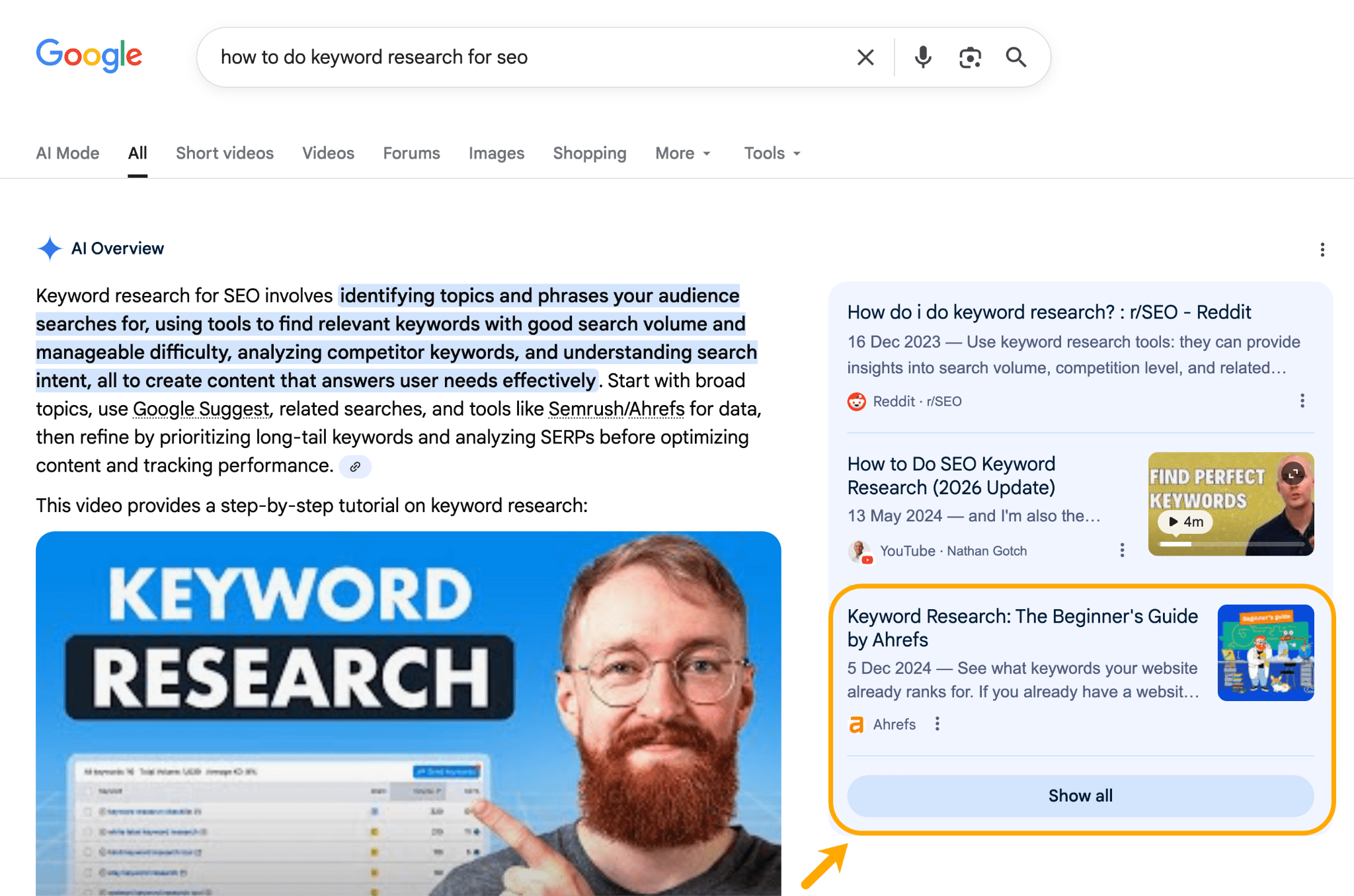
Accurately quantifying the impact of AI Overviews is an uphill battle, as Google integrates this data into standard organic search results without providing specific metrics in tools like Search Console or GA4. Clicks originating from AI Overviews are typically categorized as either google / organic or no referrer. For example, a click on an Ahrefs page from an AI Overview was logged in Ahrefs Web Analytics simply as originating from Google within the Search channel. This lack of direct attribution necessitates indirect tracking methods and workarounds.
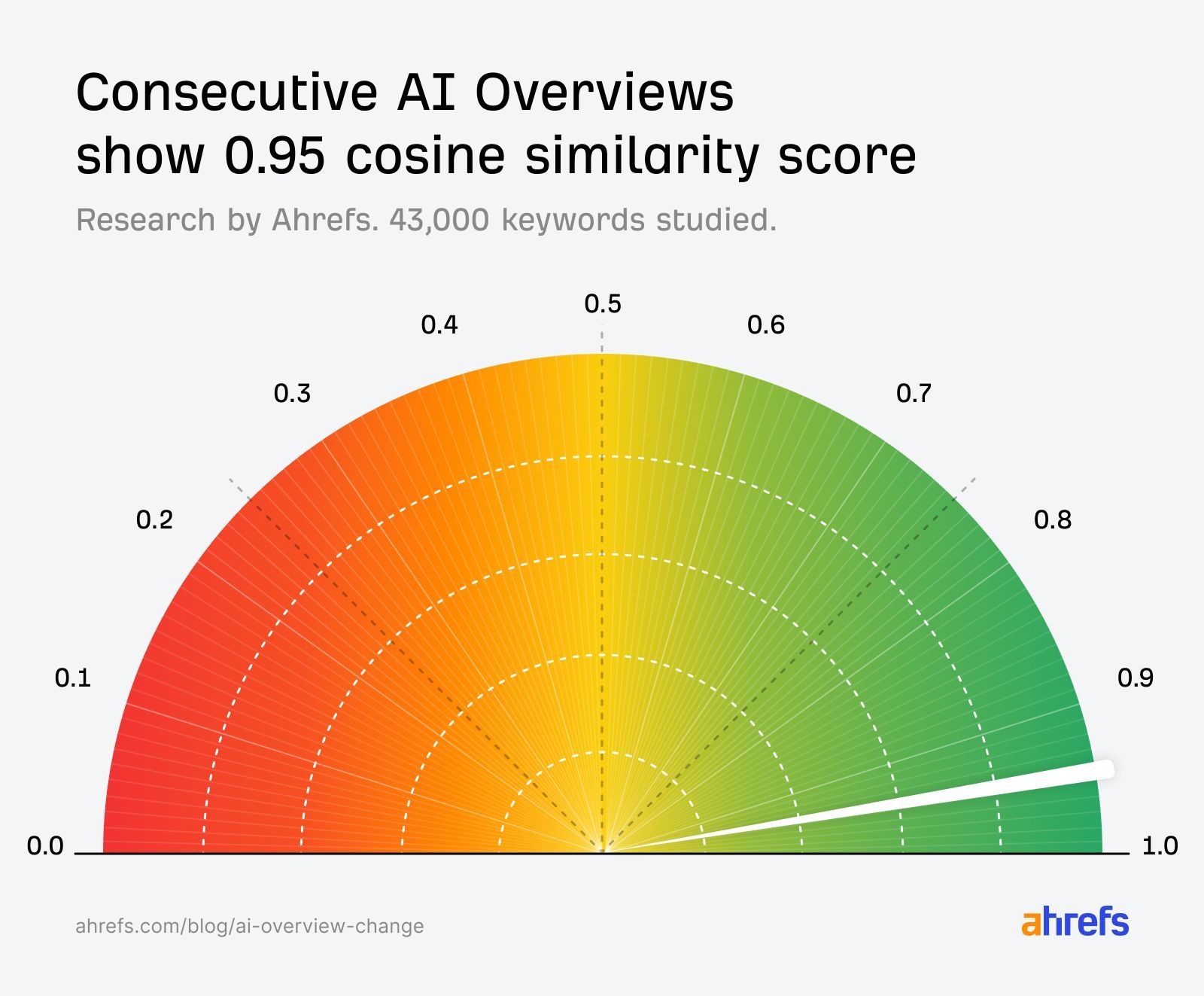
Adding to the complexity, AI Overviews are inherently dynamic. Research indicates that the content of AI Overviews changes approximately 70% of the time, with citations being updated around 46% of the time. Furthermore, personalization based on user location, search history, and other factors means that what one user sees in an AI Overview may differ for another. Despite this volatility, the underlying meaning, opinion, and intent of these overviews remain remarkably stable, allowing for directional performance tracking over time. Effective AI Overview tracking requires visibility into when they appear for target keywords, what they communicate, and which URLs they cite.
Strategies for Tracking AI Overview Performance
1. Monitoring AI Overview Citations:
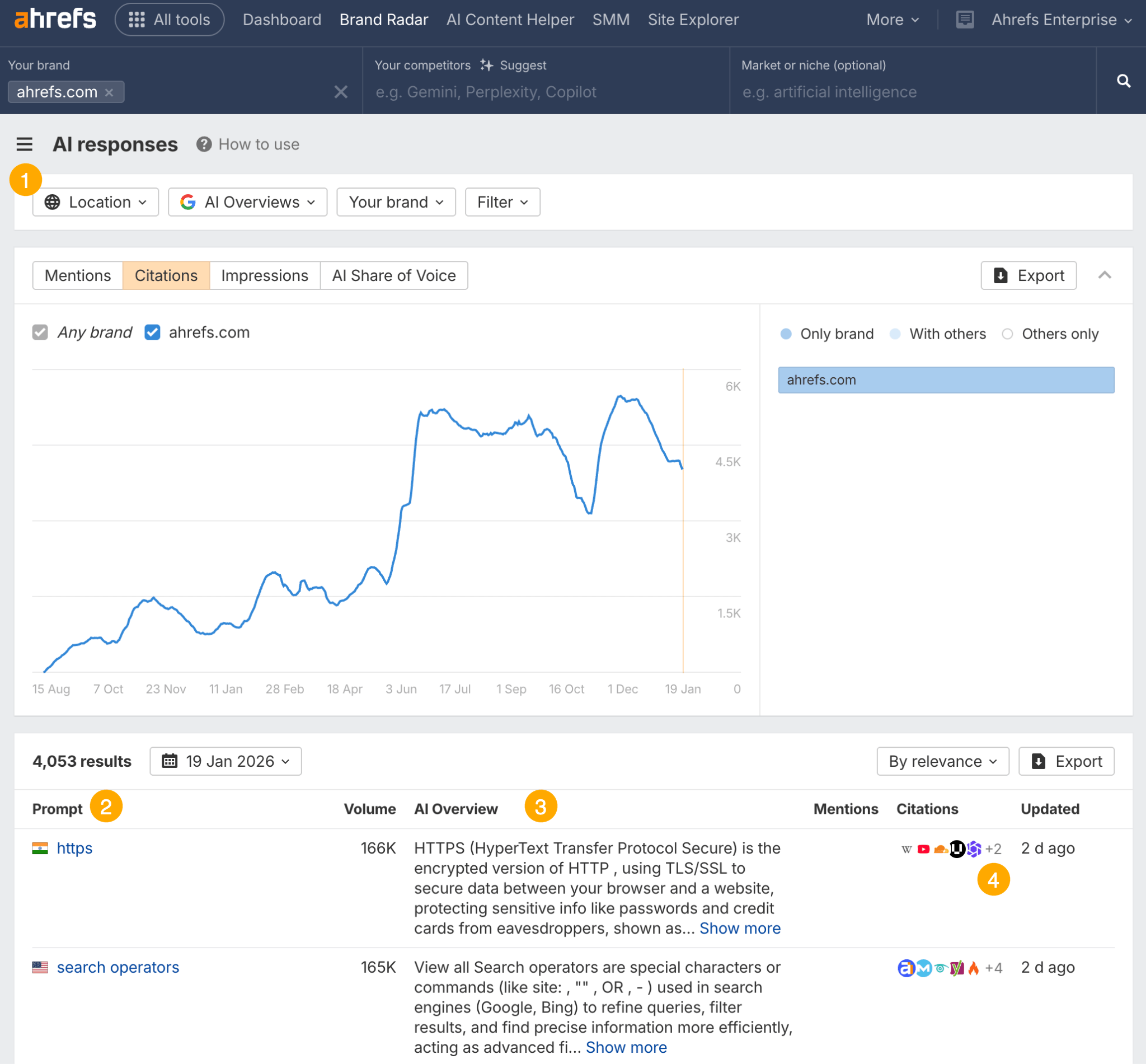
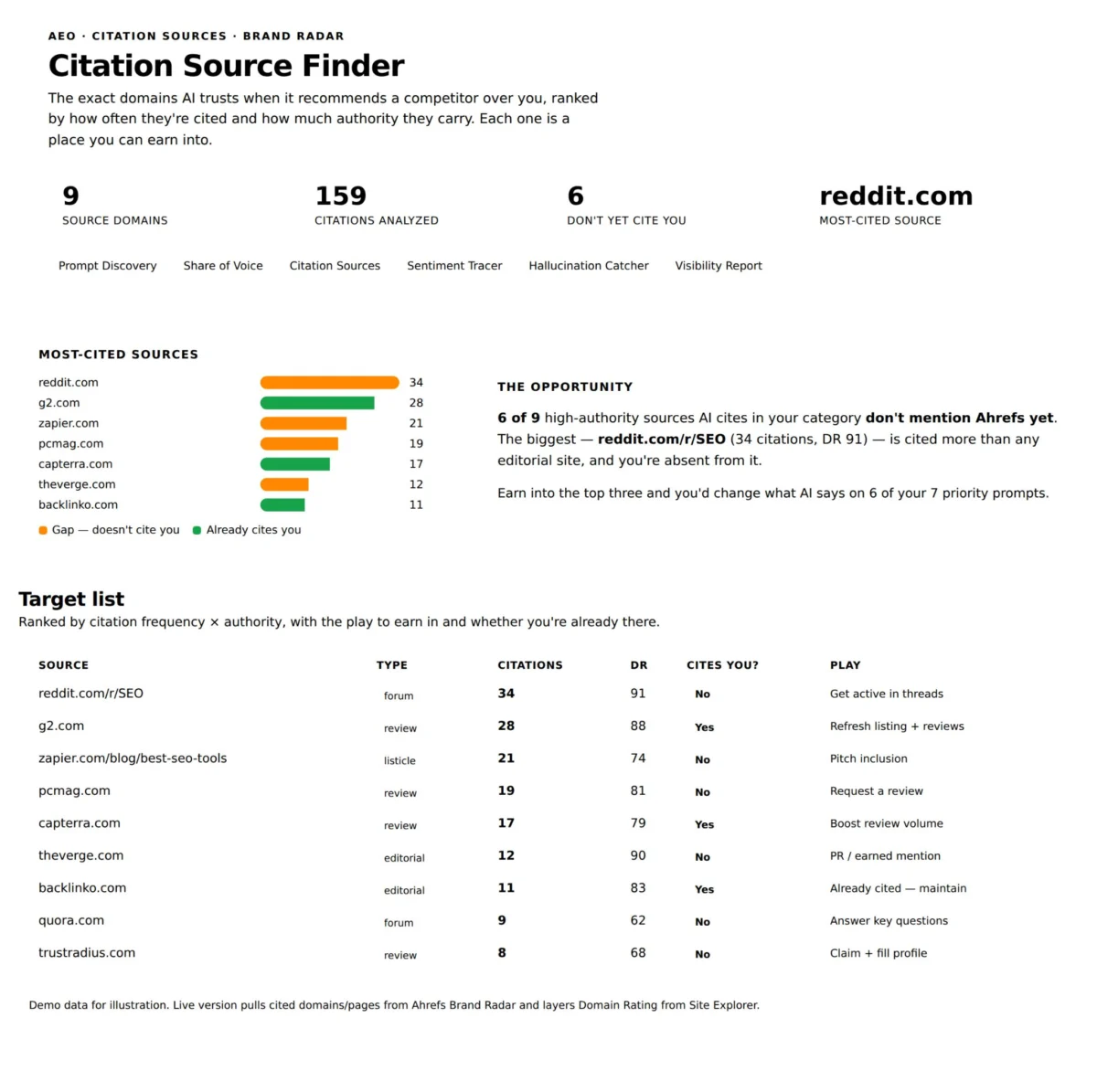
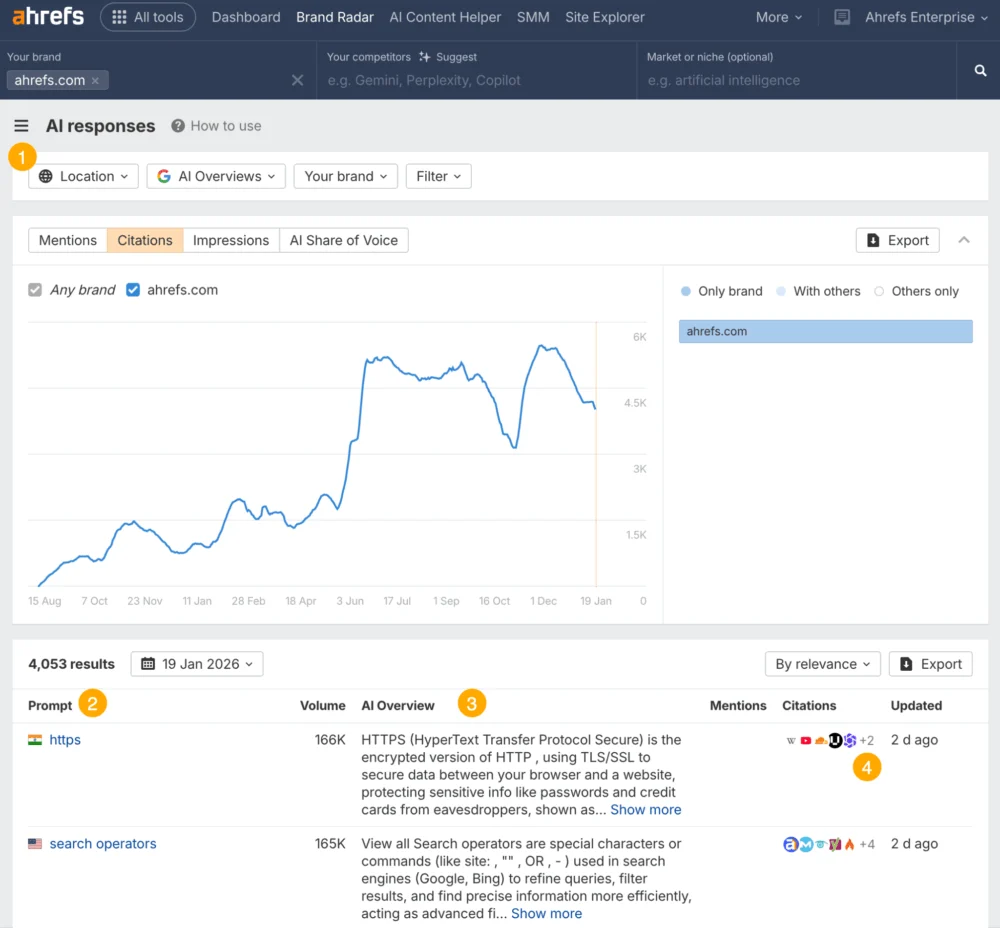
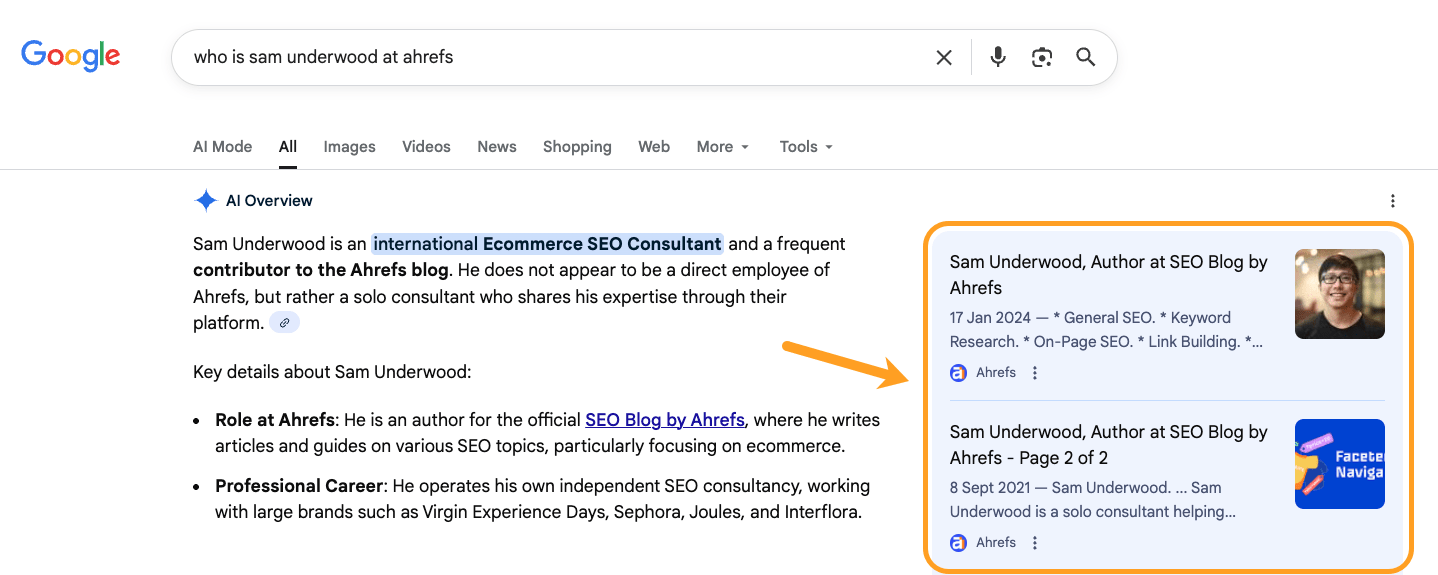
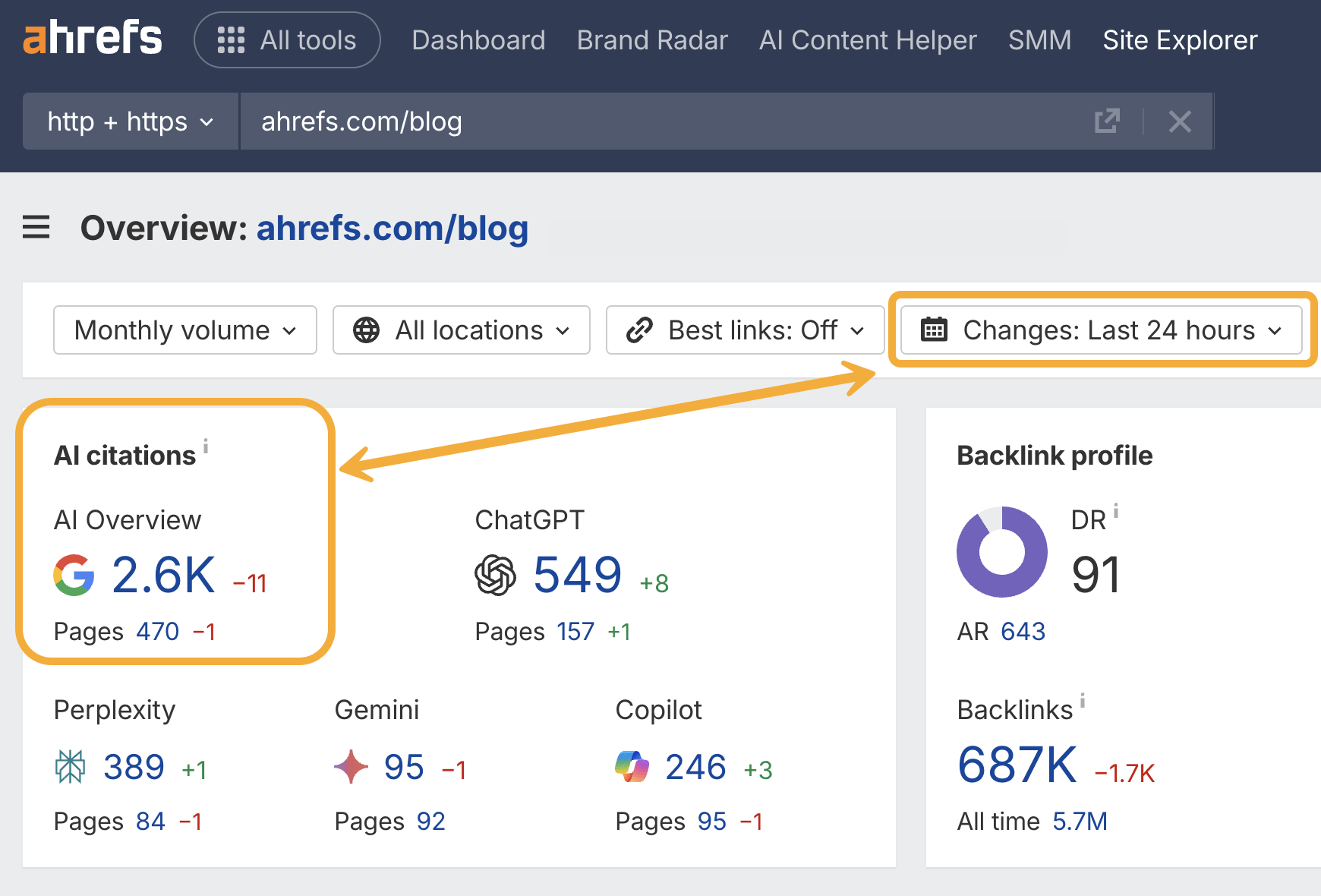
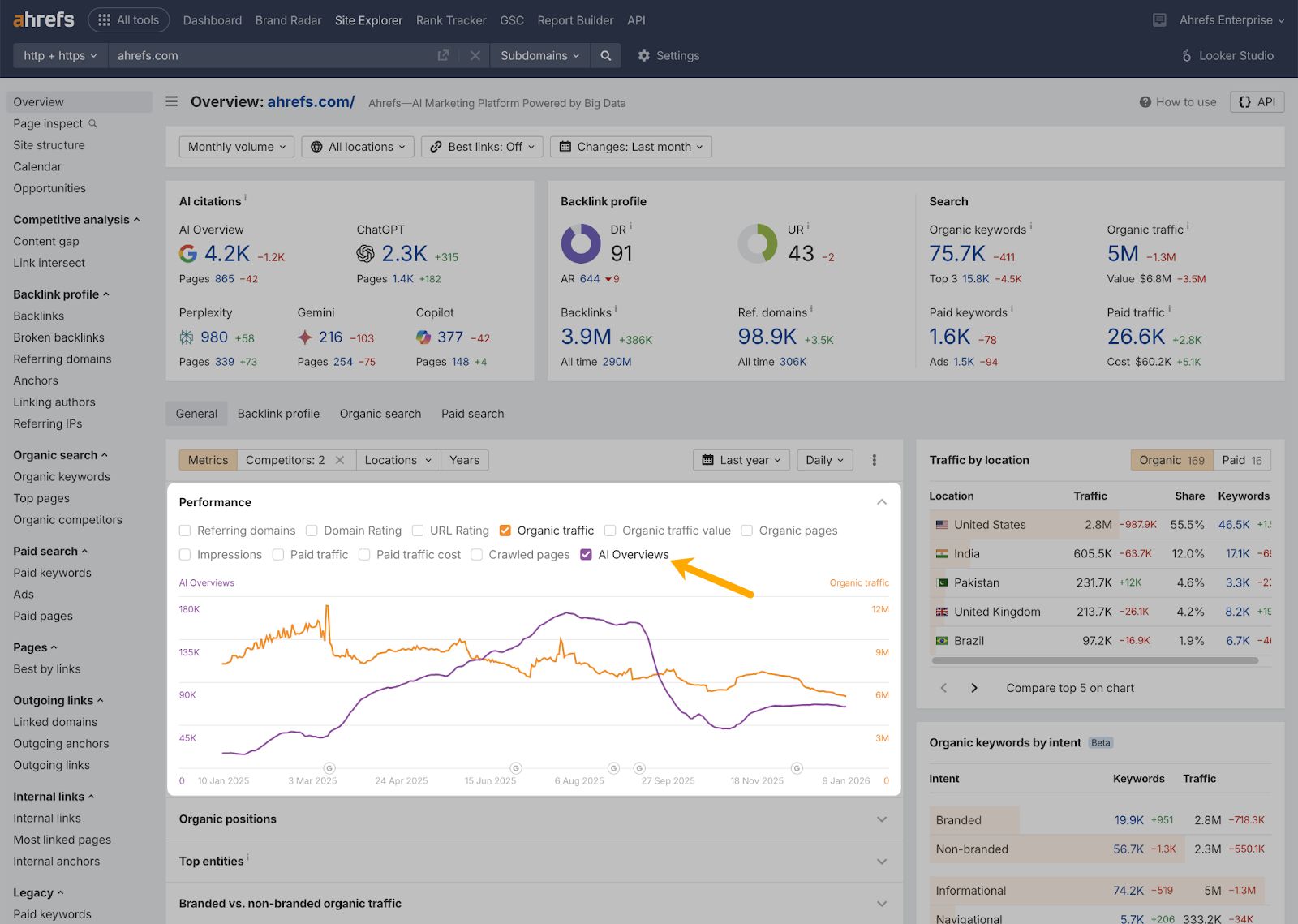
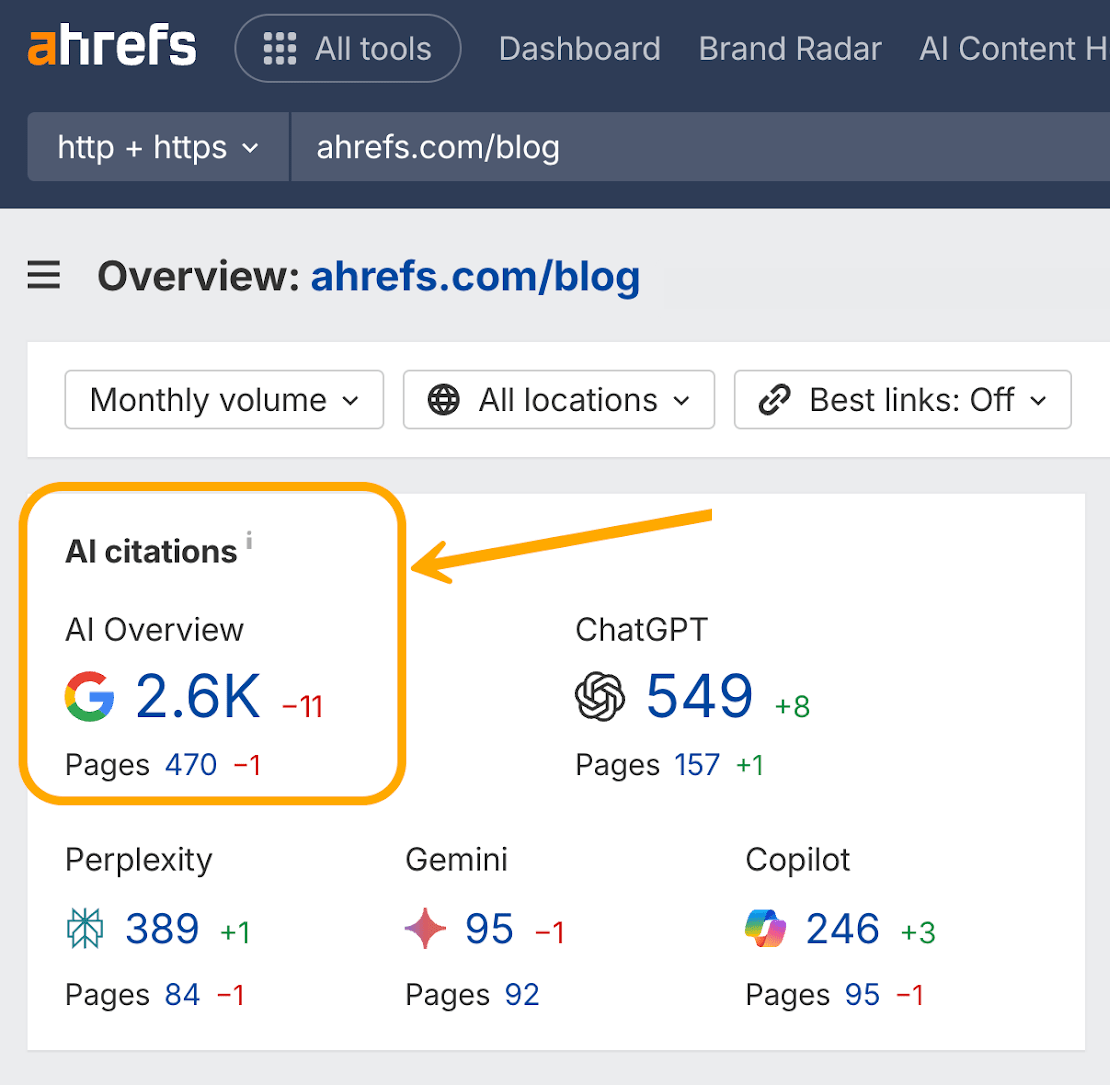
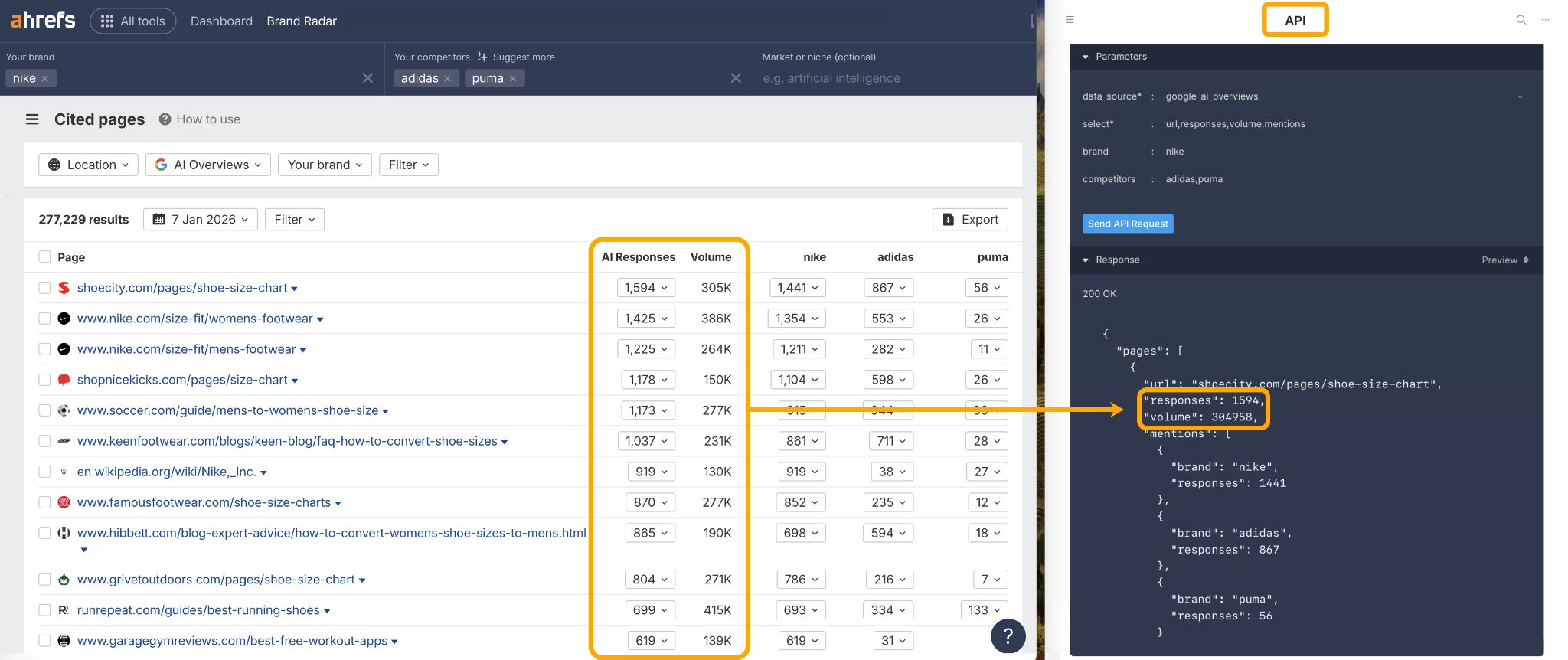
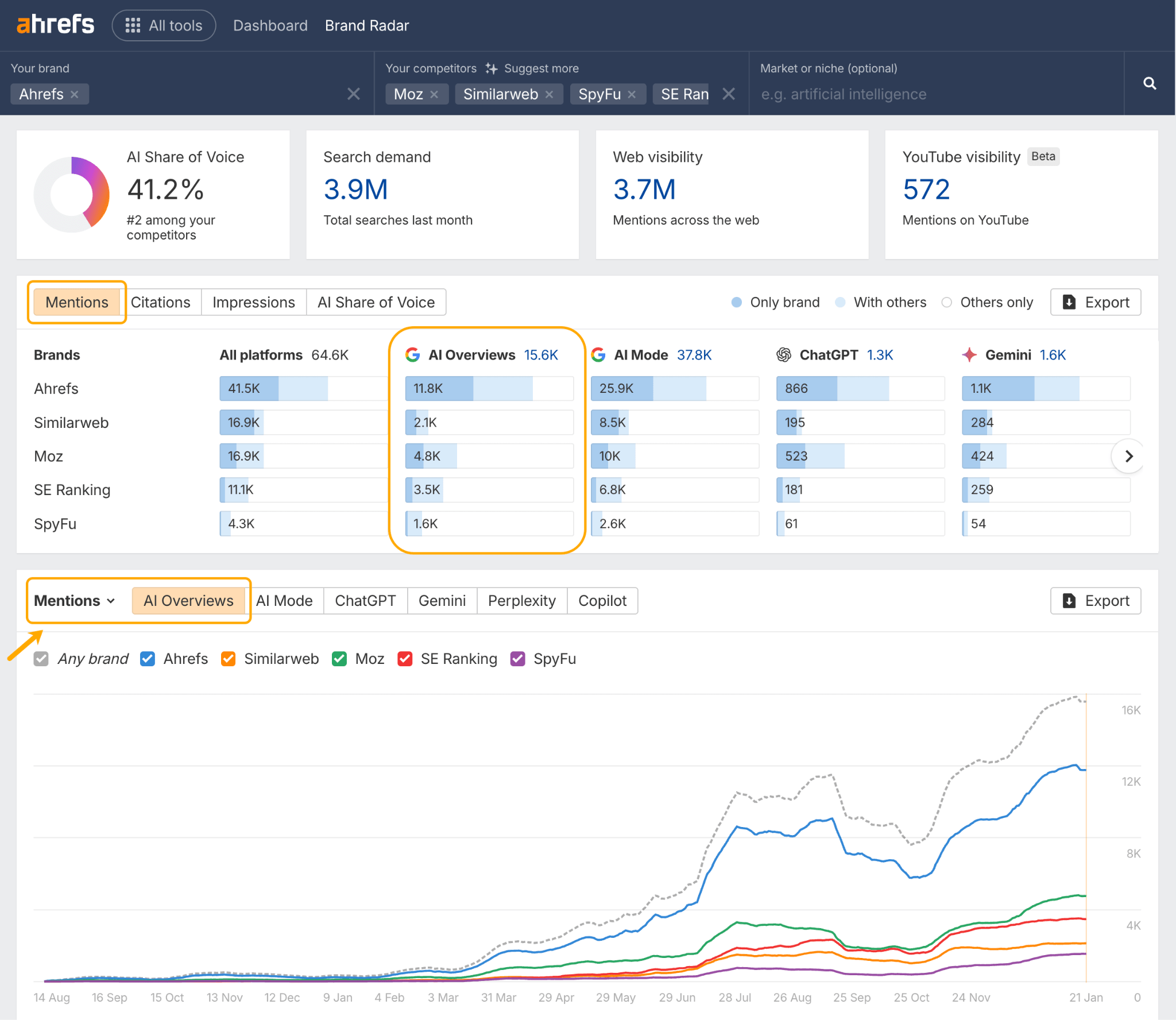
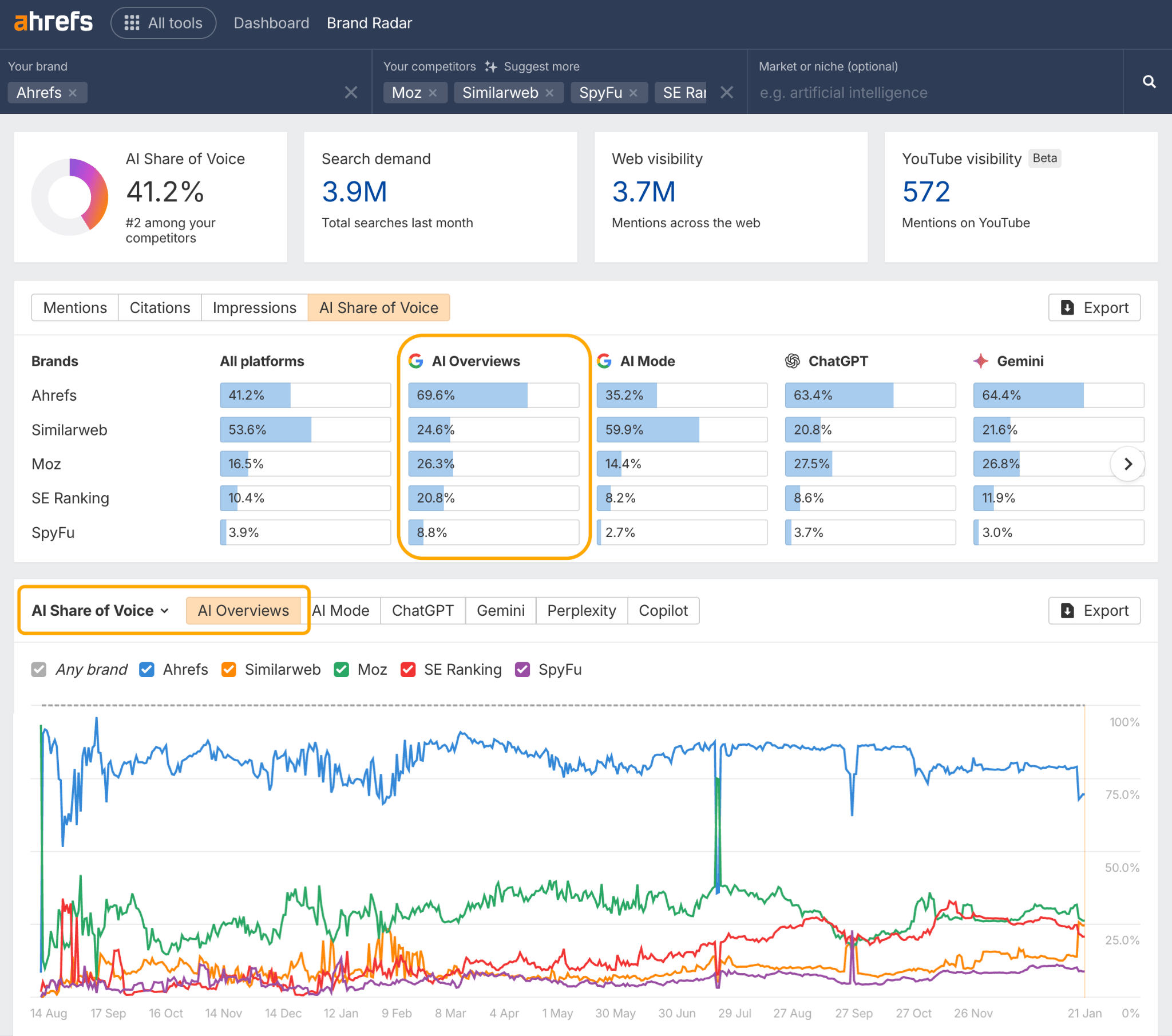
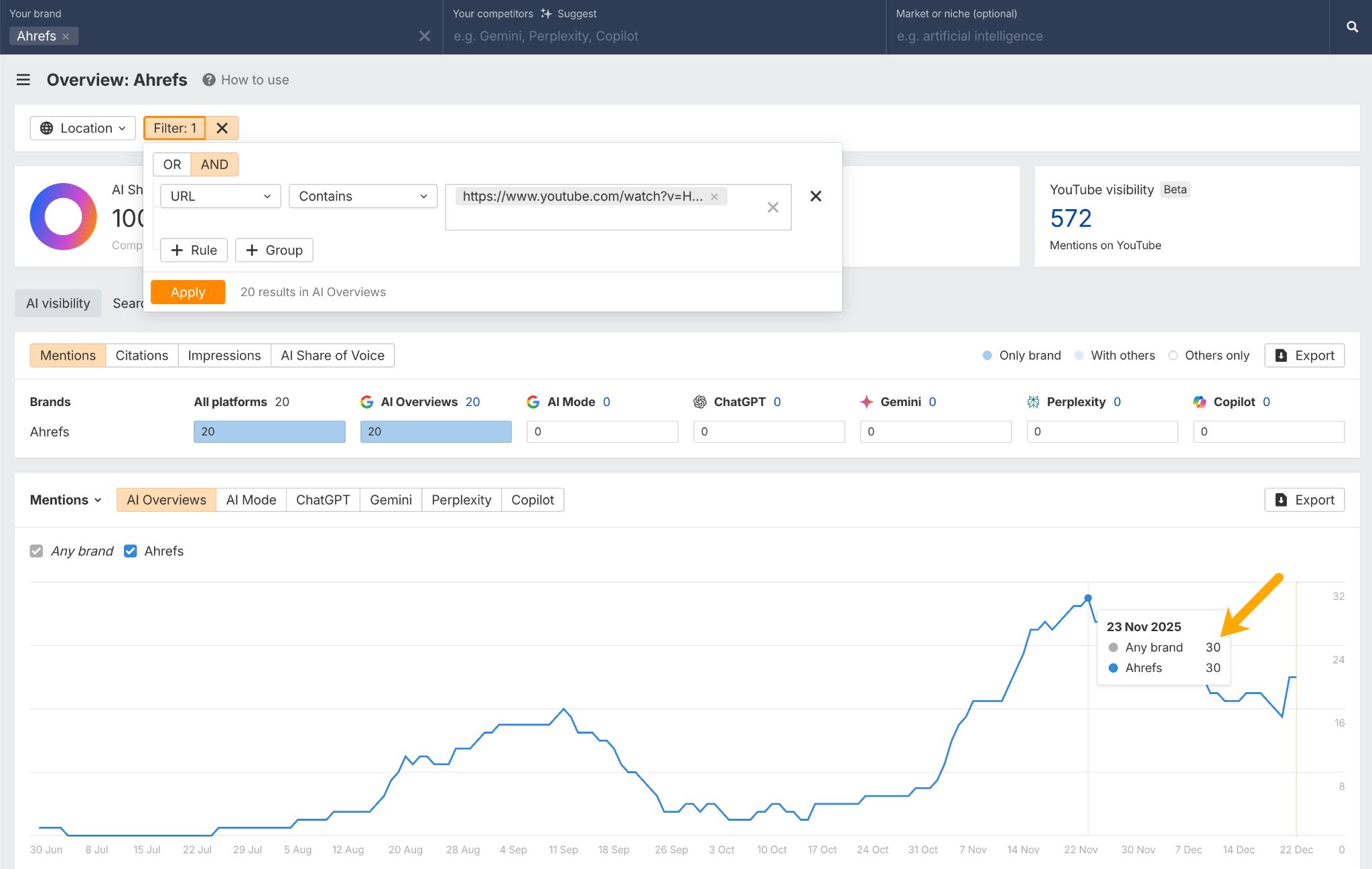
The first step in tracking AI Overview performance is to identify which of your pages are already being cited. Ahrefs Site Explorer offers a quick snapshot of a domain’s total AI Overview citations, including historical performance trends, which is invaluable for regular reporting and benchmarking. By enabling the "AI Overview" checkbox in Site Explorer Overview, users can track the historical performance of these citations. For a more granular view, Ahrefs Brand Radar provides a detailed report on citations over time, encompassing global ownership, specific prompts, AI Overview responses, and competitor analysis. This data allows for tracking the growth of citations and understanding how content, PR, and brand strategies influence AI Overview visibility. Identifying citation gaps where competitors are featured but your brand is not can inform content creation strategies. Citation data can also be accessed via API for integration into custom reporting environments.
2. Tracking AI Overview Keyword Wins and Opportunities:
Several methods exist for tracking keywords associated with AI Overviews:
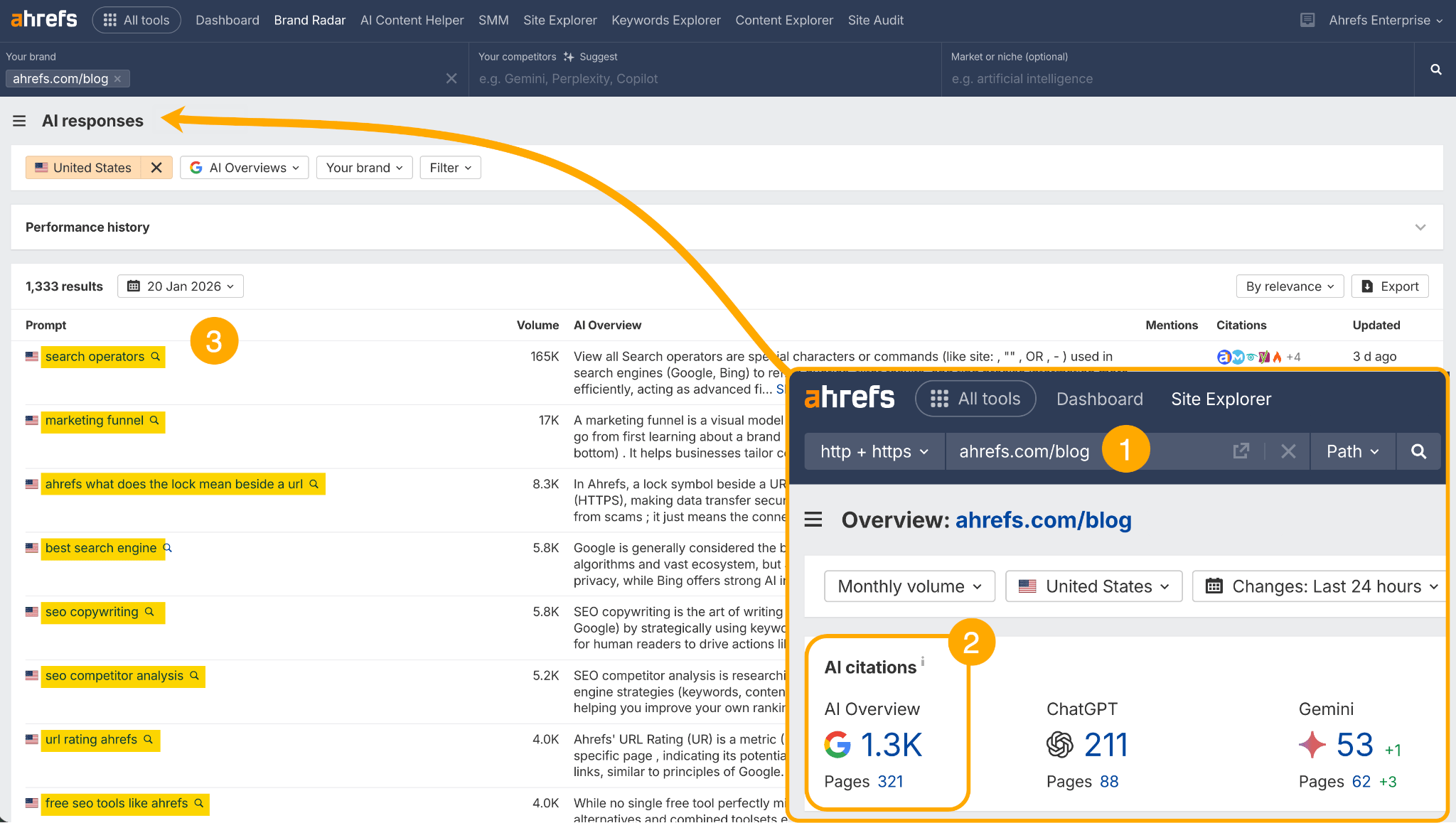
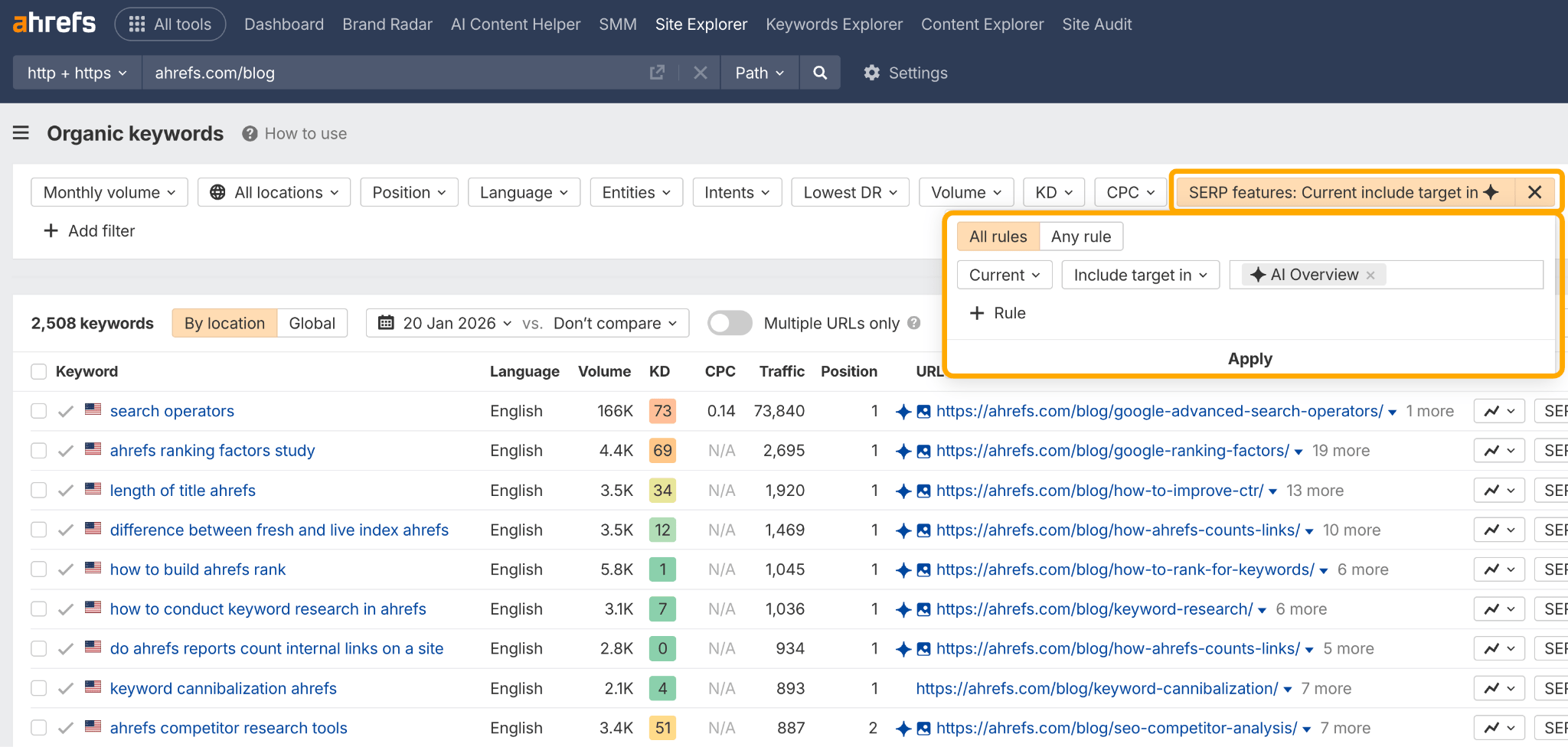
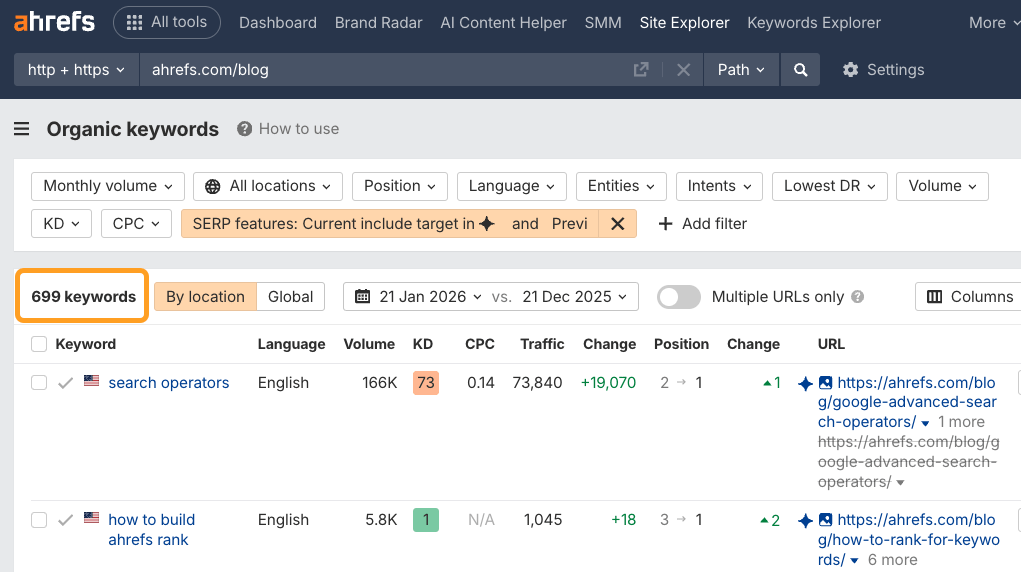
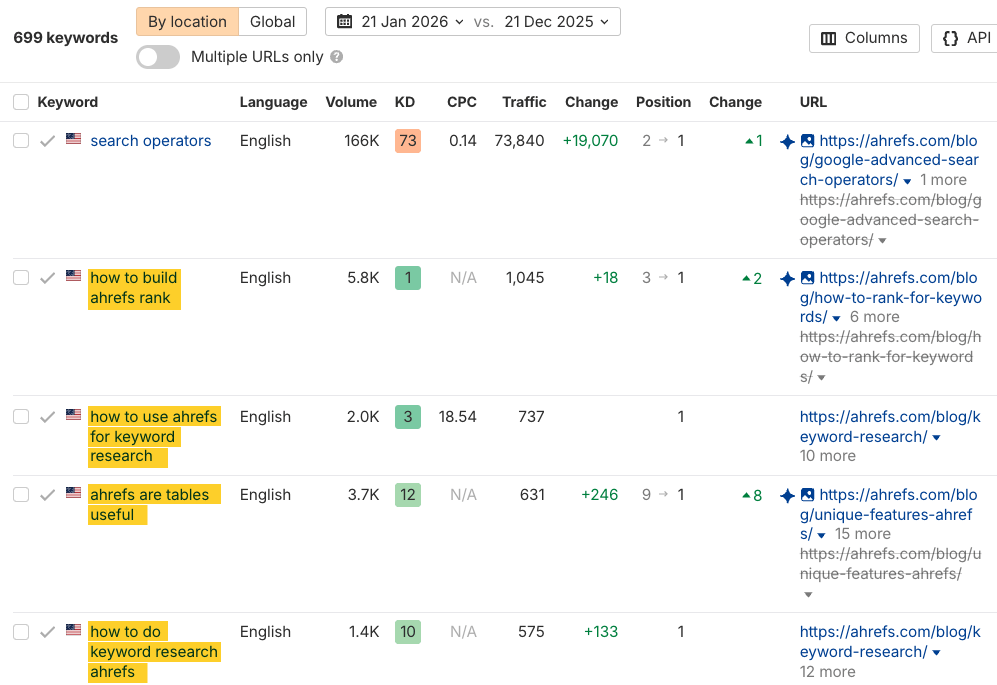
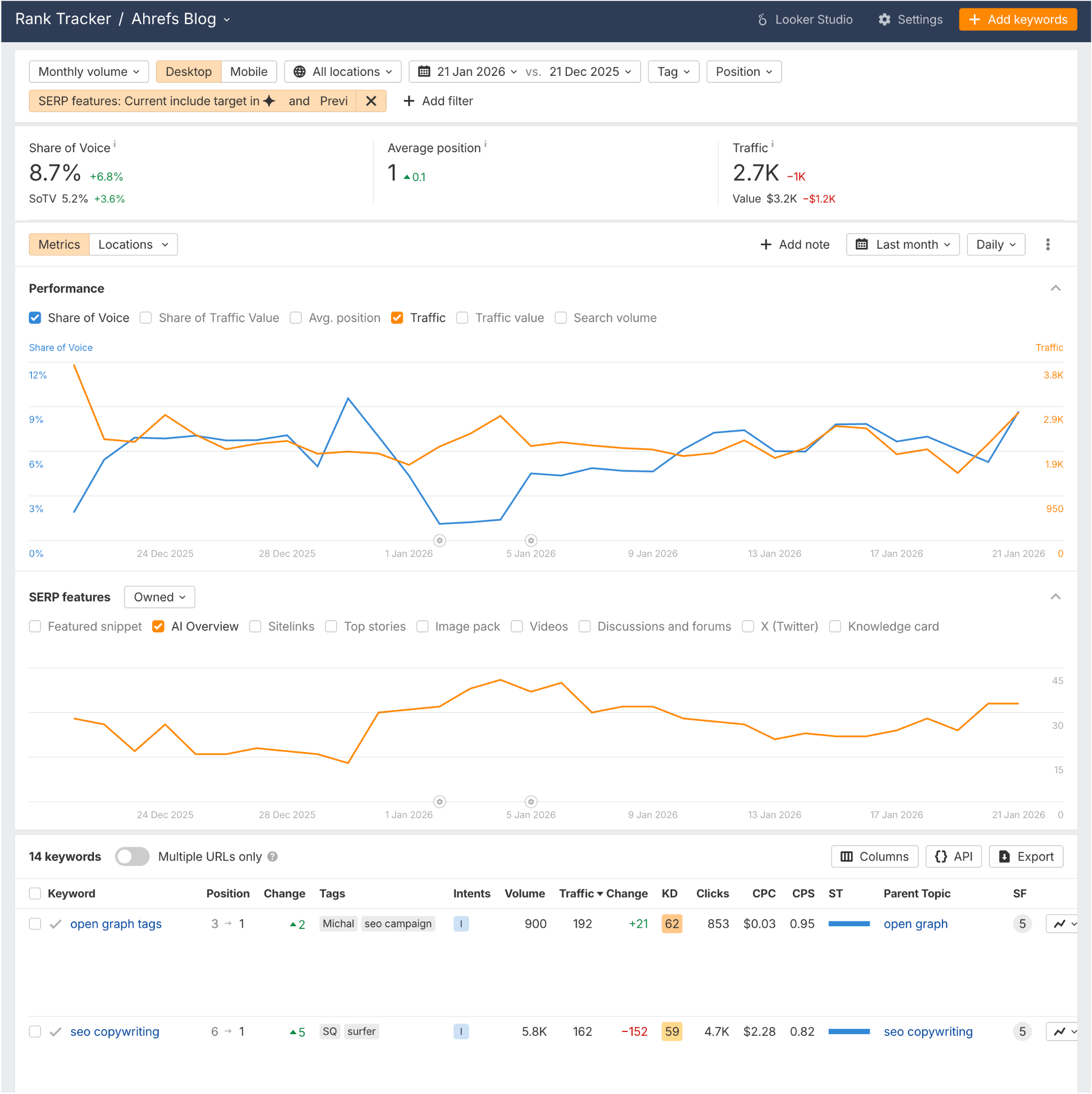
Monitoring Existing Wins: The "AI responses" report within Ahrefs Brand Radar lists all AI Overview keywords a domain has claimed. Additionally, Ahrefs Site Explorer’s Organic Keywords report can be filtered by SERP features to include keywords where the target appears in an "AI Overview."
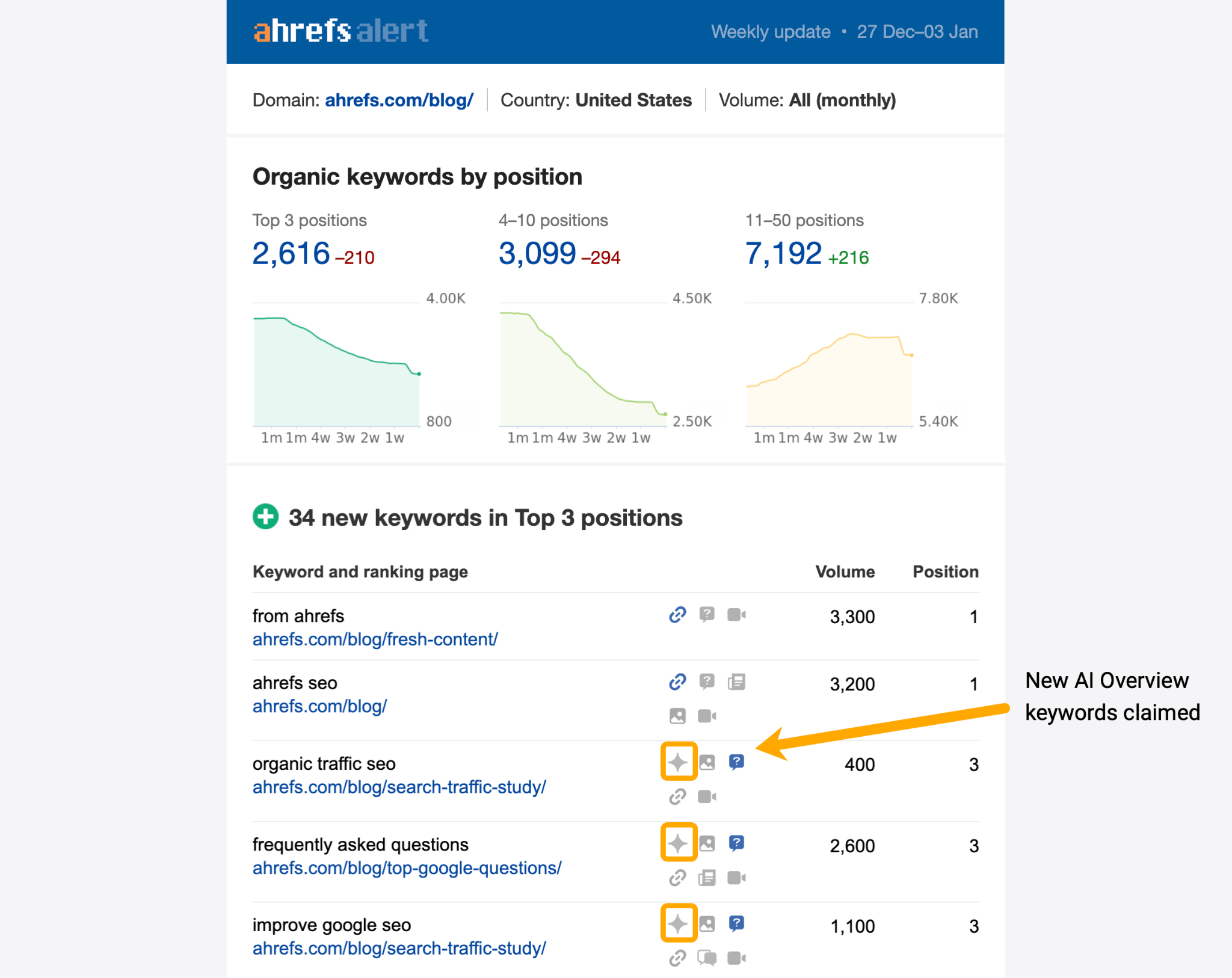
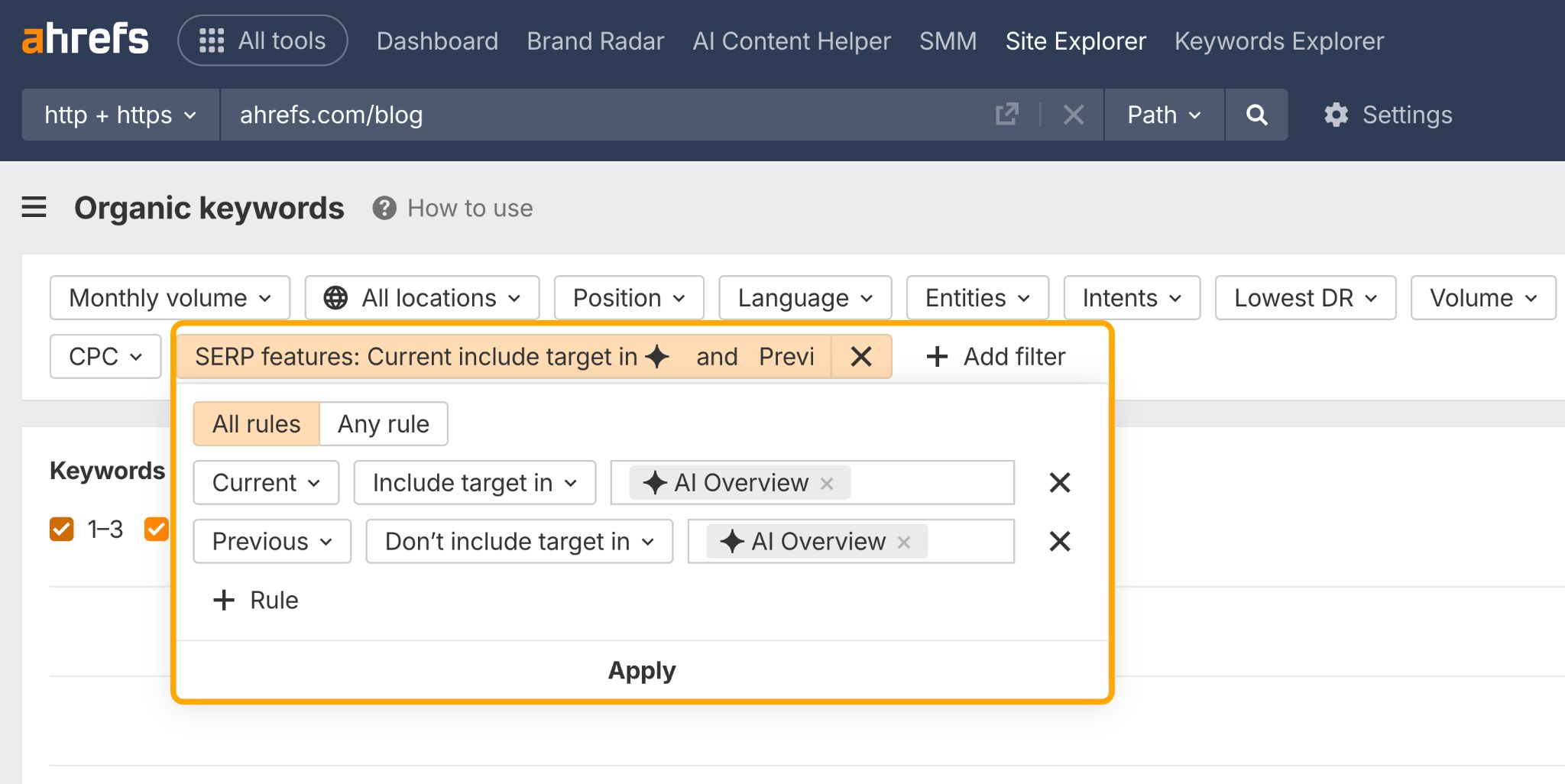
Catching New Wins: Ahrefs Alerts can be set up to notify users of newly won AI Overview keywords, indicated by a sparkle symbol. Alternatively, comparing date ranges in the Organic Keywords report, using filters for "Current include target in AI Overview" and "Previous Don’t include target in AI Overview," can reveal keywords newly claimed in AI Overviews. This data is useful for client reports and leadership updates, demonstrating the impact of SEO efforts. Analyzing these keywords can also reveal which AI Overview keywords continue to drive traffic, even amidst a general decline in clicks from AIOs.
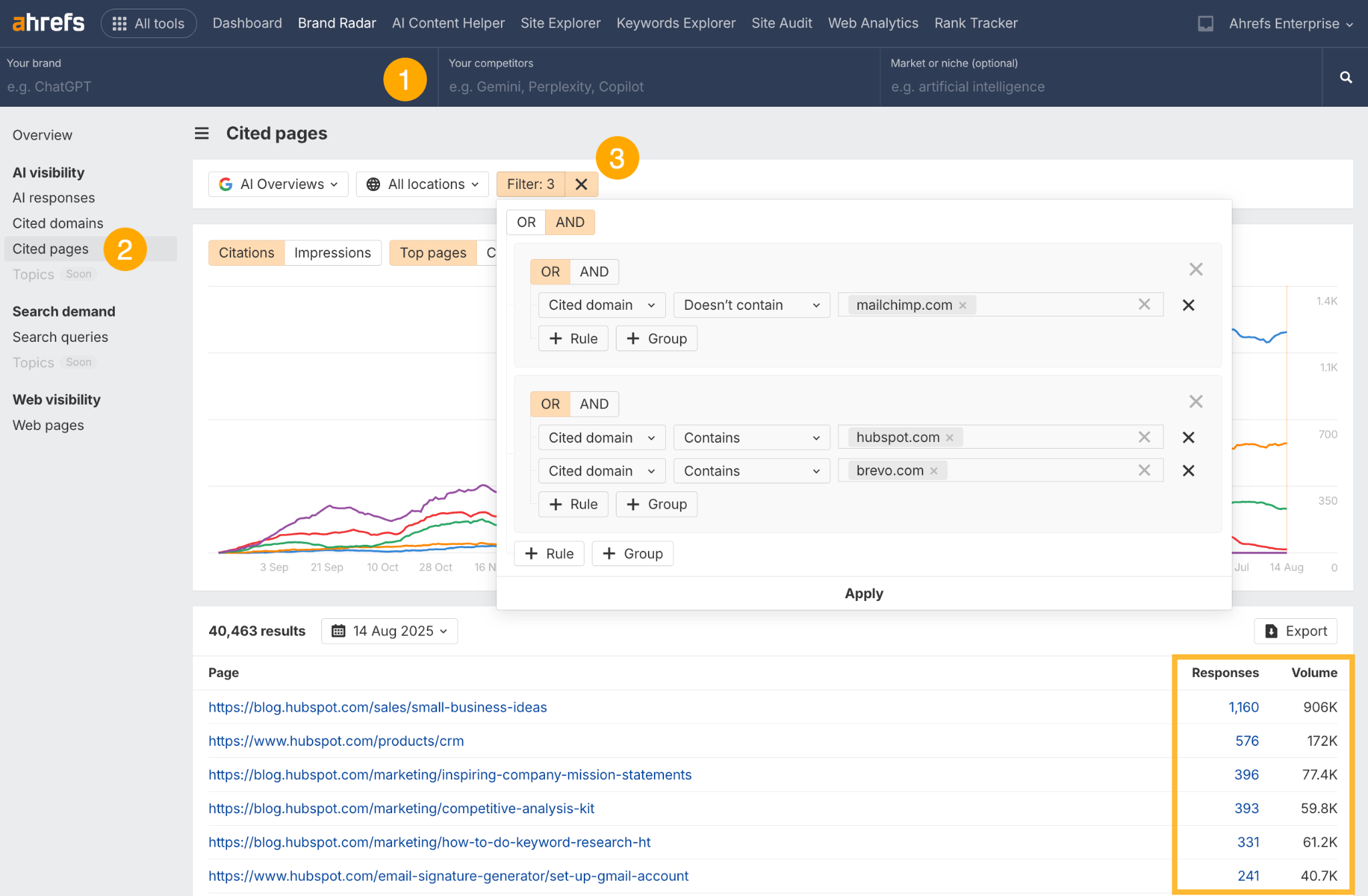
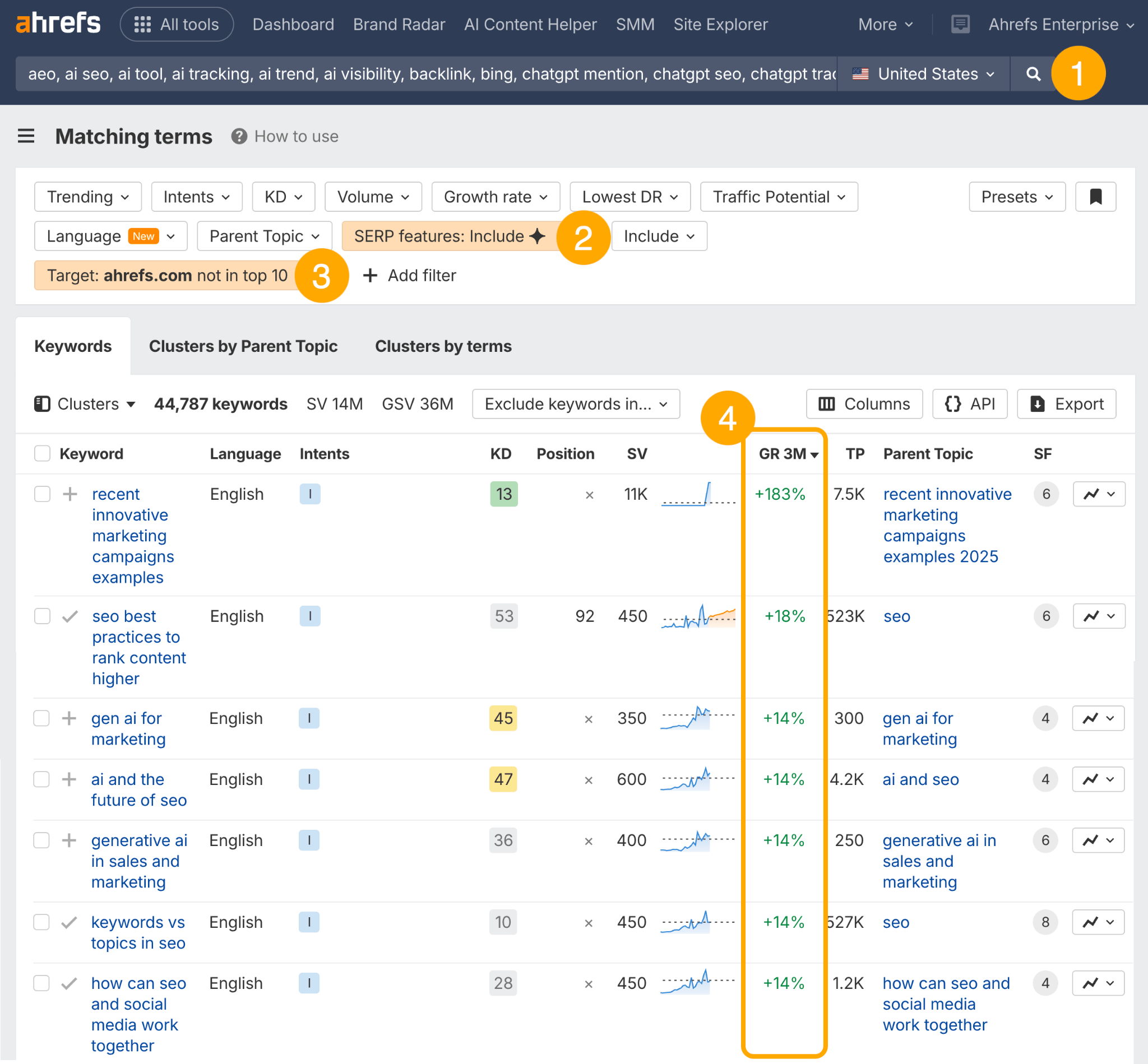
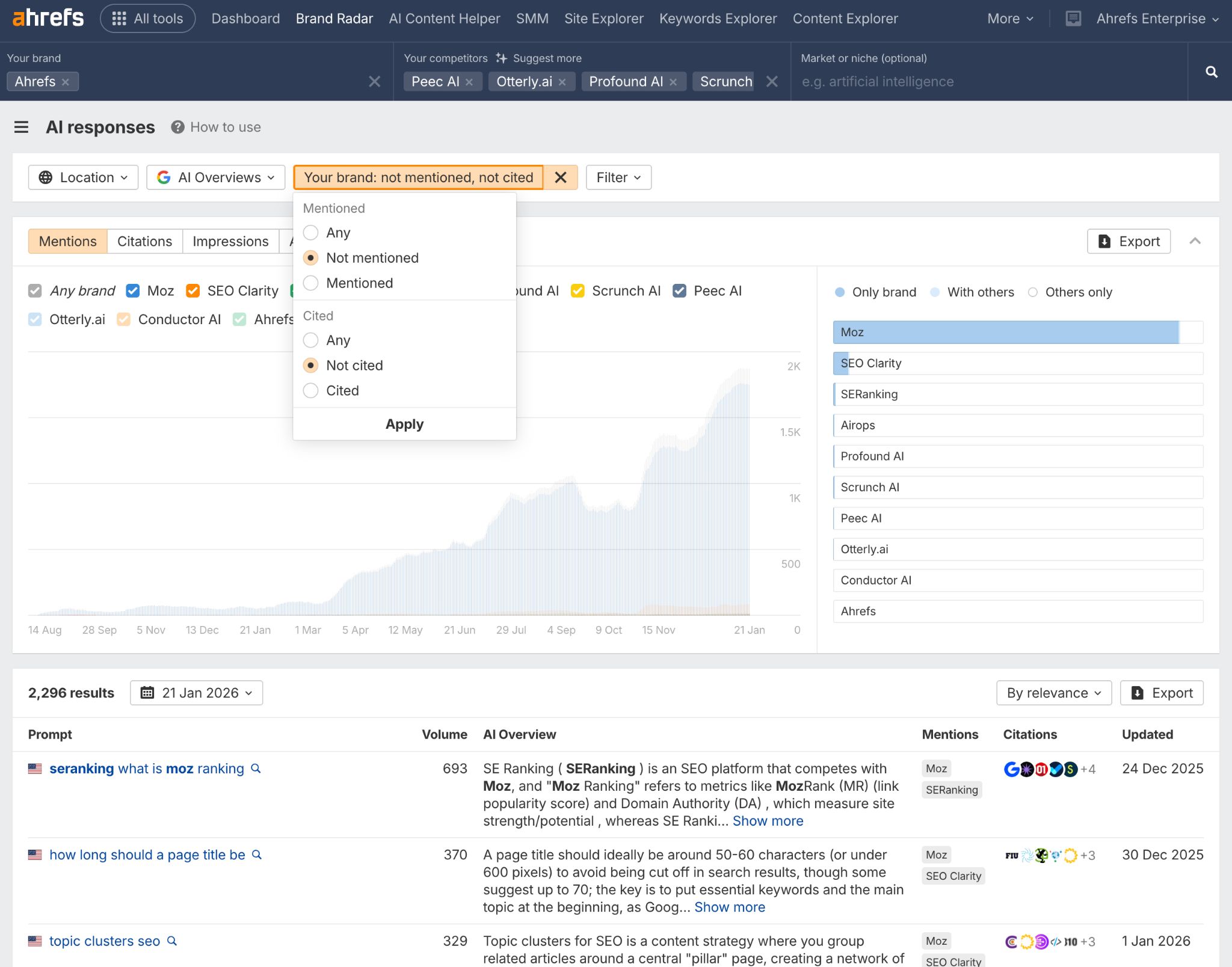
Identifying Unclaimed Opportunities: Ahrefs Keywords Explorer’s "Keyword ideas" reports, such as "Matching terms," can be filtered to identify trending keywords that do not yet feature an AI Overview for a given domain. By applying filters for search volume, keyword difficulty, and growth rates, users can uncover high-potential keywords. These can then be added to a rank tracking tool like Ahrefs Rank Tracker or monitored via Ahrefs Alerts to be notified upon claiming. Further opportunities can be found in Brand Radar by filtering for competitor citations where the user’s brand is "Not mentioned" and "Not cited."
3. Monitoring Brand Mentions in AI Overviews:
Given that AI Overviews are designed to reduce direct clicks, tracking brand mentions is crucial for measuring visibility. AI monitoring tools like Ahrefs Brand Radar provide insights into:
4. Tracking AI Overview Traffic:
Directly attributing traffic from AI Overviews is challenging due to Google’s data handling. However, indirect signals can provide insights:
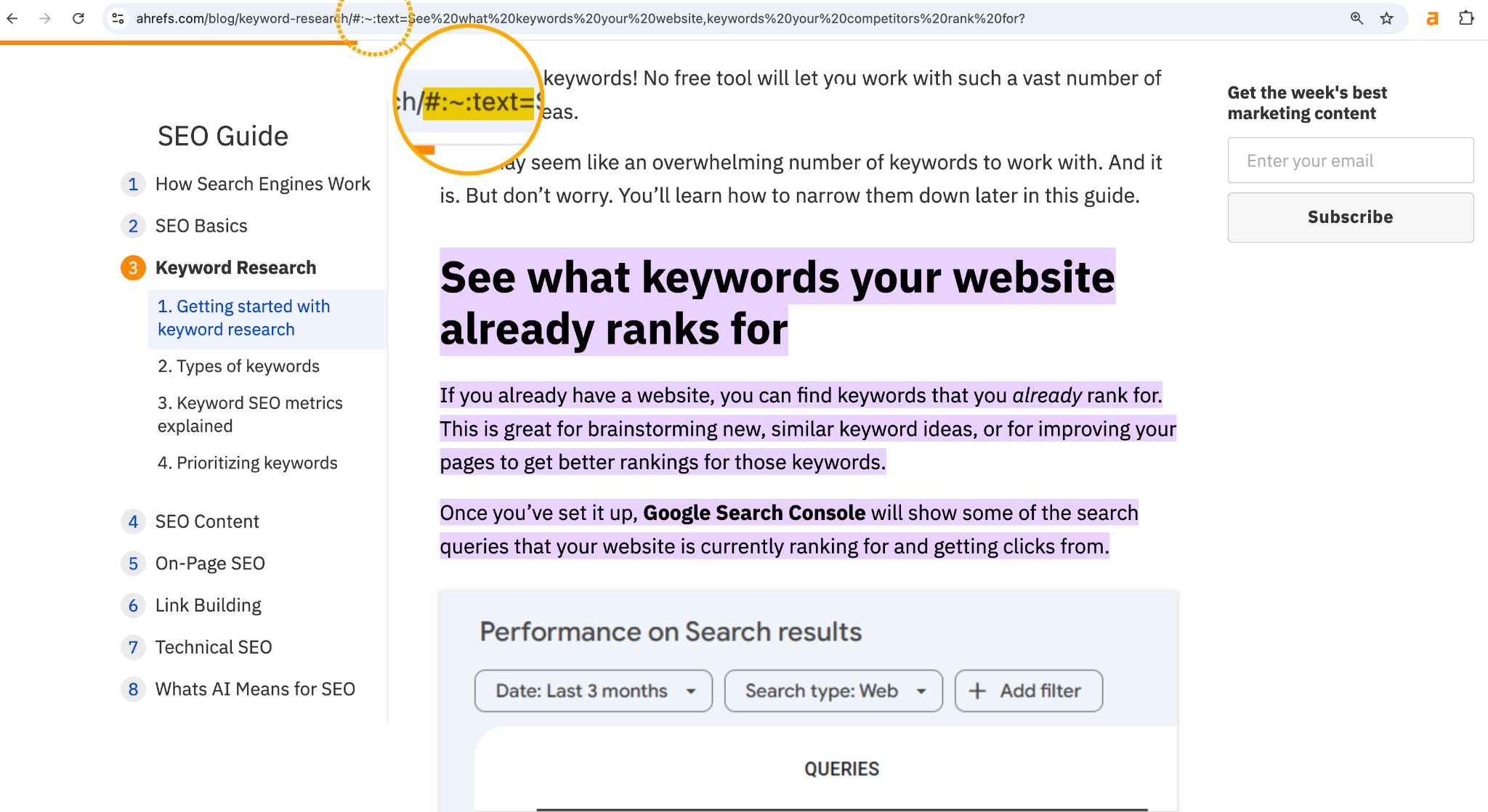
#:~:text= URL Fragments: Google sometimes appends text fragments to URLs in AI Overview clicks, directing users to specific highlighted passages. While GA4 cannot directly track these client-side rendered fragments, a workaround involves using Google Search Console data and following detailed guides, such as the one by Dana Di Tomaso, to track traffic from AI Overviews, Featured Snippets, and People Also Ask boxes.5. Analyzing AI Overview Click-Through Rate (CTR) Changes:
To gauge the impact of AI Overviews on traffic, CTR changes around known rollout dates can be analyzed using Google Search Console data. By filtering for keywords that likely trigger AI Overviews (e.g., informational queries starting with "what," "how," "why," "when") and comparing CTRs before and after an AI Overview expansion, one can estimate the click impact. Ahrefs Brand Radar data can be used to validate this by comparing CTRs for keywords where citations are confirmed. Studies have shown significant CTR drops, around 34.5%, for keywords with AI Overviews compared to informational keywords without them.
6. Tracking AI Overview CTR Drops Without Ranking Changes in GSC:
Another method for estimating AI Overview impact in Google Search Console involves identifying keywords that experience CTR drops without corresponding ranking losses. This phenomenon, often termed "the great decoupling," suggests that AI Overviews are absorbing clicks by answering queries directly on the SERP. Filtering GSC data in tools like Ahrefs to identify queries with declining CTRs but stable rankings can flag keywords potentially affected by AI Overviews. This analysis helps in understanding how AI Overviews impact traffic without necessarily losing SERP position.
7. Vibe-Coded AI Citation Tracking:
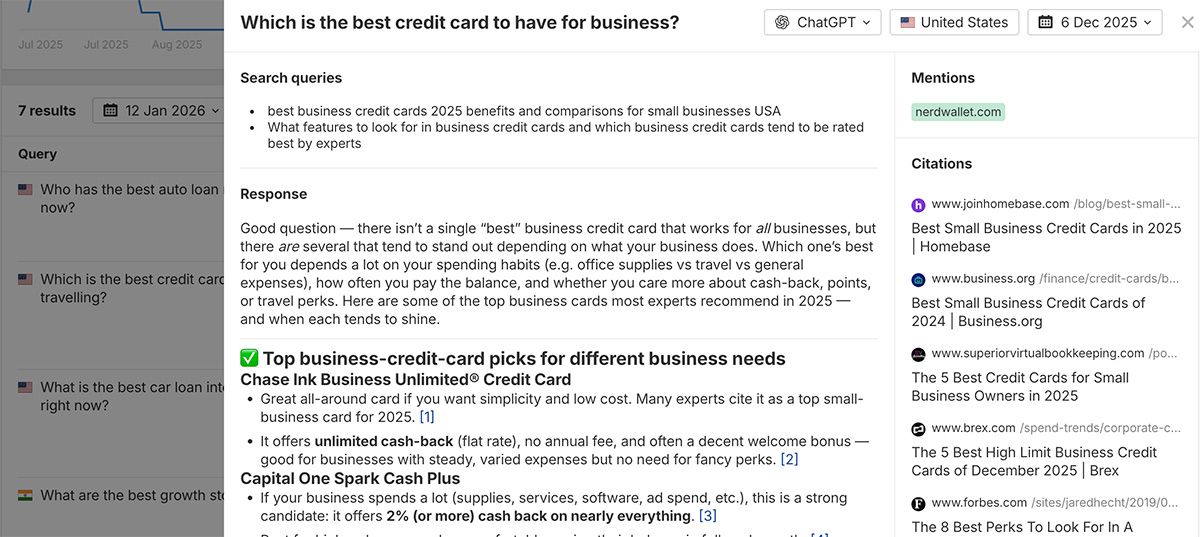
For a more DIY approach, users can create custom AI trackers. By sending prompts to an LLM API and saving the output to a spreadsheet, a basic AI Overview tracker can be built. This method is cost-effective for tracking a small, known set of keywords and provides quick visibility insights. However, it has limitations regarding scale, API credit usage, and the absence of advanced features like AI Overview responses, brand mentions, or competitor share of voice trends.
Conclusion
The evolving search landscape, driven by AI Overviews, requires a strategic shift in how performance is measured. The methods outlined—from tracking citations and keyword wins to monitoring brand mentions and analyzing CTR changes—provide a framework for understanding AI Overview impact. While direct data from Google remains limited, these indirect signals and dedicated tools offer valuable insights. By actively tracking AI Overviews now, businesses can gain a competitive advantage as AI-driven search matures. The choice of tracking method depends on the specific measurement goals and the depth of analysis required, ranging from simple filters in GSC to comprehensive solutions like Ahrefs Brand Radar.