 11
11
Like many companies in the heart of Silicon Valley, Scout AI is at the forefront of developing sophisticated artificial intelligence models and agents designed to automate complex tasks. However, Scout AI’s ambition diverges sharply from the typical applications seen in tech hubs, where AI streamlines digital chores like writing code, managing emails, or facilitating online purchases. Instead, this nascent company is pioneering AI agents engineered for a far more kinetic purpose: to identify, track, and eliminate targets in the physical world using explosive drones. This bold venture places Scout AI at the epicenter of a rapidly evolving and ethically charged debate surrounding the future of military technology and the increasing autonomy of lethal weapon systems.
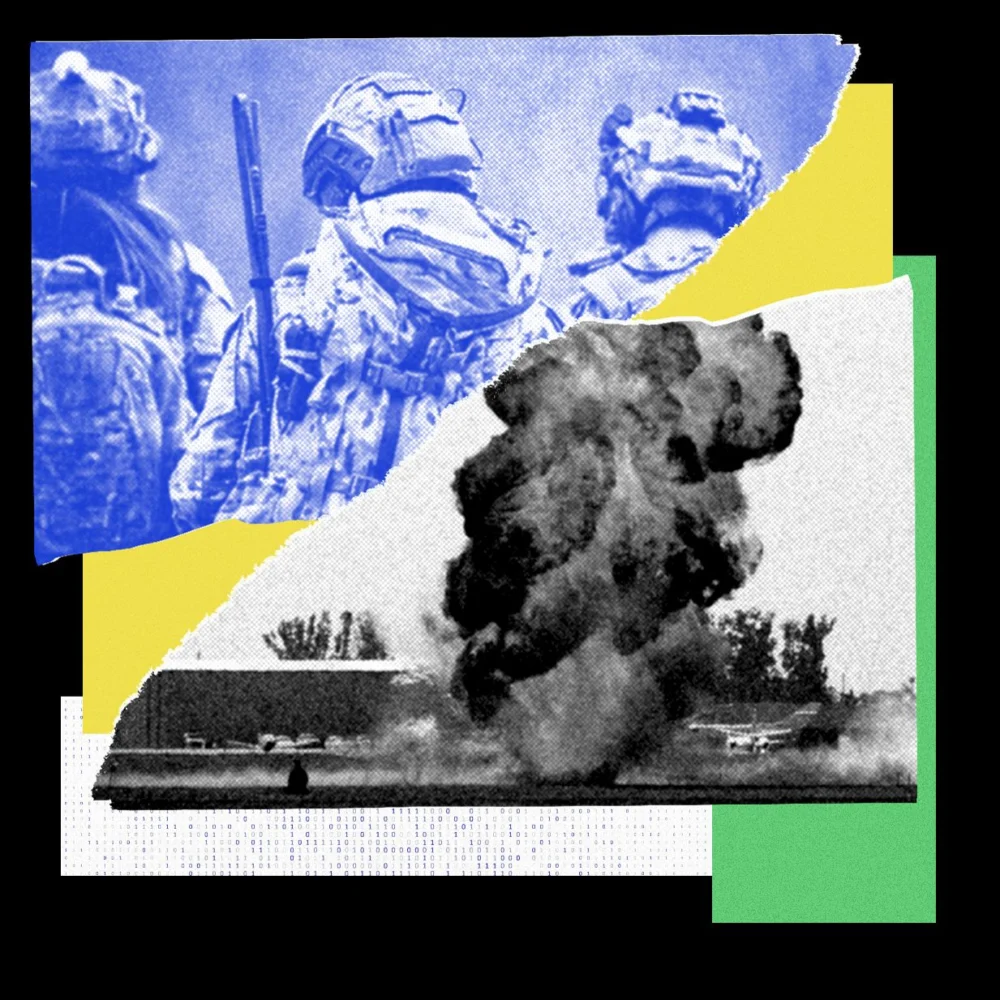
The company recently provided a stark demonstration of its capabilities at an undisclosed military installation nestled within central California. During this pivotal exercise, Scout AI’s advanced technology was given full command of a self-driving off-road vehicle, augmented by a pair of lethal drones. The mission, orchestrated entirely by AI agents, involved locating a truck concealed within the expansive terrain and subsequently obliterating it with an explosive charge. This display underscored a significant leap in autonomous warfare, showcasing AI’s potential to execute complex military operations from target identification to kinetic strike without direct human intervention.
Colby Adcock, the CEO of Scout AI, articulated the company’s vision in a recent interview, stating, "We need to bring next-generation AI to the military." He elaborated on their methodology, explaining, "We take a hyperscaler foundation model and we train it to go from being a generalized chatbot or agentic assistant to being a warfighter." This transformation highlights a strategic pivot from general-purpose AI to highly specialized, combat-ready systems. It is noteworthy that Colby Adcock’s brother, Brett Adcock, also leads a prominent AI startup, Figure AI, which focuses on developing humanoid robots, indicating a family trend of entrepreneurial innovation in advanced AI fields.
Scout AI is not alone in this endeavor; it is part of a burgeoning generation of startups dedicated to adapting cutting-edge AI technologies, originally developed in major AI research labs, for military applications. This trend reflects a widespread belief among policymakers and defense strategists that harnessing advanced AI capabilities will be instrumental in achieving future military dominance. The immense combat potential attributed to AI is a primary reason why the US government has implemented measures to restrict the sale of advanced AI chips and chipmaking equipment to China, aiming to curtail China’s technological advancement in this critical sector. Despite these broader strategic controls, the Trump administration notably chose to loosen some of these restrictions more recently, adding a layer of complexity to the geopolitical landscape of AI development.

Michael Horowitz, a distinguished professor at the University of Pennsylvania and a former deputy assistant secretary of defense for force development and emerging capabilities at the Pentagon, commented on this burgeoning field. He affirmed the value of such innovation, stating, "It’s good for defense tech startups to push the envelope with AI integration. That’s exactly what they should be doing if the US is going to lead in military adoption of AI." Horowitz’s perspective underscores the imperative for the United States to foster innovation in AI-driven defense technologies to maintain a competitive edge.
However, Horowitz also offered a crucial caveat, emphasizing that integrating the latest AI advancements into military systems presents considerable practical challenges. He pointed out that large language models, the foundational technology for many modern AI systems, are inherently unpredictable. Furthermore, AI agents—similar to those controlling popular consumer AI assistants like OpenClaw, which have been known to "misbehave" even when assigned relatively benign tasks like online shopping—pose significant risks when deployed in critical combat scenarios. Horowitz stressed the particular difficulty in demonstrating the robustness and cybersecurity of such systems, requirements that would be absolutely essential for their widespread adoption and reliable operation within military contexts. The potential for unforeseen errors or vulnerabilities in a combat situation could have catastrophic consequences, making rigorous testing and validation paramount.
The recent demonstration by Scout AI provided a detailed glimpse into the multi-layered autonomy embedded in their combat systems. The mission commenced with a specific command fed into Scout AI’s central system, known as Fury Orchestrator. The command read: "Fury Orchestrator, send 1 ground vehicle to checkpoint ALPHA. Execute a 2 drone kinetic strike mission. Destroy the blue truck 500m East of the airfield and send confirmation." This succinct instruction initiated a cascade of autonomous decisions and actions.
At the core of this operation is a relatively large AI model, boasting over 100 billion parameters. This sophisticated model is designed to operate either on a secure cloud platform or within an air-gapped computer system located directly on-site, ensuring operational security and minimizing external vulnerabilities. Scout AI employs an undisclosed open-source model, stripped of its original restrictions, which serves as the primary agent for interpreting the initial command. This foundational model then acts as a strategic commander, issuing subsequent commands to smaller, more specialized AI models, each containing approximately 10 billion parameters. These smaller models are distributed across the ground vehicles and drones involved in the exercise. Each of these smaller models, in turn, functions as an agent, generating its own commands for even lower-level AI systems responsible for controlling the precise movements and operational functions of the vehicles and drones.
Seconds after the Fury Orchestrator received its marching orders, the self-driving ground vehicle swiftly moved along a dirt track, navigating through dense brush and trees. After a few minutes of autonomous travel, the vehicle came to a calculated stop and deployed its pair of drones. The drones then ascended and flew directly into the designated area where the target truck was believed to be waiting. Upon visually identifying the blue truck, an AI agent operating within one of the drones made the critical decision to initiate a strike. It issued an immediate order to fly towards the target and detonate its explosive charge just moments before impact, successfully destroying the truck.

While the capabilities demonstrated by Scout AI represent a significant technological advance, they also intensify long-standing ethical and practical concerns surrounding autonomous weapons. Militaries globally already possess systems capable of exercising lethal force autonomously within narrowly defined parameters. However, the advent of adaptable, off-the-shelf AI, as developed by companies like Scout AI, could dramatically expand the scope of autonomy with potentially fewer human safeguards in place. Critics, including arms control experts and AI ethicists, have voiced serious warnings about the new complexities and profound ethical risks this poses. A particularly contentious point is the prospect of AI systems being tasked with making life-or-death decisions, such as determining who is and isn’t a combatant, a role traditionally reserved for human judgment and adherence to international humanitarian law.
The ongoing conflict in Ukraine has already provided a stark preview of how readily inexpensive, commercially available hardware, such as consumer drones, can be repurposed and adapted for deadly combat roles. Some of these systems deployed in Ukraine already incorporate advanced autonomous functions, though, crucially, human operators often retain the authority to make key decisions to ensure reliability and accountability. Scout AI’s technology, by contrast, suggests a move towards even greater AI autonomy in lethal decision-making.
Collin Otis, cofounder and CTO of Scout AI, stated that the company’s technology is designed to rigorously adhere to the US military’s rules of engagement, as well as international norms and conventions like the Geneva Convention. This commitment aims to address some of the ethical concerns, asserting that the AI will operate within established legal frameworks. Colby Adcock further revealed that Scout AI currently holds four contracts with the Department of Defense and is actively competing for a new contract to develop a sophisticated system for controlling swarms of unmanned aerial vehicles. He estimates that it would take at least a year, or potentially longer, for their technology to be ready for full deployment in a military context.
Adcock emphasized that this elevated level of autonomy is precisely what differentiates Scout AI’s system and makes it so promising. He stated, "This is what differentiates us from legacy autonomy." He clarified that older autonomous systems "can’t replan at the edge based on information it sees and commander intent, it just executes actions blindly." In contrast, Scout AI’s agents are designed to interpret complex orders, dynamically adapt to changing battlefield conditions, and make real-time decisions, embodying a more sophisticated form of "commander’s intent" rather than simply executing pre-programmed actions. However, the very notion of an AI system possessing the freedom to interpret orders and adapt on its own raises significant concerns about the potential for unintended outcomes, especially in high-stakes combat environments.
Despite the impressive demonstrations and the promise of advanced adaptive AI, Michael Horowitz’s concluding caution remains pertinent. He advises against confusing these advanced demonstrations with "fielded capabilities that have military-grade reliability and cybersecurity." The leap from a controlled demonstration to robust, battle-ready systems capable of operating reliably and securely in diverse and unpredictable combat zones is immense. This transition requires overcoming significant engineering, logistical, and ethical hurdles, ensuring that such powerful autonomous systems are not only effective but also trustworthy and accountable in the most demanding circumstances.