 11
11
The marketing industry, a critical operation across all sectors, is undergoing a rapid transformation fueled by artificial intelligence. This necessity of marketing has led to a proliferation of AI-powered tools aimed at optimizing various aspects of a marketer’s role. From major social platforms like Facebook, Instagram, and TikTok, to tech giants such as Microsoft and Google, and specialized content generation startups like Jasper and Copy.ai, a vast array of AI solutions promises enhanced efficiency and effectiveness. These tools automate tasks, provide deeper insights, personalize customer interactions, and optimize campaign performance across diverse channels, fundamentally altering traditional marketing workflows and promising to make marketers’ lives easier in countless ways.
Amidst this already crowded landscape, the emergence of yet another marketing AI startup might initially seem unexpected. However, San Francisco-based Kana has recently unveiled itself from stealth mode, introducing a comprehensive suite of AI agents designed to address critical marketing operations. Its platform handles sophisticated data analysis, precision audience targeting, dynamic campaign management, responsive customer engagement, strategic media planning, and advanced optimization for AI chatbots. This ambitious undertaking is supported by a significant $15 million in seed funding, spearheaded by prominent venture capital firm Mayfield, signaling strong investor confidence in Kana’s vision and technological prowess.
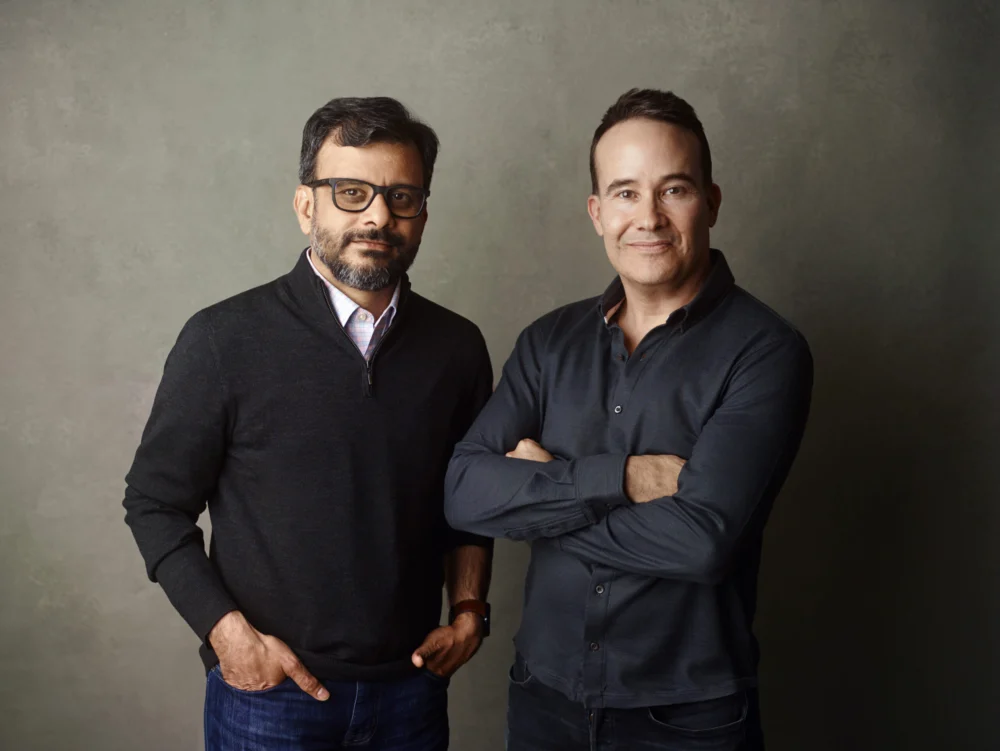
What truly distinguishes Kana is the unparalleled pedigree of its co-founders, Tom Chavez (CEO) and Vivek Vaidya (CTO). With over 25 years of dedicated experience building marketing technology, Chavez and Vaidya bring a depth of understanding and a proven track record that few nascent startups can match. Kana represents their fourth entrepreneurial venture together, building upon a legacy of successful exits and innovative contributions to the martech space. Their previous endeavors include Rapt, an ad optimization startup acquired by Microsoft in 2008, and Krux, a data management platform (DMP) that Salesforce purchased in 2016 for $340 million in cash and stock, potentially reaching $750 million overall. Most recently, Kana itself was incubated for nine months within superset, a startup studio also co-founded by Chavez and Vaidya, which provided a unique environment for its development and strategic refinement.
Chavez characterized the current period as a "wondrous" time for innovation, emphasizing the opportune moment to leverage their extensive experience with contemporary AI advancements to address persistent challenges within marketing. He conveyed a palpable sense of market demand, stating, "We see a market that’s crying out for solutions that meet this moment." This profound understanding stems from their long tenure in the industry. "We understand the space deeply, having wallowed in it arguably a little too long; having really stood in our customers’ pain," Chavez told TechCrunch, underscoring their firsthand knowledge of the pain points and inefficiencies marketers grapple with daily. This historical perspective allows Kana to approach problem-solving with empathetic insight into user needs, identifying genuine gaps in existing AI marketing solutions.
Kana’s solution centers on an architecture of "loosely coupled" AI agents. This design philosophy enables marketers to tailor and adapt these agents "on the fly" to suit evolving campaign requirements and market dynamics. A key advantage is the platform’s capacity for seamless integration into existing legacy marketing software, mitigating the often-onerous process of overhauling established systems. Furthermore, these agents are engineered to simultaneously operate across disparate marketing functions, enhancing operational fluidity and efficiency, allowing for a more holistic and integrated approach to campaign execution.
For example, a marketer could upload a media brief into Kana’s platform. The AI agents would then autonomously analyze the brief to discern campaign objectives and target KPIs. Following this, they would identify optimal audience segments, drawing upon vast datasets from various sources. Concurrently, the agents would pull critical information from inventory systems and comprehensive market research databases, using this aggregated data to meticulously refine and optimize the campaign plan, suggesting optimal channels, ad creatives, and messaging. Beyond initial planning, the Kana platform incorporates autonomous capabilities for real-time campaign tracking, continuous optimization based on performance metrics, and automated reporting, providing marketers with unparalleled visibility and control throughout the campaign lifecycle.
Complementing its agent-based system, Kana also offers advanced synthetic data generation. This feature is designed to augment and enrich existing third-party data sources, proving invaluable for activities such as in-depth market research and precise audience targeting. Chavez highlighted several strategic benefits: it can significantly reduce the costs associated with acquiring and utilizing extensive third-party data, effectively fill in crucial data gaps that might otherwise impede comprehensive analysis, and empower marketers to conduct A/B tests and refine strategies across various platforms with unprecedented speed and agility. Synthetic data allows for robust testing in environments where real data might be scarce, sensitive, or too costly to acquire for every permutation of a strategy.
Crucially, Kana’s methodology is built around the principle of keeping "humans in the loop." This ensures marketers retain ultimate control and oversight, enabling them to approve the actions proposed by the AI agents, provide critical feedback to refine their performance, and customize the agents’ functionalities as their strategic needs evolve. This collaborative model positions AI not as a replacement for human intelligence, but as an intelligent assistant that augments and amplifies human capabilities, fostering trust and ensuring ethical application of advanced technology in marketing decisions.
Both Chavez and Vaidya have consistently underscored the paramount importance of the platform’s inherent flexibility. They contend that the ability to rapidly deploy, meticulously tailor, and even construct new AI agents in real-time offers marketers a distinct advantage, allowing them to observe tangible results from their campaigns far more quickly than would be possible with conventional, more rigid legacy systems. This agility translates directly into faster iterations, quicker learning cycles, and ultimately, more effective and responsive marketing campaigns, adapting swiftly to market changes and consumer behavior.
Looking ahead, Kana views this very flexibility – the capacity to customize its platform extensively for individual customers – as its primary strategic moat against both entrenched incumbents and other emerging startups vying for market share. "We have the opportunity, it’s not to create bespoke solutions, but to highly tailor and configure these solutions to meet customers where they are. Larger companies just are never going to get there," Chavez asserted, highlighting the inherent limitations of larger, more bureaucratic organizations in adapting to highly specific client needs due to their legacy tech debt and standardized product offerings.
Vaidya further articulated this unique value proposition, envisioning a "third option" for customers that transcends the traditional "build or buy" dilemma. "We live in a world which allows us to explore a third option [with customers]: not build, not buy, but build with — build with in a way which is supported," Vaidya explained. This collaborative "build with" model suggests a partnership approach, where Kana provides the foundational AI infrastructure and expertise, working closely with clients to co-create tailored solutions that are continuously supported and evolved. He concluded, emphasizing their operational advantage: "We can move with insane speed that these big companies just cannot. And that’s our advantage." This agility, combined with deep domain expertise, positions Kana to respond to market shifts and customer demands with a velocity that larger, more established players often struggle to achieve.
The $15 million in fresh capital will be strategically deployed to fuel Kana’s expansion, particularly in critical areas such as engineering, product development, and go-to-market initiatives. This investment will enable the company to scale its team and accelerate the refinement and rollout of its innovative AI agent suite. As part of the funding round, Navin Chaddha, managing partner at Mayfield, will join Kana’s board of directors, bringing valuable strategic guidance and industry insights to the burgeoning company. This move further solidifies the partnership between Kana and Mayfield, providing a strong foundation for future growth and market penetration in the dynamic world of AI-powered marketing.
Ram Iyer, a distinguished financial and tech reporter and editor, provided this insightful report. With a background covering North American and European M&A, equity, regulatory news, and debt markets at Reuters and Acuris Global, Iyer has also contributed extensively to topics spanning travel, tourism, entertainment, and books. He can be reached for contact or outreach verification via email at [email protected].