 11
11 1
1 2
2 3
3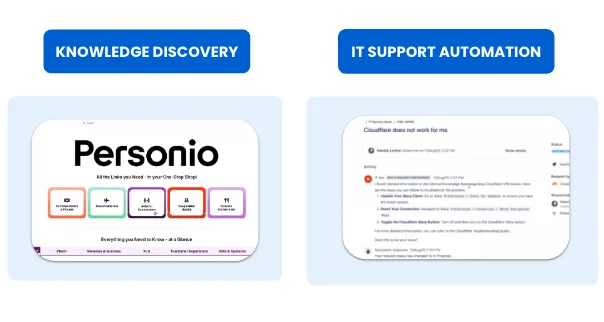
Modern enterprises currently face a dual challenge: the external demand for rapid technological adaptation and the internal drag of fragmented systems. For Personio, a leading German HR software provider, this tension became a primary obstacle as the company sought to scale its operations to support four million users by 2026. With a workforce growing toward 2,000 employees, the organization realized that its existing patchwork of collaboration tools was no longer sustainable. By transitioning to the Atlassian Teamwork Collection—a unified stack comprising Jira, Confluence, and Loom, powered by the AI-driven Rovo—Personio successfully reduced internal friction, tightened security protocols, and established a scalable foundation for future growth.
The difficulties Personio encountered are indicative of a broader trend in the corporate world. As artificial intelligence lowers barriers to entry for competitors and shipping cycles accelerate across all industries, market leaders are finding themselves vulnerable to more agile disruptors. For Personio, these pressures were exacerbated by a legacy of "organic" growth that had resulted in significant integration debt. When Natalia Lezhai joined the company as a Senior Atlassian Expert, she discovered a collaboration environment that was described as "creatively organized" but functionally chaotic. Most notably, the company had inadvertently authorized over 300 different system administrators, leading to a total lack of standardization and a high risk of data loss.
This fragmentation was not limited to administrative permissions; it extended to the very tools employees used to execute their daily tasks. Personnel were split across multiple platforms, including Notion for documentation and Miro for digital whiteboarding, while simultaneously utilizing scattered, standalone instances of Atlassian products. This lack of central governance meant that auditing usage was nearly impossible, and compliance practices—while not as strictly regulated as in the finance or healthcare sectors—were frequently compromised. Security teams lacked visibility into how sensitive information was being shared, and "Shadow IT" flourished as individual employees created free accounts for various tools outside of corporate oversight.
Recognizing that adding more niche solutions would only deepen the crisis, Personio’s leadership initiated a strategic shift toward consolidation. The objective was to create a single, integrated foundation that could support cross-functional collaboration while providing the necessary level of executive control. The cornerstone of this transformation was the adoption of the Atlassian Teamwork Collection. This move allowed the company to phase out redundant platforms like Notion and migrate all content and collaboration workflows into Confluence. Similarly, the organization began consolidating its whiteboarding needs, utilizing Confluence whiteboards as a robust alternative to Miro.
To ensure this new system was adopted effectively, Personio developed the "Personio Hub" within Confluence. This centralized knowledge base serves as the definitive source of truth for the entire company. By implementing consistent templates, repeatable navigation patterns, and clear ownership models, the company ensured that information was not only easy to find but also easy to maintain. A central landing page was established to orient employees across the various Atlassian products, providing a single starting point for accessing tools and workflows. This structural clarity significantly reduced the cognitive load on employees, who previously had to navigate a labyrinth of disconnected systems.
The practical applications of this revamped system are most visible in Personio’s People Workplace and IT hub. These spaces were intentionally designed to address the most commonly searched topics, utilizing "scoped search" functionality to filter out noise and deliver precise results for policies, how-to guides, and internal processes. The management of these spaces is driven by analytics, allowing the company to highlight "hot topics" based on actual employee needs. Furthermore, strict content hygiene is enforced through regular reviews and clearly assigned page owners, ensuring that the information remains accurate and trustworthy.
Beyond simple knowledge management, Personio integrated Jira and Confluence to standardize core operational workflows. This includes the tracking of Objectives and Key Results (OKRs) and the management of large-scale projects. Even the legal department has benefited from this unification, utilizing legal service desks that handle both internal and external requests. By employing carefully designed permission schemes, the company is able to protect sensitive legal data while maintaining the speed and transparency of a modern service desk.

The introduction of Rovo, Atlassian’s AI-powered intelligence layer, has further accelerated Personio’s productivity. Because the company had already invested the effort to clean and unify its data foundation, the AI was able to provide immediate value. Employees can now use natural language to query the system, receiving answers backed by the most current Confluence content. In the IT department, a Tier 1 support agent was developed to handle routine requests such as password resets and access issues. This agent automatically searches the knowledge base to provide answers and links to relevant documentation; if the necessary information is missing, the AI creates a subtask for Tier 2 support to fill the knowledge gap, creating a self-improving documentation cycle.
The impact of AI is also felt at the individual contributor level. In one instance, a platform engineer used Rovo to aggregate six months’ worth of Jira tickets, GitHub pull requests, and Confluence pages to generate a draft for a performance review. A task that would traditionally require hours of manual collation was completed in a fraction of the time. As the quality of documentation continues to improve across the organization, the utility of AI compounds, allowing humans to delegate repetitive administrative tasks and focus on high-value strategic initiatives.
Another critical component of Personio’s transformation was the adoption of asynchronous communication through Loom. Guided by the philosophy that "if it can be async, it will be async," the company moved away from the culture of constant live meetings. Instead, complex information and decisions are now captured in Loom video recordings and embedded directly into Confluence pages. This approach supports diverse working styles and time zones, as employees can consume information at their own pace. Loom AI further enhances this by generating written transcripts and summaries, catering to those who prefer reading over watching video.
From a security perspective, the transition to Loom’s enterprise controls has eliminated the risks associated with Shadow IT. Security teams now have full visibility into video sharing patterns and can enforce privacy policies through centralized accounts. This prevents sensitive internal content from being shared via public links and ensures that intellectual property is retained when employees leave the company. What was once a fragmented and risky tool has become a secure enabler of global collaboration.
The results of Personio’s shift to the Atlassian Teamwork Collection are measurable and significant. The company has seen a marked reduction in manual, repetitive work and a decrease in "tool fatigue" among its employees. Security and compliance have been bolstered through centralized governance, and the organization now possesses a scalable infrastructure that can support its ambitious 2026 goals.
Reflecting on this journey, Personio identifies four practical lessons for other modern enterprises. First, documentation must drive adoption; tools are only effective if employees understand how to use them within the company’s specific context. Second, content hygiene is essential for building trust; if users find outdated or conflicting information, they will abandon the system in favor of unofficial side channels. Third, data must be unified to unlock the true potential of AI; without a clean data foundation, AI tools provide little more than "hallucinations" or noise. Finally, the company emphasizes the importance of visual communication, using video to supplement text and drive deeper understanding across the workforce.
By prioritizing consolidation and standardization over the mere acquisition of new features, Personio has transformed its internal operations. The company has moved from a state of "creative" chaos to a streamlined, AI-enhanced environment where data is connected, security is inherent, and teams are empowered to focus on the strategic work necessary to impact millions of lives. The Atlassian Teamwork Collection has provided the backbone for this evolution, proving that a unified collaboration stack is a prerequisite for success in an increasingly complex global market.