 11
11
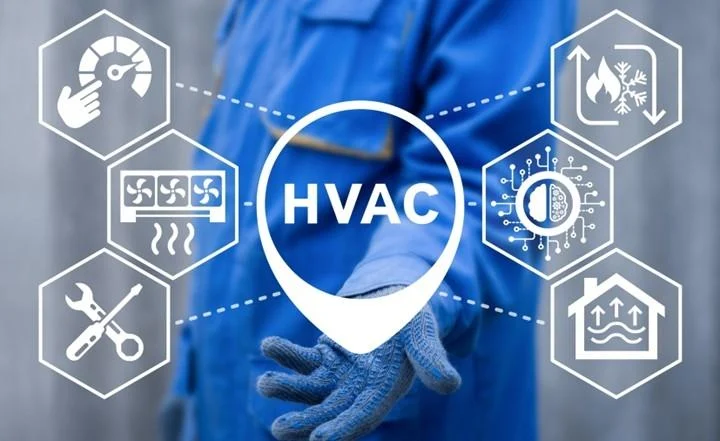
We’ve all experienced the disappointment of buying a new product, perhaps even a premium version, only to find it falls short of the promised performance, longevity, or value. This frustration is particularly acute when the purchase involves a major home or commercial investment like a heating, ventilation, and air conditioning (HVAC) system. When an HVAC system underperforms, the implications extend beyond mere inconvenience, impacting comfort, operating costs, and long-term building performance.
HVAC systems are the single largest energy users in both residential and commercial buildings, directly influencing indoor air quality (IAQ), occupant health, and overall energy consumption. Their proper functioning is critical for maintaining stable temperatures, controlling humidity, and circulating clean air. Despite their pivotal role, the HVAC industry often faces a significant challenge: while robust installation standards, building codes, and best practices exist, consistent enforcement, independent verification, and tangible accountability for adherence are frequently lacking.
This disparity creates a precarious situation. Consumers are often asked to place considerable trust in contractors to deliver on promises regarding efficiency and comfort, promises they are rarely equipped to verify themselves. Conversely, highly skilled contractors who meticulously follow industry best practices often struggle to differentiate themselves, as their superior work may go unrecognized in a market that priorit’s initial price over verified quality. In an industry where outcomes — such as consistent comfort, lower energy bills, and system longevity — matter more than good intentions, relying solely on trust is insufficient; tangible proof of performance is paramount.
A Common, Costly Scenario

Consider a real-world scenario that unfolds far too often. A homeowner invests in a new heating and cooling system, perhaps a 3-ton unit, after being assured it will provide optimal comfort and efficiency year-round. The installation is completed, payment is made, and on paper, everything appears correct. However, beneath the surface, a series of critical installation flaws silently undermine the system’s potential, leading to significant underperformance:
The cumulative effect of these common installation errors is a system that, despite its expensive components, delivers only 50%–60% of its actual capacity at best. The homeowner subsequently experiences uneven temperatures, persistent humidity problems, inexplicably high energy bills, and growing frustration. The equipment, designed for efficiency, is often unfairly blamed for poor performance, even though the true culprit is the quality of its installation. This unfortunate situation is far more common than most consumers realize, highlighting a critical industry-wide challenge.
Why Equipment Quality Isn’t the Problem
It is essential to distinguish between equipment quality and performance delivery. Modern HVAC equipment is more advanced, efficient, and capable than ever before. Innovations such as variable-speed compressors, smart thermostats, and highly efficient heat pump technologies offer unprecedented levels of comfort, energy savings, and environmental benefits. However, even the most sophisticated system cannot overcome fundamental flaws in its design application or shortcuts taken during installation.
As Bill Spohn, President of TruTech Tools and Chair of the Better HVAC Alliance, explains, "To get the rated efficiency out of an HVAC system, it needs to be designed to fit the application (heating and cooling load calculation measurements), including where the home or building is located (the Climate Zone), and how well it is air sealed to the outdoor elements (blower door measurements). You will not get a custom suit fit if you pick it off the rack and buy it on price alone." Spohn’s analogy underscores that an HVAC system is an integrated part of a complex building ecosystem; its performance is inextricably linked to the building’s unique characteristics.

He further adds, "Even if the design is correct, installation has to be executed by the book… better contractors are equipped to commission the system, that is take fast and accurate measurements to verify everything is installed properly and rated performance is achieved." This emphasizes that precise design, followed by meticulous installation and verification, are equally critical for a system to achieve its full potential.
How Commissioning and Verification Change Outcomes
Commissioning represents a crucial shift in the industry, moving from reliance on assumption to evidence-based performance. This systematic process involves verifying that the installed HVAC system operates precisely according to its design specifications and meets the owner’s operational requirements.
Spohn strongly advocates that home and building owners should expect a detailed heating and cooling load calculation for new and replacement systems. "Replacing a system with one of the same size is often the wrong move and bigger than needed is never