11
11
In an era where artificial intelligence, particularly tools like ChatGPT, is increasingly used for research, tool building, and even purchasing decisions, many brands are operating in the dark regarding their presence within these AI platforms. They are appearing in thousands of AI-generated responses without any knowledge of which queries mention them, what is being said about them, or how they compare to competitors. While basic monitoring tools exist, they are insufficient for capturing the dynamic nature of AI prompts and responses. The sheer volume and constant shifts in AI-generated content necessitate a data-driven approach.
Ahrefs Brand Radar offers a comprehensive solution, allowing brands to track their ChatGPT visibility across a vast database of 13.5 million prompts. It also enables the creation of custom queries to monitor specific areas of interest. The platform provides a structured approach to measuring, monitoring, and improving AI visibility through seven key steps.
1. Benchmark Your ChatGPT Visibility Against the Competition
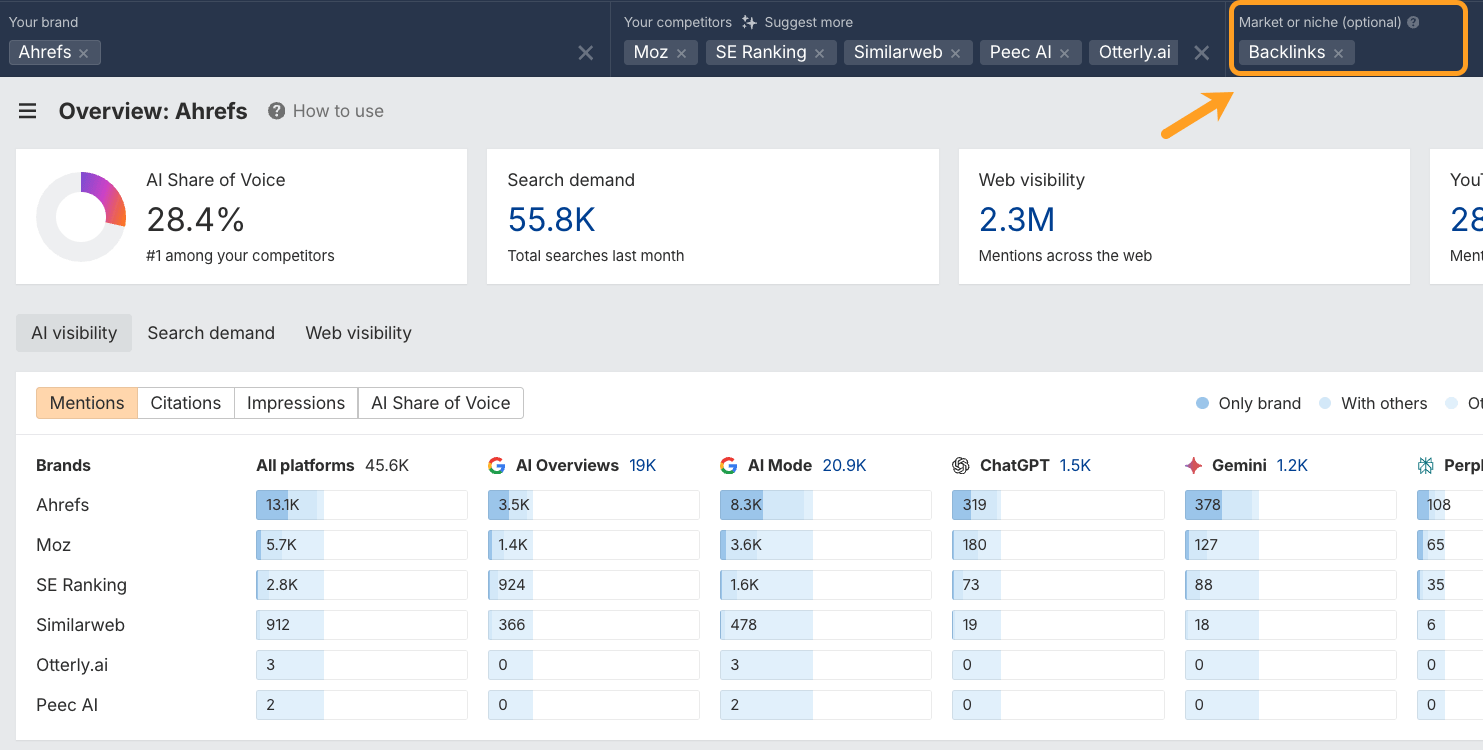
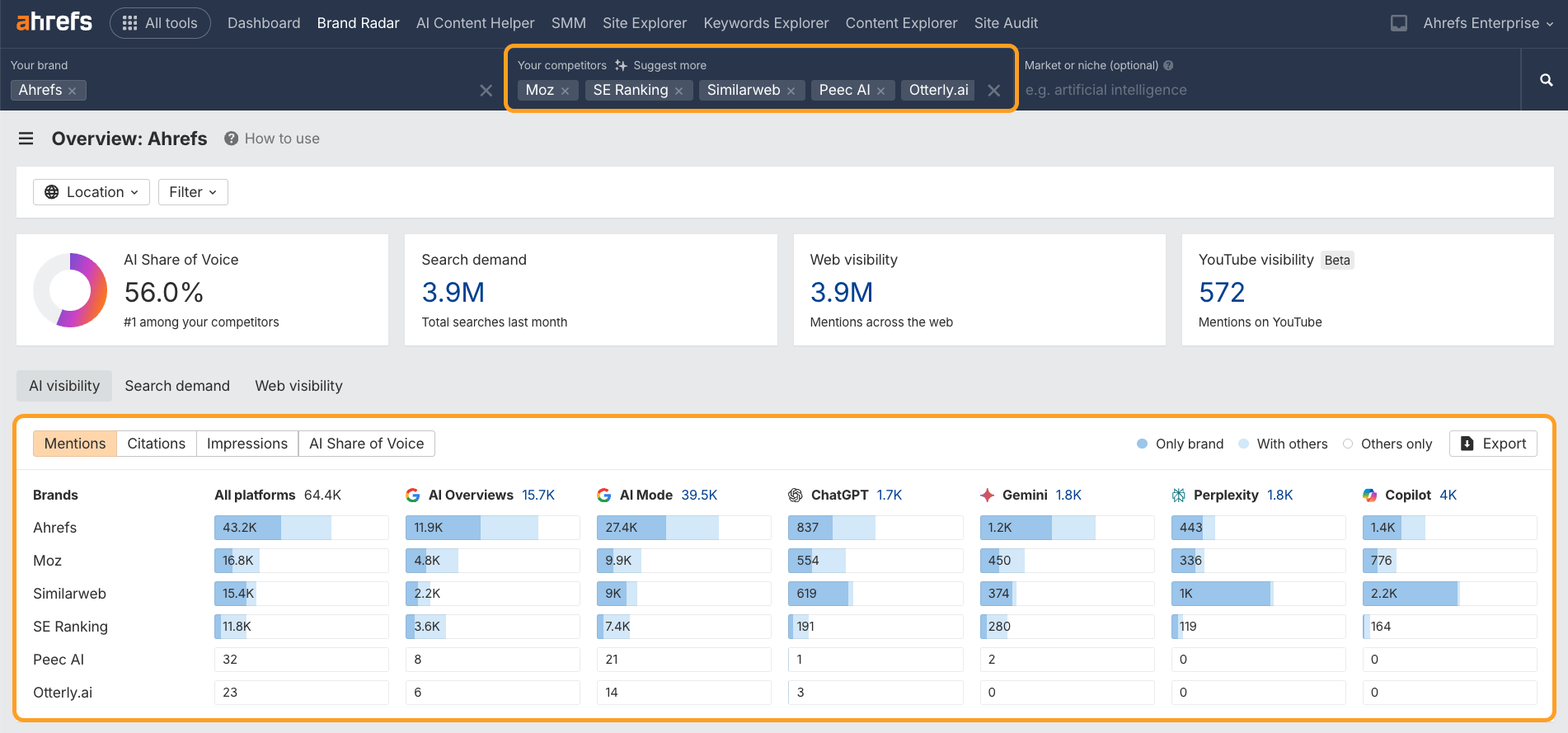
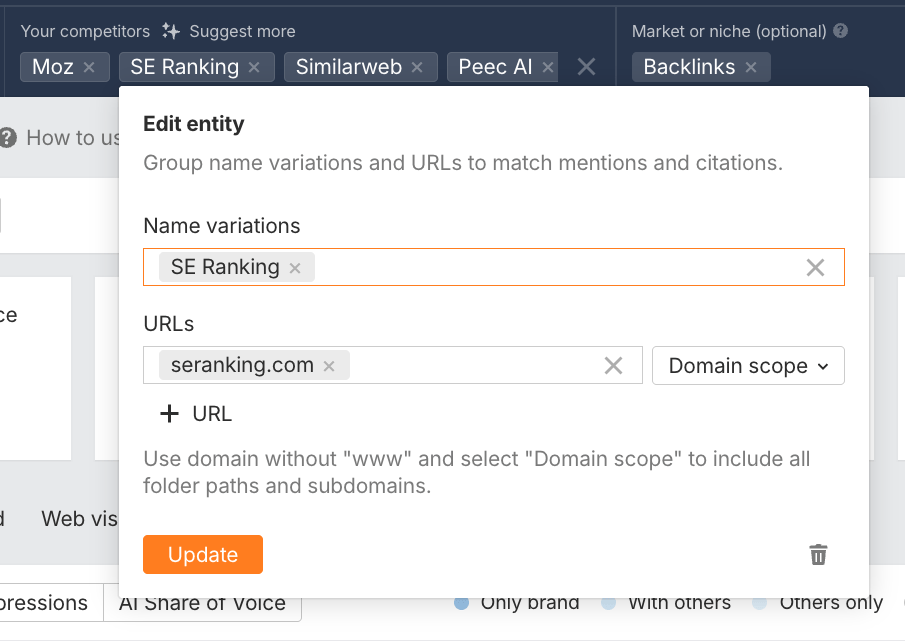
Ahrefs Brand Radar facilitates a direct comparison of a brand’s ChatGPT presence against up to ten competitors. By inputting competitor domains or URLs during setup, users can track their rivals’ page visibility and citations within ChatGPT responses. The tool also offers AI-driven suggestions for competitor identification and allows for the inclusion of name variations to ensure accurate tracking, especially for brands whose names are also common words. Upon setup, the platform provides side-by-side metrics for each brand, enabling a thorough competitive analysis. This analysis can be further refined by narrowing the focus to specific markets or niches, such as Ahrefs focusing on "Backlinks" as a core topic.
2. Understand Your Percentage of Conversations
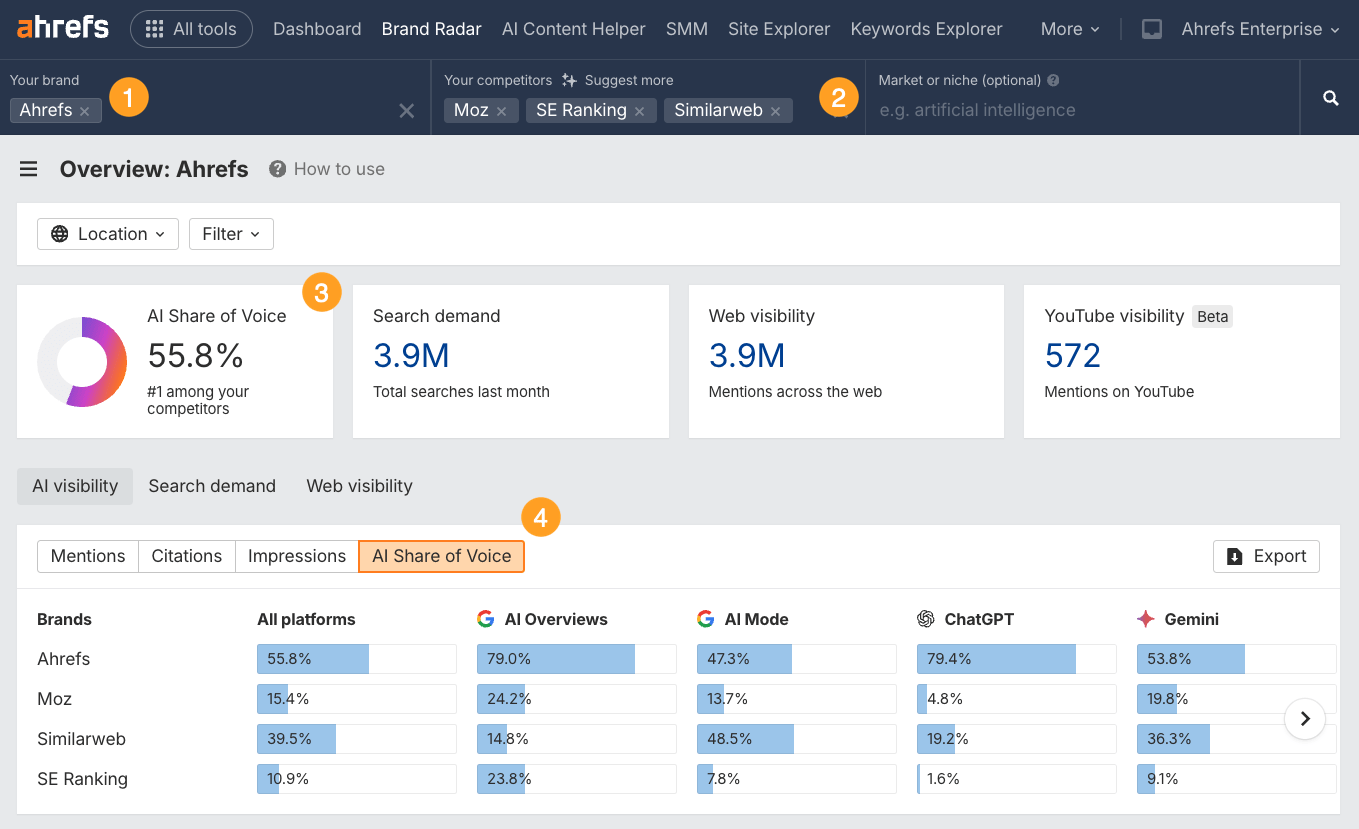
To answer the critical question of competitive visibility within ChatGPT, Brand Radar introduces the "AI Share of Voice" (AI SoV) report. This metric quantifies a brand’s presence in conversations that are most likely to be encountered by users. Brand Radar prioritizes "popularity-weighted" visibility, meaning it focuses not just on whether a brand is mentioned, but on the significance of those mentions. Each prompt in the database is linked to search demand data, providing an indication of topic popularity through associated "impressions." This approach helps users prioritize prompts that are most likely to be impactful. Tracking AI SoV over time reveals the effectiveness of content strategies, PR efforts, and brand-building activities on AI visibility. A rising AI SoV signals increased recommendation frequency by ChatGPT, while a decline indicates a loss of ground.
3. Identify Your Top Topics, Mentions, and Pages
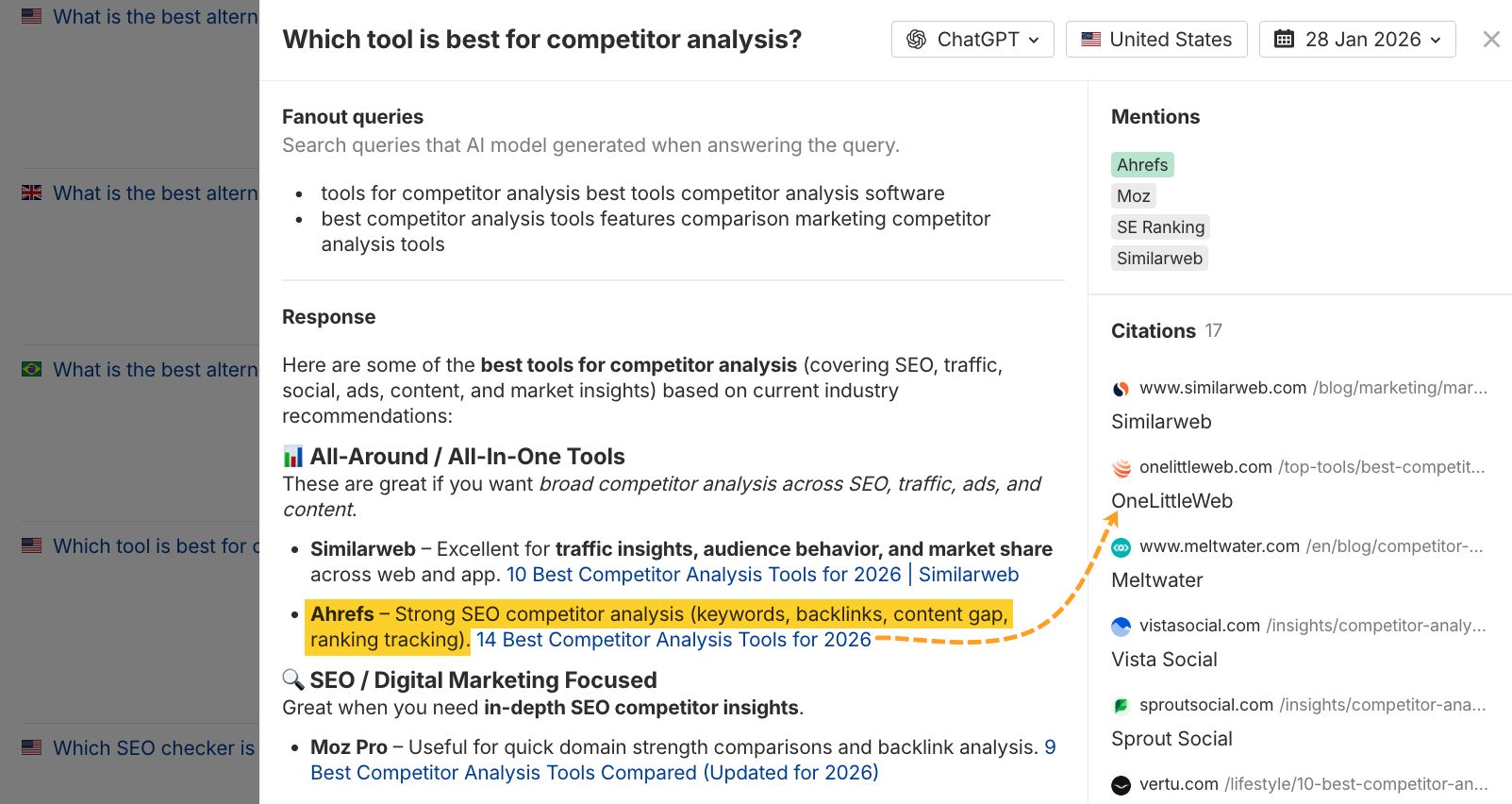
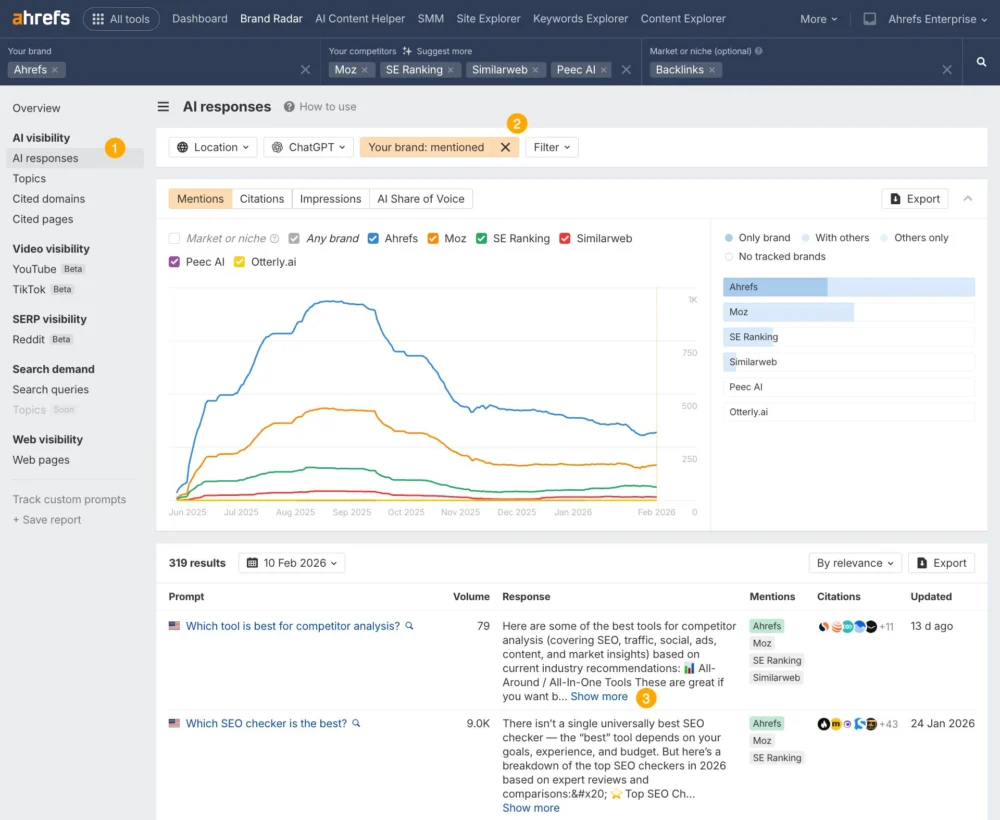
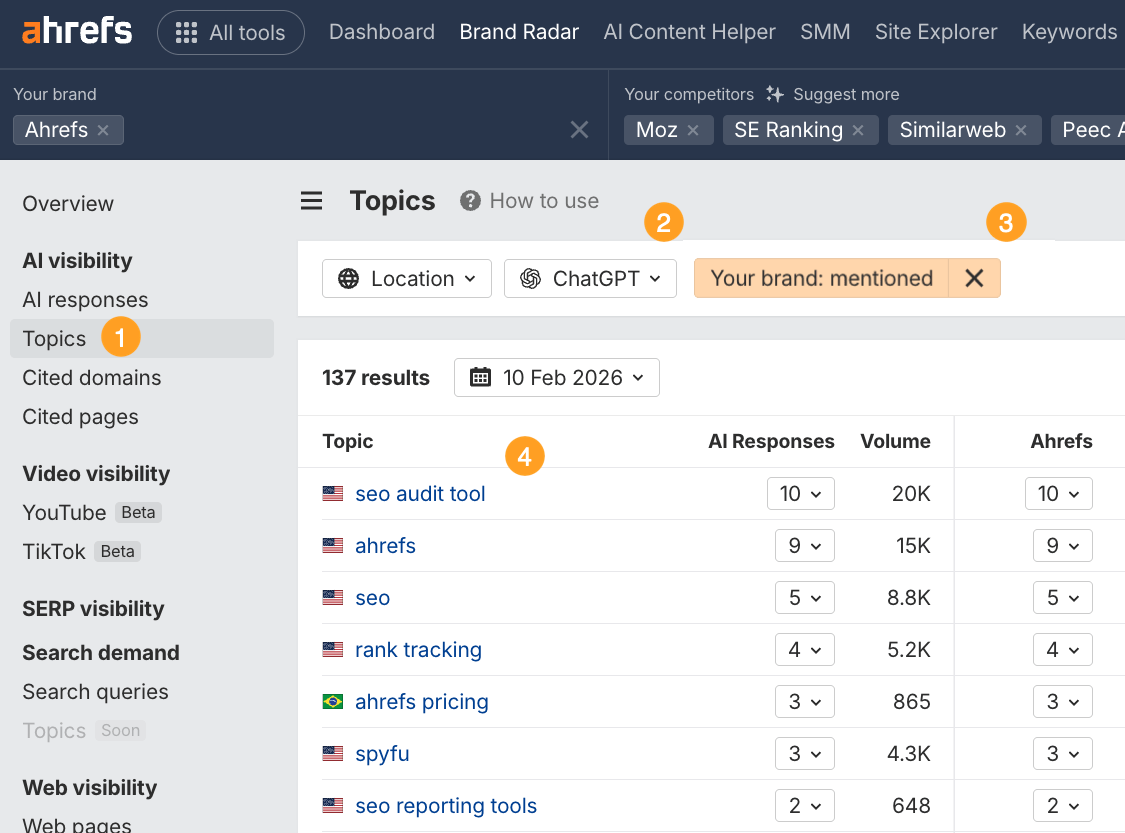
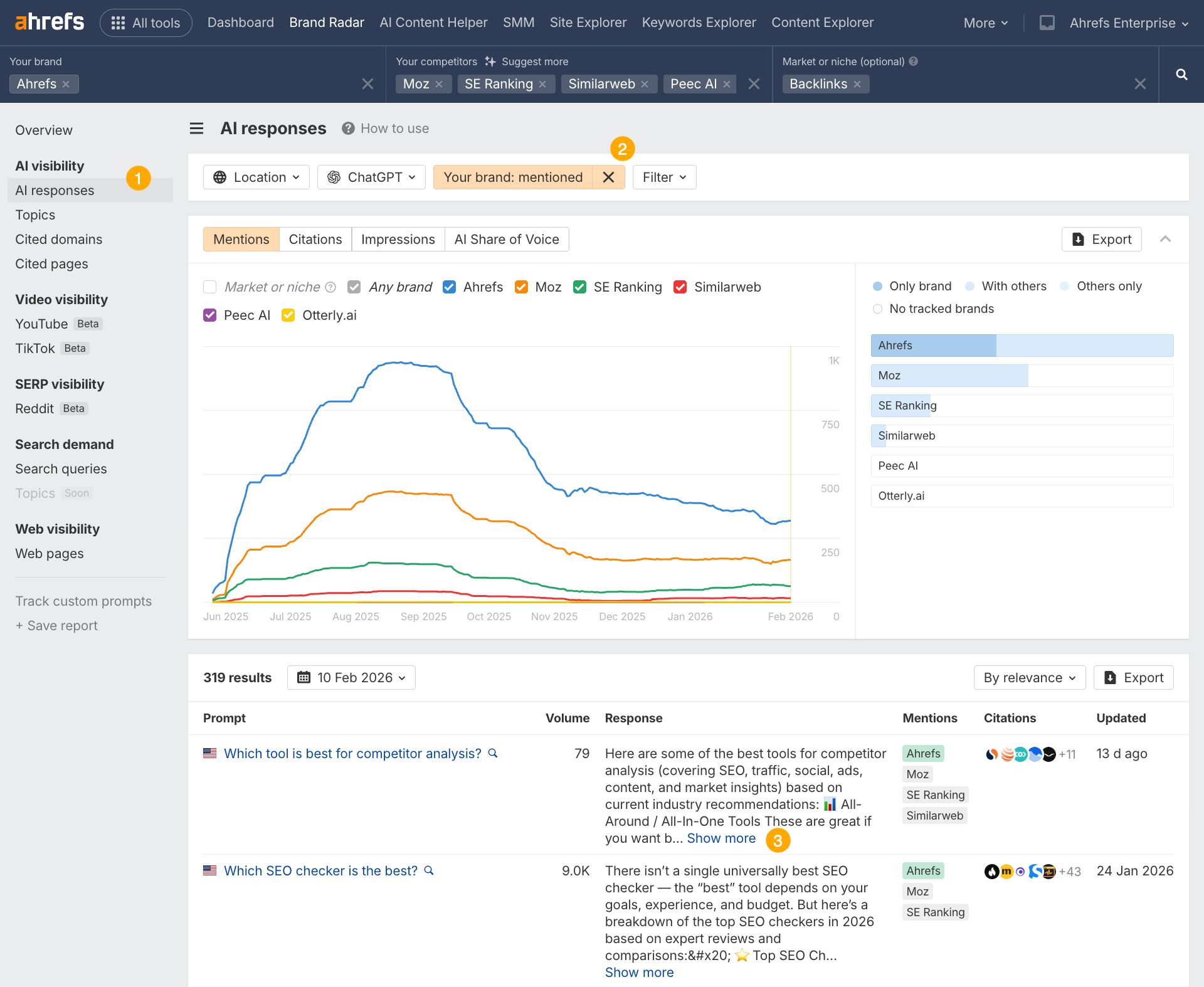
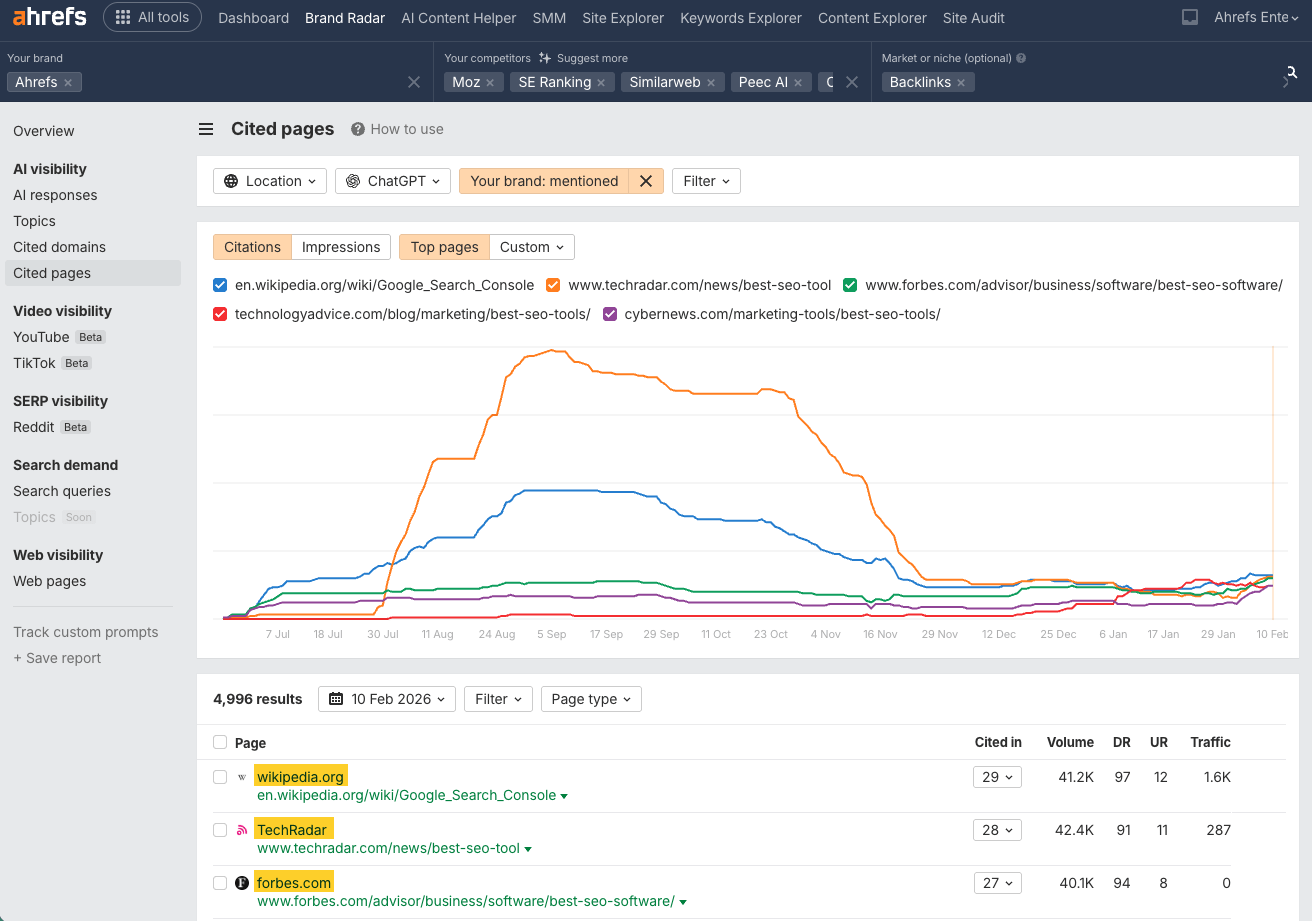
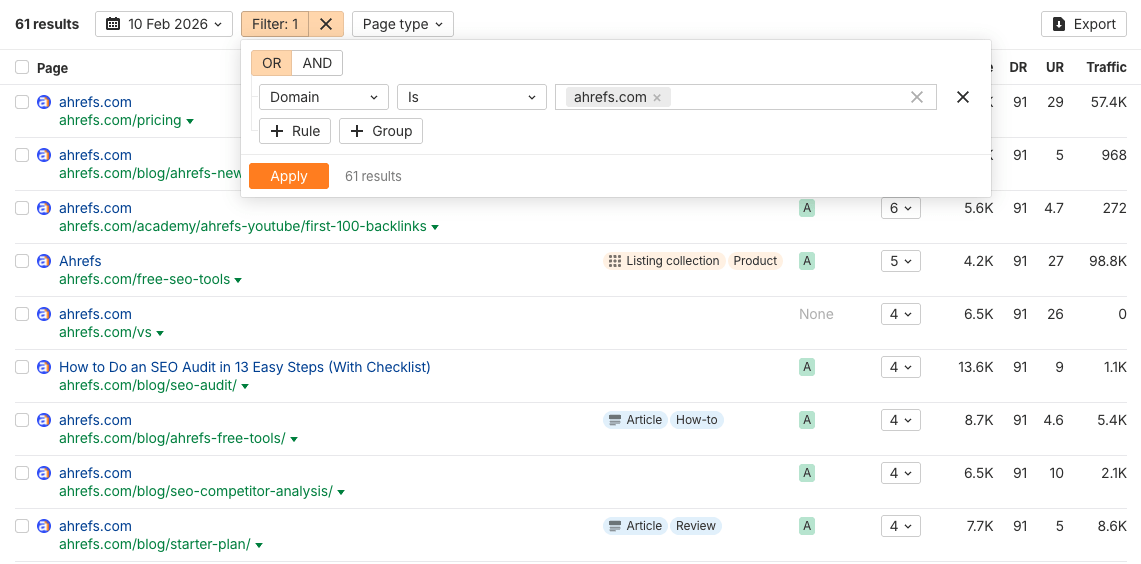
Brand Radar delves deeper by revealing the specific topics for which a brand is being recommended, the queries that mention it most frequently, and the domains contributing to its visibility. This information helps brands understand what ChatGPT "knows" about them and where they are perceived as experts. The "AI Responses" report provides granular detail, showcasing exact prompts and answers that include a brand. By examining these responses, brands can identify outdated information, incorrect claims, or missing features. This insight can then inform the creation of new content or the updating of existing articles to fill information gaps and correct inaccuracies. Furthermore, the "Cited Pages" report highlights the URLs most frequently referenced in ChatGPT responses, offering an opportunity to audit and optimize these pages. For Ahrefs, examples of cited pages include a Wikipedia entry on "Google Search Console," a Tech Radar review, and a Forbes tool list. Pages that are cited but do not explicitly recommend the brand become potential outreach targets to enhance visibility. Filtering by domain allows users to see which of their own website pages are most cited.
4. Discover Where Competitors Are Mentioned, But You Aren’t
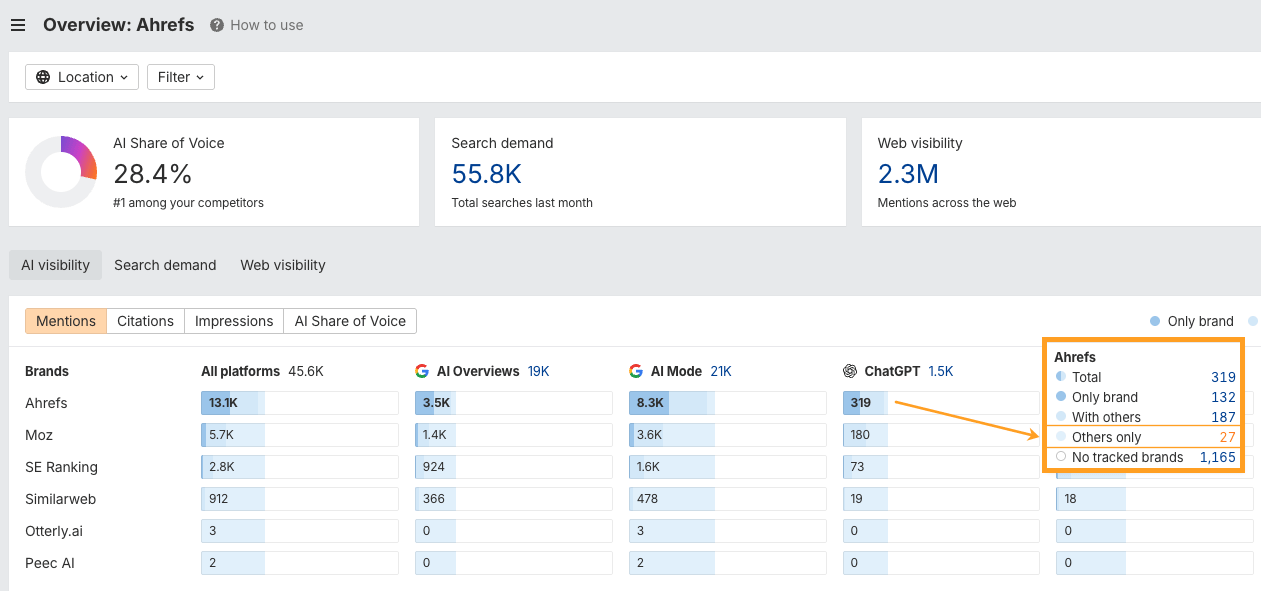
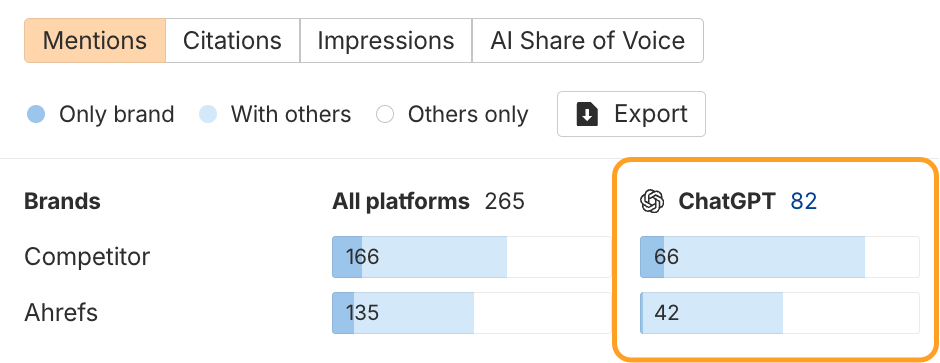
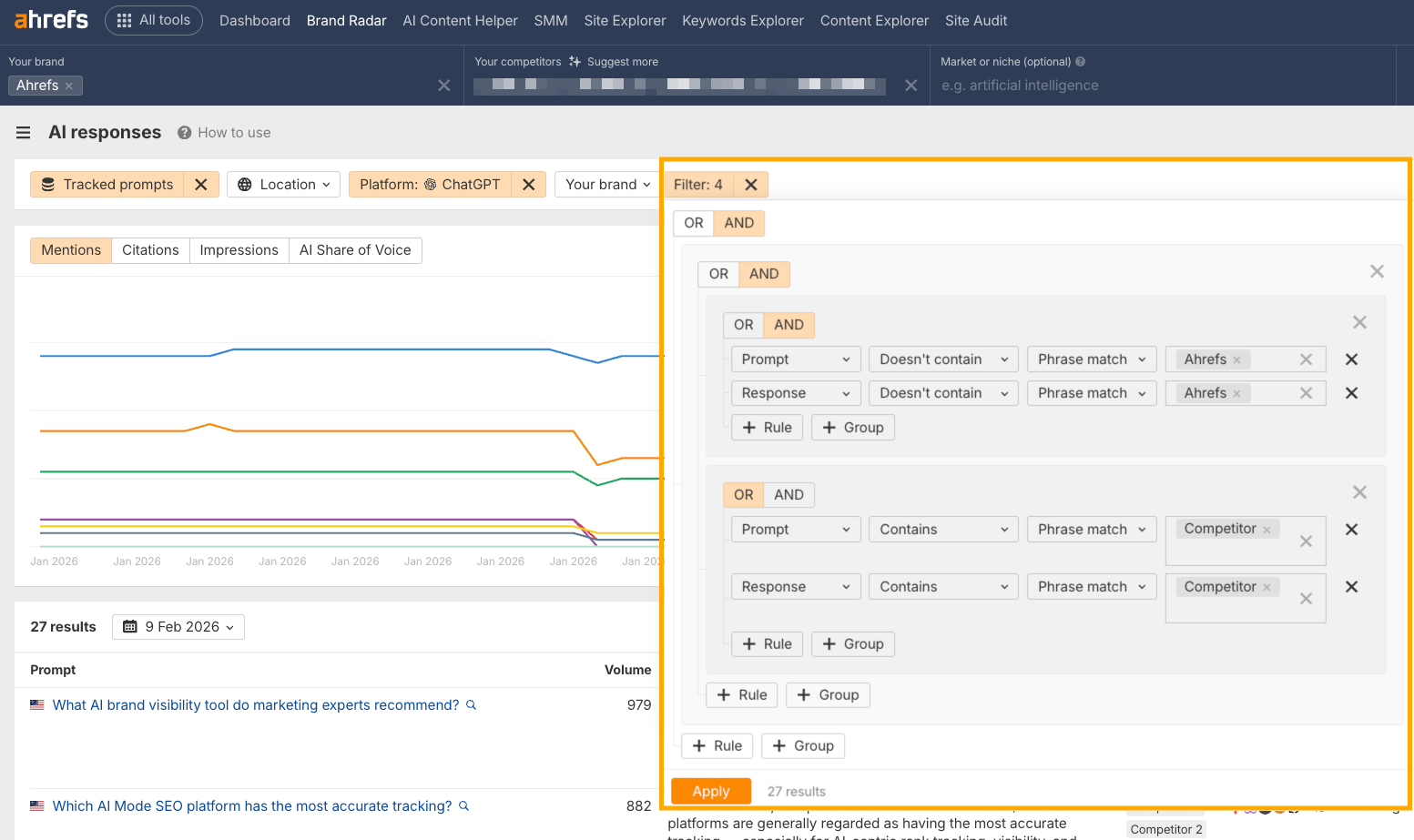
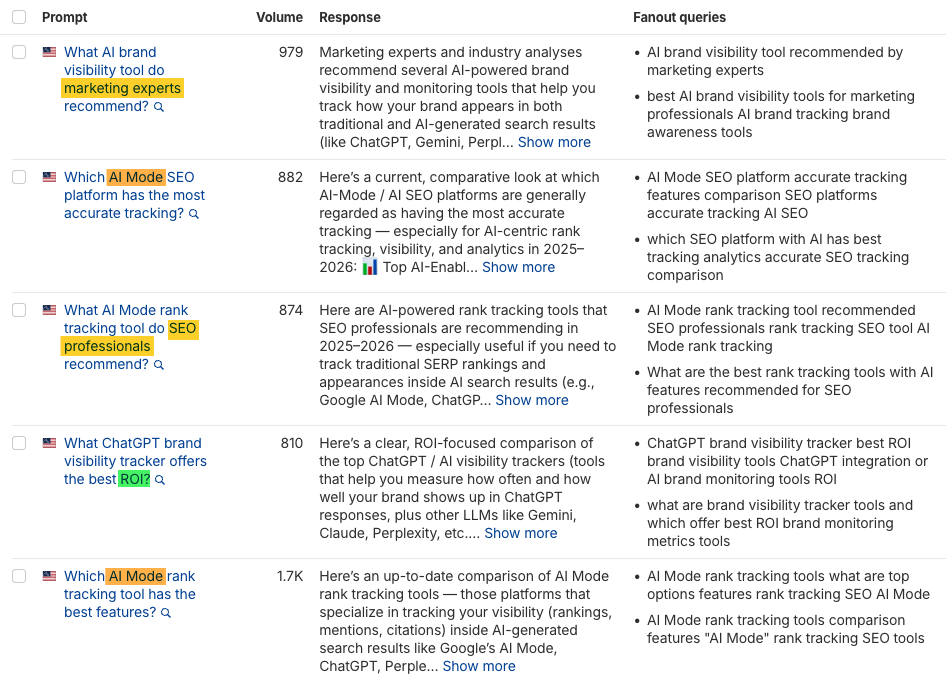
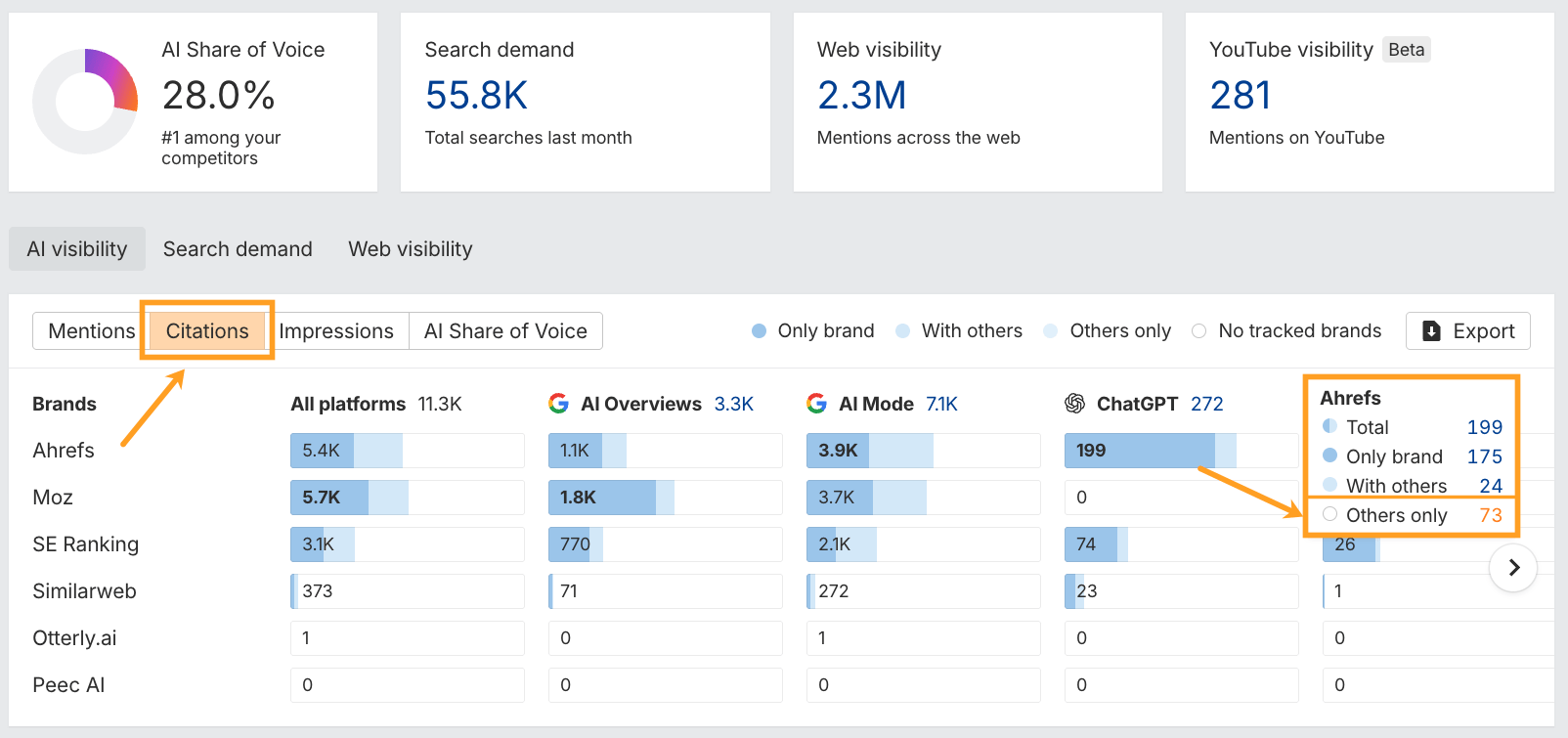
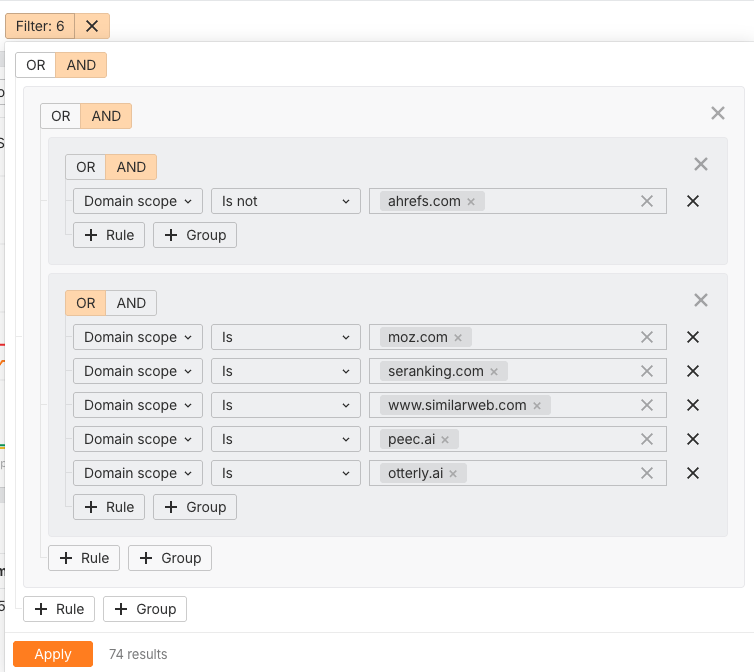
A highly actionable strategy for improving ChatGPT visibility is to identify topics where competitors are mentioned and the brand is not. Brand Radar’s dashboard offers a straightforward method for this gap analysis. By hovering over a brand in the "Mentions" bar chart and selecting "Others only," users can generate a filtered view in the "AI Responses" report. This view highlights prompts and responses that include competitors but exclude the brand itself. This data can then guide content creation, optimization efforts, and strategies to reclaim market share. For instance, a gap analysis for Ahrefs revealed a situation where a competitor appeared in 66 ChatGPT responses while Ahrefs was mentioned in 42. Further examination of prompts and fan-out queries pinpointed specific topic gaps, such as "expert endorsements," "ROI justification," and "platform coverage," indicating a need for more decision-stage content. The tool also allows for the identification of competitor citations where the brand is absent, enabling outreach and content enrichment strategies.
5. Track the Impact of Web and UGC Mentions on ChatGPT Visibility
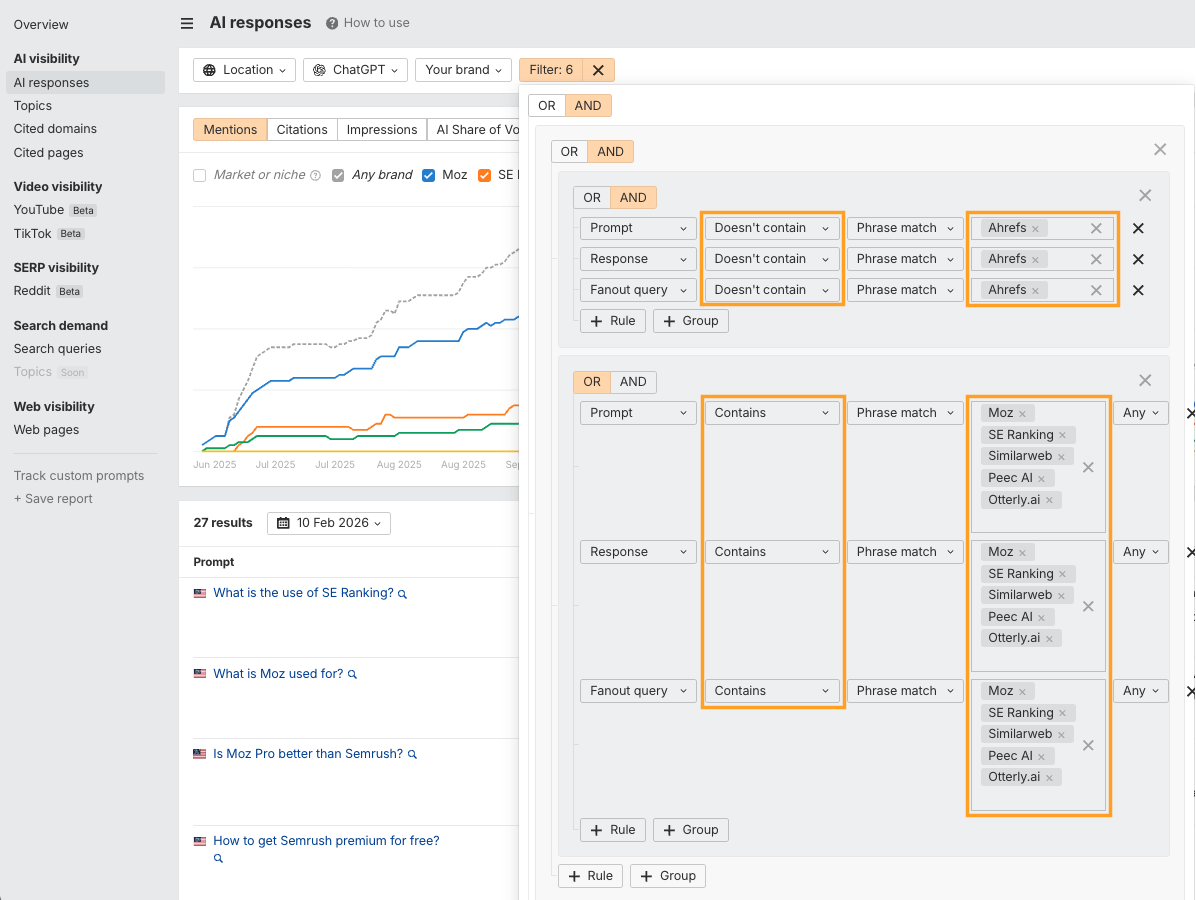
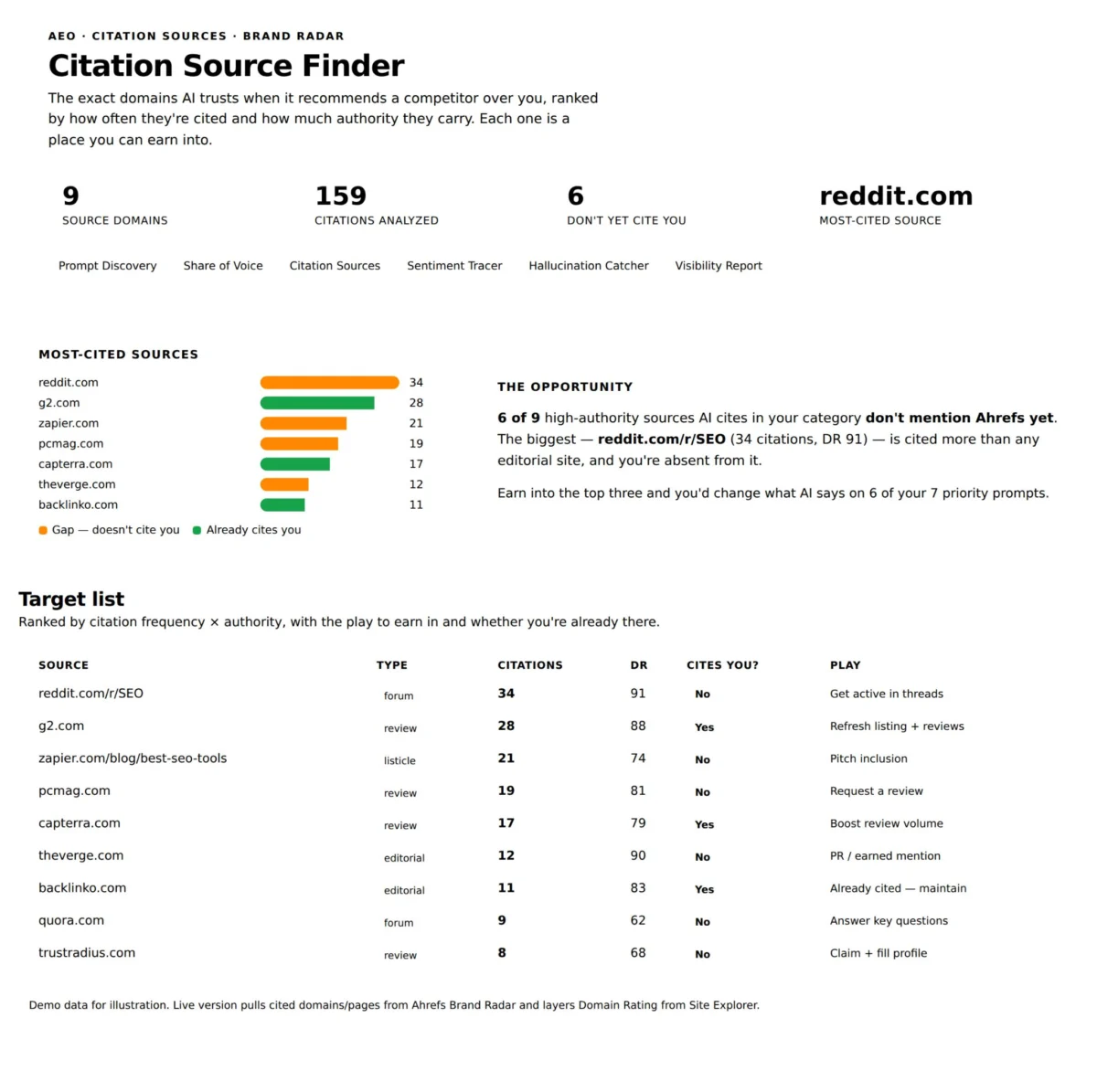
AI visibility is intrinsically linked to a brand’s performance across the broader web, including platforms like YouTube, Reddit, and TikTok. Brand Radar integrates tracking across these channels, allowing users to see how their overall online presence influences their mentions in AI. YouTube is highlighted as the second-largest search engine and a significant source of ChatGPT citations, with YouTube mentions showing a strong correlation with AI brand mentions. The "Video visibility > YouTube" section displays videos mentioning a brand, which can then be cross-referenced with the "Cited pages" report to identify videos informing ChatGPT answers. Patterns in topics and creators can inform content production and sponsorship strategies. Branded web mentions are also strongly correlated with ChatGPT visibility, enabling brands to analyze trends in both areas and understand the impact of off-site efforts. The "Web visibility" tab provides access to these trends and specific pages mentioning the brand. The "Cited pages" report further aids this by indicating which cited URLs also mention the brand. Tracking metrics like brand mentions across these platforms can demonstrate the effectiveness of PR and brand awareness campaigns in driving ChatGPT visibility. Similarly, search demand for a brand can be a leading indicator of ChatGPT growth, with a positive correlation observed between branded search volume and AI visibility. Trends and queries related to branded search demand can be monitored in the "Search demand" tab. Reddit discussions are a rich source for ChatGPT, with Reddit being the #1 cited domain in Brand Radar’s analysis of 13.5 million prompts. Monitoring "SERP visibility > Reddit" reveals Reddit threads mentioning a brand, allowing for sentiment analysis and strategic engagement. TikTok mentions are also influential, with videos explaining product usage or comparisons contributing to category positioning reflected in ChatGPT. The "Video visibility > TikTok" section tracks these mentions.
6. Monitor Custom Prompts in ChatGPT
While Brand Radar offers insights into millions of existing prompts, businesses can also track custom queries that are crucial to their operations. Custom prompt tracking allows brands to monitor specific questions customers are asking, such as "best CRM for construction companies" or "is [your product] worth it in 2026." The key is to group related queries and analyze aggregate patterns for a reliable view of performance. Prompts can be clustered by intent, funnel stage, or product category. For example, a group of over 100 bottom-funnel custom prompts related to "AI visibility tools" was created by expanding trending keywords into prompt-like queries. Users can set up monitoring schedules (daily, weekly, monthly) for selected platforms, locations, and competitors, and track progress by analyzing brand mention frequency, cited pages, and overall visibility trends over time.
7. Track ChatGPT Fan-Out Queries
When ChatGPT requires external information to answer a query, it employs retrieval-augmented generation (RAG), generating "fan-out queries" to explore related sub-topics. These fan-out queries, much like the original prompts, are dynamic. Studying them in aggregate is crucial for identifying recurring themes and topics that can inform content cluster development. Brand Radar tracks millions of these fan-out queries within the "AI Responses" report, accessible via the "Fan-out queries" column. A practical tip involves replicating and enhancing top-cited content. By identifying the most-cited URL in a category within the "Cited pages" report and then filtering the "AI Responses" report by that URL, users can uncover prompts, responses, and fan-out queries needed to create or update their own content. This approach helps to identify sub-topics for cluster expansion and improves the likelihood of being cited by ChatGPT.
By implementing these seven steps using Ahrefs Brand Radar, businesses can gain a comprehensive understanding of their AI visibility, identify competitive advantages and disadvantages, and develop data-driven strategies to enhance their presence in AI-generated responses. Continuous tracking over time is essential for monitoring progress and adapting to the evolving landscape of AI.