 11
11 1
1 2
2 3
3
In a comprehensive analysis of the current technological landscape, Atlassian has released new findings regarding the integration of artificial intelligence within product management and development workflows. Published on February 13, 2026, the report suggests that while AI tools for code generation, video editing, and autonomous agents have become ubiquitous, many organizations are struggling to convert these tools into tangible productivity gains. The research, drawn from in-depth consultations with global product leaders and insights from the "Product in Practice" series, identifies a critical divide between "AI theater"—superficial adoption that mimics progress—and "AI fluency," a deeper organizational capability that drives real impact.
The report opens by revisiting William Gibson’s 1984 observation that "the future is already here—it’s just not evenly distributed." According to Atlassian, this sentiment accurately describes the 2026 AI landscape. While the race to become "AI-native" is accelerating, many teams find the transition characterized more by operational turbulence than by a seamless launch. The primary challenge identified is not the lack of access to technology, but the difficulty in measuring and validating the effectiveness of AI integration.
A central theme of the report is the identification of "AI theater," a set of anti-patterns that hinder organizational progress. AI theater occurs when teams prioritize the appearance of innovation over substantive change. This often manifests as high-visibility demos or the adoption of trendy tools that do not actually improve workflows or customer outcomes.
Product leaders interviewed for the study noted that these challenges are symptoms of a larger, more complex transition: the shift from individual craft—where a single designer or engineer uses AI in isolation—to an organizational capability where AI is woven into the collective fabric of the company. This transition can be destabilizing for teams accustomed to traditional workflows, leading to "gatekeeping" behaviors where individuals hoard AI prompts or techniques to protect their perceived value. The report emphasizes that leaders must move past these surface-level displays of technology to foster a culture where AI use is transparent, shared, and outcome-oriented.
To counteract AI theater, Atlassian introduces the concept of "AI fluency." Unlike technical mastery or mere proficiency, fluency is described as the practical confidence to use AI to think, make, and decide. The report distinguishes between the two: while proficiency allows a user to execute specific tasks using a tool, fluency enables a user to "converse, critique, and compose" with AI as a medium.

AI-fluent teams are characterized by a set of distinct traits. They approach new tools with grounded curiosity, ensuring that every experiment is pointed toward a specific, meaningful outcome. These teams do not work in silos; they share their learnings—both successes and failures—across the organization. This shared intelligence allows the entire team to advance, rather than just a few early adopters. Furthermore, fluent teams know when to use AI and, perhaps more importantly, when the technology is not the right fit for a particular problem.
Ravi Mehta, a prominent Product Advisor and former Chief Product Officer at Tinder, provides a strategic framework for building this fluency. Mehta argues that AI fluency depends less on the innate skills of individuals and more on the cultural environment created by leadership. He identifies three primary levers: Access, Expectation, and Challenge.
The first lever, Access, focuses on reducing friction. Mehta observes that experimentation often stalls when employees must navigate complex procurement requests or use "shadow" logins to access AI tools. He suggests that for AI experiments to "stick," the technology must be integrated into the tools teams already use daily, such as Slack, Figma, and Jira. When AI is a single click away within an existing workflow, adoption becomes a path of least resistance.
The second lever is Expectation. Mehta asserts that leaders signal the importance of AI simply by asking the right questions. By regularly inquiring, "How did AI help here?" or "What could we try with AI next time?" managers frame AI use as a standard operating procedure rather than a novelty. This normalization encourages teams to consider AI as a default component of their toolkit.
The third lever, Challenge, involves pushing teams to reimagine their work. Mehta encourages leaders to issue open-ended prompts, such as "How could we do this 50% faster with AI?" He emphasizes that fluency grows when people feel safe sharing "half-finished attempts." By recognizing effort and experimentation rather than just final outcomes, leaders create the psychological safety necessary for teams to discover non-obvious wins.
Kene Anoliefo, who has led product and design teams at Google, Spotify, and Netflix, offers a complementary model for AI adoption known as the "3 Ps": People, Process, and Platform. Anoliefo warns that many organizations mistakenly reach for the "Platform" first, purchasing expensive AI software before aligning their people and processes. This, she notes, results in "expensive shelfware."

Regarding People, Anoliefo addresses the existential concerns of modern craftspeople. Designers, product managers (PMs), and engineers often wonder, "Who am I if AI does this part of my craft?" She advocates for a shift in identity from "gatekeeper"—one who guards knowledge—to "architect"—one who designs systems and workflows that others can use.
In terms of Process, the report highlights that AI fundamentally changes the speed and shape of work. This necessitates a re-evaluation of quality standards. Anoliefo poses a critical question for leadership: "Is 75% quality acceptable if it’s 50% faster?" Leaders must make these trade-offs explicit so that speed does not erode organizational trust and perfectionism does not stall momentum.
Finally, the Platform should be the final piece of the puzzle, serving to amplify an already established strategy rather than preceding it. Anoliefo stresses that when adoption stalls, it is usually because one of the 3 Ps is being neglected.
The Atlassian report cautions against the use of "vanity metrics" in tracking AI success. Metrics such as the total number of prompts run or tokens consumed may look impressive in a report, but they often fail to correlate with actual customer value or team learning. Instead, the research suggests a blend of leading and lagging indicators.
Leading indicators, which track behavioral changes, include the percentage of the team using AI tools weekly, the number of shared prompts or "context libraries" created, and the frequency of AI-related discussions in project retrospectives. Lagging indicators measure the resulting outcomes, such as a reduction in time-to-market for new features, improvements in code quality or bug rates, and higher employee satisfaction scores related to reduced "drudge work."
Atlassian recommends that organizations capture a baseline before launching a major AI initiative. Reviewing these indicators monthly allows leaders to steer behavior, while quarterly reviews help in making larger strategic decisions, such as which pilot programs to graduate into permanent workflows.

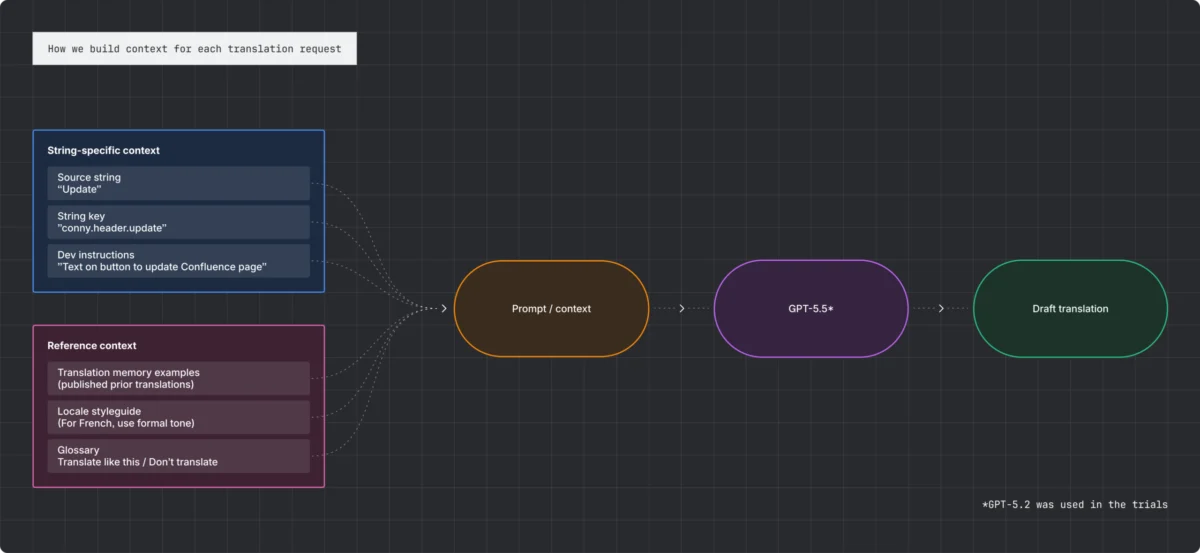
A final tactical recommendation from the report is the creation of "context libraries." These are living repositories of product strategy, design principles, domain-specific language, and customer insights that both humans and AI can reference. By codifying these standards, organizations ensure that AI-generated work remains consistent with the company’s unique vision.
Elena Verna, Head of Growth at Lovable, warns that without these distinct context libraries, organizations risk "converging toward sameness." She notes that if every company relies on the "averages" provided by generic AI models, they will all eventually build the same products. The human role, therefore, is to set a distinct destination and provide the unique context that allows AI to produce differentiated work.
The report concludes by framing AI fluency as the "new product superpower." As the technology continues to evolve, the ability to effectively collaborate with AI will become a defining characteristic of high-performing teams. Atlassian has released an accompanying ebook, "AI Fluency: The New Product Superpower," to provide further practical frameworks for leaders navigating this transition.