 11
11
Jenny Wang, the visionary founder behind Alta, has significantly advanced her company’s mission to revolutionize the fashion industry through innovative technology. What began as a concept inspired by the iconic 1995 film "Clueless," where protagonist Cher Horowitz effortlessly styled outfits using a digital closet, has rapidly evolved into a tangible, high-impact platform. Alta is not merely a nostalgic nod to cinematic fantasy; it is a leading force in integrating artificial intelligence and virtual reality into everyday fashion consumption, fundamentally altering how consumers interact with clothing and brands.
A pivotal moment in Alta’s journey occurred last year when the company successfully raised an impressive $11 million in a funding round. This substantial investment was led by Menlo Ventures, a prominent venture capital firm known for backing transformative technology companies. The capital injection was earmarked to further develop Alta’s core offerings: enabling users to create intricate digital closets and virtually try on clothes using their own personalized virtual avatars. This cutting-edge technology was once confined to the realm of science fiction, making its real-world implementation by Alta a remarkable achievement. Much like Cher’s sophisticated computer system that allowed her to meticulously plan and visualize her outfits, Alta leverages the latest advancements in AI to provide users with a similar, highly intuitive, and personalized styling experience. The platform empowers individuals to curate, plan, and experiment with outfits digitally, bringing a new dimension of convenience and creativity to personal styling.
The significance of Alta’s funding round was amplified by the participation of a diverse and influential group of investors. A slew of big names joined Menlo Ventures, underscoring the broad appeal and perceived potential of Alta’s vision. These included renowned models Jasmine Tookes and Karlie Kloss, whose involvement lends considerable credibility and industry insight, highlighting the platform’s resonance within the fashion world itself. Additionally, Anthology Fund, the venture capital arm of leading AI research company Anthropic, participated, signifying a strong belief in Alta’s technological foundation and future potential within the AI landscape. The round also saw investment from Jenny Fleiss, co-founder of Rent the Runway, bringing invaluable experience from a pioneer in the fashion rental and digital wardrobe space. This star-studded investor lineup not only provided crucial financial backing but also strategic guidance and industry connections, positioning Alta for accelerated growth and wider market penetration.
TechCrunch recently had the opportunity to catch up with Jenny Wang during the bustling New York Fashion Week, providing an insightful look into the company’s remarkable expansion and achievements since that transformative funding round. Wang shared compelling updates that illustrate Alta’s rapid ascent in the fashion tech sector.
For starters, the Alta product has officially launched and is now available in the app store, marking a crucial step in making its innovative technology accessible to a broader consumer base. The app’s impact was almost immediate, garnering significant industry recognition. Both Time and Vogue, two of the most influential publications in their respective fields, named Alta as one of the best innovations of the past year. Such accolades from esteemed media outlets not only validate Alta’s technological prowess but also solidify its position as a game-changer in fashion and technology. Furthermore, Wang proudly revealed an impressive user engagement metric: more than 100 million outfits have been generated on the platform since its launch in 2023. This staggering figure underscores the platform’s popularity and the substantial value users find in its virtual styling capabilities. Beyond user adoption, Alta has also forged strategic partnerships that are set to expand its ecosystem. Current collaborations include Poshmark, a leading social marketplace for fashion, and the Council of Fashion Designers of America (CFDA), a prestigious organization that champions American design. Wang hinted that more high-profile partnerships are slated to be announced soon, indicating a strategic expansion into various facets of the fashion industry.
Highlighting Alta’s direct consumer offering, Wang stated, "Alta’s own app also features thousands of brands that users can shop from." This vast catalog provides users with an extensive selection, reinforcing the app’s utility as a comprehensive styling and shopping tool.
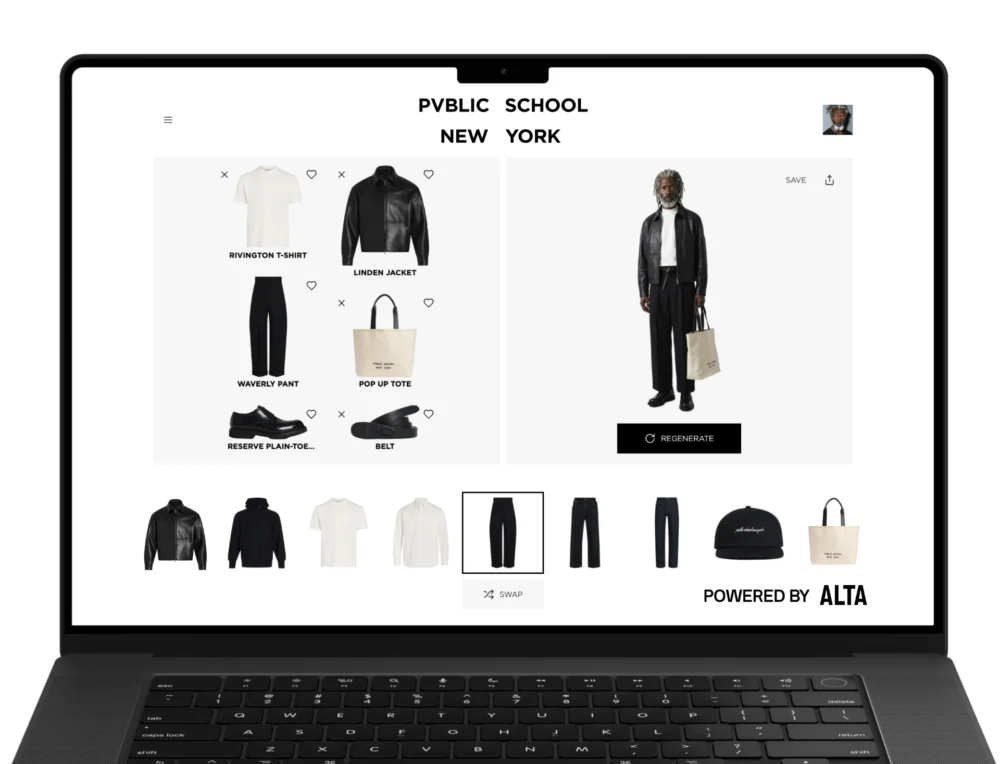
Currently, a significant focus for the company is on developing seamless app and website integration experiences for brands. This enterprise solution allows brands to offer their customers the unique ability to try on designer clothing using a personalized Alta Avatar directly on their own digital platforms. This week marked a significant milestone in this strategy, as Alta unveiled its first integration collaboration with Public School, a storied and highly respected New York City brand known for its innovative designs and strong cultural presence.
The collaboration with Public School represents a groundbreaking step in digital retail. As Wang explained, "Shoppers can style looks from the new collection on their own Alta avatar." This integration provides an immersive and personalized shopping experience, allowing consumers to visualize how garments from Public School’s latest collection would look on their unique digital representations before making a purchase. This not only enhances the online shopping journey but also addresses common pain points such as fit uncertainty and style compatibility.

The genesis of this significant partnership was facilitated through an unexpected but strategic connection. Wang met Public School’s acclaimed design duo, Dao-Yi Chow and Maxwell Osborne, through the founder of Poshmark, who coincidentally serves as an angel investor in both Alta and Public School. This interconnected network proved instrumental in bringing the two innovative companies together.
Wang elaborated on the mutual appeal of the partnership: "Public School designers Dao-Yi Chow and Maxwell Osborne had been looking for an AI partner and virtual try-on avatar solution, and Dao-Yi has been an Alta app user himself." This personal endorsement from one of the brand’s founders speaks volumes about Alta’s intuitive design and practical utility. For Public School, the timing of this collaboration was particularly poignant. The brand had undergone a hiatus for several years, making its appearance at this New York Fashion Week a grand re-debut. During their time away, the founders explained that they had rediscovered their voices and refined their artistic direction, and part of this re-evaluation included a fresh perspective on technology.
Dao-Yi Chow articulated this renewed perspective to TechCrunch, emphasizing the necessity of embracing technological advancements in contemporary fashion. "We have to look at tech as a partner in the business today," Chow stated, adding, "It’s not 2015 anymore." This sentiment underscores a crucial shift in the industry, acknowledging that technology is no longer an optional add-on but an integral component for brand growth and consumer engagement. Chow continued to elaborate on Public School’s thoughtful approach: "We want to be thoughtful on how we use tech and AI, not as a design tool but as a tool to extend our storytelling and a tool to interact with the consumer and have them experience the brand even if they can’t do so in person." This philosophy highlights a nuanced understanding of AI’s role, positioning it as a powerful medium for brand communication and experiential retail, rather than solely a functional design utility.
Wang noted that this Public School collaboration marks one of the first instances of a designer truly embedding personal avatar and styling technology directly into its own website. The user experience is seamlessly integrated: near the bottom of Public School’s product pages, customers will find an icon labeled "Style by Alta." Clicking this icon transports the customer to Alta’s platform, where they can then utilize their personalized avatars to style and virtually try on Public School clothing, assessing how the garments would look on them should they choose to purchase. This innovative integration bridges the gap between digital visualization and potential ownership.
Furthermore, users of Alta’s standalone app can also conveniently access Public School’s collections directly through the Alta app. Wang outlined the ambitious goal for Alta to expand such integrated experiences to numerous other brands and websites. While currently, for most brands outside of Public School, a user would need to add a potential purchase to their Alta wishlist before styling outfits and trying them on their avatar, the ultimate aim is to enable direct virtual try-on on any brand’s website. Wang emphasized the broader objective: "The goal is to bring their community on a new journey to engage with and shop the brand." This vision aims to create a pervasive and consistent virtual try-on experience across the entire e-commerce landscape.
The concept of virtual avatars in fashion is not entirely new, with major brands like Zara and Balmain having previously experimented with digital models and virtual try-on solutions. However, Wang highlighted Alta’s distinctive advantages that set it apart from these earlier attempts. A key differentiator lies in the efficiency and capacity of Alta’s avatar technology. Wang pointed out that Alta avatars can accurately put on at least eight items of clothing within a matter of seconds, offering a rapid and comprehensive styling experience. In contrast, she noted that Zara avatars typically allow users to wear only four items and often take around two minutes to process. This significant difference in speed and item capacity translates to a far more fluid, engaging, and practical user experience, allowing for quicker experimentation and more complex outfit creation.
Overall, the demand for sophisticated virtual avatars and personalized digital shopping experiences has surged, making Alta’s offerings particularly timely and relevant. Jenny Wang views Alta as embodying a dual identity: it remains the "Clueless" technology at its core, catering to the consumer’s desire for an intelligent digital closet, while simultaneously evolving into a robust digital avatar business that provides enterprise solutions for brands.
Wang clarified this dual role: "The consumer Alta app is the ‘Clueless’ closet, while the enterprise Alta experience allows shoppers to style pieces and try the outfits on their pre-existing Alta avatar." This distinction highlights Alta’s versatility in serving both individual consumers seeking personal styling tools and businesses looking to enhance their digital storefronts. Looking ahead, Wang articulated an even grander vision for Alta, aspiring for it to become the "personal identity layer for the future of consumer AI and shopping." This ambitious goal positions Alta as a foundational technology that understands and represents individual consumers in an increasingly AI-driven retail environment.
To truly realize the potential of "agentic commerce," a paradigm where AI systems can act autonomously on behalf of consumers to fulfill their shopping needs, Wang believes a critical component is missing. "We need a data layer that understands the shopper’s style preferences, such as their closet, past purchases, and their avatar, likeness, and body, which is Alta," she explained. In this context, Alta serves as that essential data layer, creating a comprehensive digital profile of each user’s aesthetic, physical attributes, and purchasing habits. This deep understanding enables a future where AI can offer highly personalized recommendations, curate wardrobes, and facilitate purchases with unprecedented accuracy and efficiency, ultimately transforming the retail experience into something far more intuitive and tailored. Alta, under Jenny Wang’s leadership, is not just building a fashion app; it is constructing the very infrastructure for the next generation of intelligent, personalized commerce.