 11
11
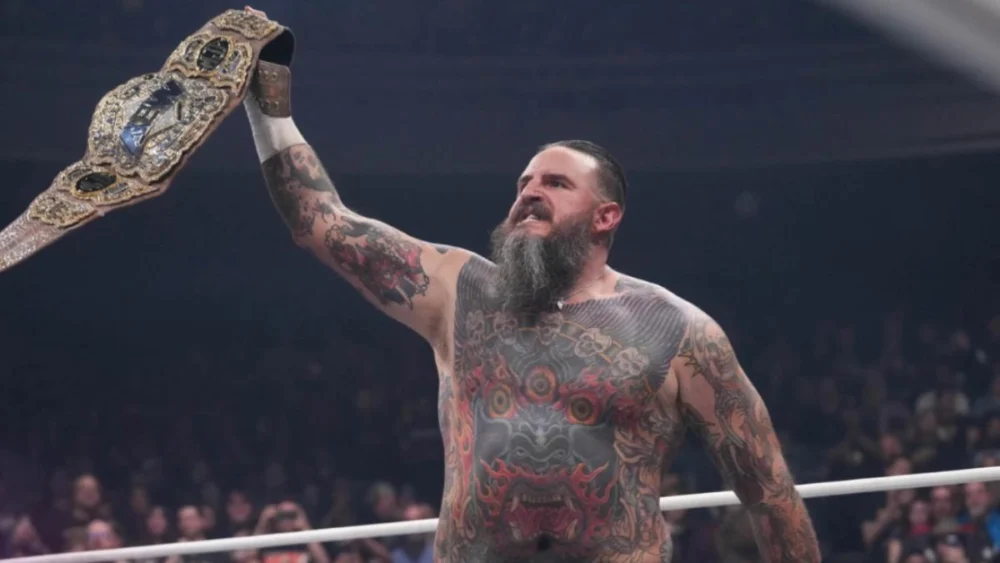
All Elite Wrestling (AEW) is gearing up for its highly anticipated Grand Slam Australia event on February 14, 2026, a card featuring four championship matches and promising high-stakes action. However, the build-up to this international spectacle has been significantly overshadowed by a burgeoning controversy surrounding AEW star Brody King and his outspoken stance against Immigration and Customs Enforcement (ICE), leading to fan chants and widespread mainstream media attention. The situation has prompted a rare public statement from Warner Bros. Discovery (WBD), AEW’s broadcast partner, denying any involvement in King’s recent schedule.
AEW Grand Slam Australia is positioned as a landmark event for the rapidly expanding professional wrestling promotion, signifying its continued global ambitions. Typically, "Grand Slam" events denote significant, high-profile shows designed to draw substantial viewership and attendance, often featuring major title defenses and pivotal storyline developments. The announcement of four championship bouts underscored the company’s commitment to making this a memorable night for Australian fans and a global audience. Yet, the usual pre-event hype has been partially diverted by a contentious storyline that blends professional wrestling theatrics with real-world political commentary.
The catalyst for the current storm emerged during the February 4 broadcast of AEW Dynamite. Fans in attendance began chanting "F ICE" ahead of a non-title match pitting the formidable Brody King against the controversial Maxwell Jacob Friedman (MJF). King, known for his intense in-ring style and often incorporating real-world themes into his persona, has explicitly embraced the moniker of an "Abolish ICE" hero, a stance that clearly resonated with a segment of the AEW fanbase. The match itself, designed to advance a longer narrative, ended swiftly in King’s favor, largely thanks to a timely distraction from "Hangman" Adam Page. While the immediate outcome served to further the simmering rivalry between Page and MJF, it was Brody King’s character and the accompanying fan response that captured the headlines and sparked a broader debate.
The "Abolish ICE" movement is a political stance advocating for the dissolution of the U.S. Immigration and Customs Enforcement agency, often citing concerns about human rights, civil liberties, and the agency’s enforcement practices. For these sentiments to spill into a live professional wrestling broadcast, culminating in explicit chants, represents a unique intersection of entertainment and activism. The "F ICE" chants, specifically reported to have occurred during an AEW event in Las Vegas, paused the event and forced a reaction from broadcasters and personnel, highlighting the immediate and undeniable impact on the live show’s atmosphere and presentation.
The controversy quickly transcended the traditional wrestling media bubble, attracting significant attention from major news outlets. Publications like Forbes, NBC News, and CNN all covered King’s anti-ICE stance and the subsequent outpouring of support from fans. This level of mainstream scrutiny is unusual for a specific wrestling storyline, particularly one rooted in political activism. These reports detailed how wrestling fans were not merely observing a narrative but actively participating, echoing King’s message and demonstrating a desire for political engagement within their entertainment. This mainstream validation, while amplifying King’s profile, also thrust AEW into a complex position, forcing the promotion to navigate the delicate balance between creative freedom, fan engagement, and corporate responsibility.

For any business, particularly one aiming for broad appeal, the radicalization of its fanbase around a specific political issue can present significant challenges. AEW, as a prominent entertainment entity, strives to attract a diverse audience. The company’s leadership, including its owner Shad Khan, who has historically been "adjacent to President Trump" through political donations, faces a particularly sensitive situation. A wrestling promotion being publicly associated with an "anti-ICE" stance could alienate a significant portion of its potential viewership, advertisers, and even its network partners. This delicate corporate tightrope walk often necessitates a careful approach to politically charged narratives, prioritizing widespread appeal over potentially divisive messaging. The internal discussions within AEW regarding how to manage this situation were undoubtedly intense, weighing the organic fan reaction against the potential commercial and reputational fallout.
Adding another layer of complexity to the saga was Brody King’s conspicuous absence from the "go-home" edition of Dynamite, the final broadcast before AEW Grand Slam Australia. This absence immediately fueled speculation within the wrestling community. Renowned wrestling journalist Dave Meltzer, often described as an "AEW apologist," claimed that King’s removal from the show was a direct decision made by Warner Bros. Discovery, AEW’s broadcast partner, ostensibly in fear of further "anti-ICE" chants and the negative publicity they generated.
However, WBD swiftly and decisively shut down these reports. In a statement sent to Forbes, a WBD executive clarified: "Warner Bros. Discovery did not have any involvement in Brody King’s upcoming AEW schedule. Any speculation to the contrary is categorically false. Brody is scheduled to appear during the next AEW event, which will air this Saturday on TNT and HBO Max." This categorical denial from WBD aimed to quell rumors and reassert that creative control remains with AEW, while also confirming King’s imminent return to television. The explicit nature of the denial underscores the sensitivity of the situation and WBD’s desire to distance itself from any perception of censorship or political interference.
Despite WBD’s statement, the underlying tension remains. The original analysis suggested that despite King’s "impressive momentum" and the "boon for AEW" that mainstream attention typically brings, it was "more likely than not that despite his impressive momentum, King will be—for lack of a better word—put on ice or even abolished to avoid AEW being painted as the anti-ICE company." This implies a potential future where King’s character might be deprioritized, his politically charged rhetoric toned down, or his push curtailed to mitigate corporate risk. Such a move would highlight the inherent conflict between a performer’s ability to express views that resonate with a passionate segment of the audience and the broader commercial imperatives of a major entertainment company.
This controversy unfolds at a time when AEW has reportedly seen a "rally in TV viewership following another shift in the Nielsen ratings system." Viewership figures are critical for any television program, and for AEW, maintaining strong ratings is essential for its continued growth, its standing with WBD, and its ability to attract advertising revenue. While the mainstream attention generated by King’s storyline could be seen as a positive for viewership, the nature of the controversy—political and potentially divisive—could also pose a risk. The company must carefully consider how such narratives impact its overall appeal and its relationship with its broadcast partners and sponsors.
As AEW Grand Slam Australia approaches, the spotlight remains firmly on how the promotion will navigate this complex situation. While the event promises thrilling championship matches and high-octane wrestling action, the overarching narrative of Brody King’s political activism and the corporate response will undoubtedly continue to be a dominant talking point. The incident serves as a stark reminder of the challenges faced by modern entertainment companies when real-world politics intersect with scripted storylines, particularly in an era where fan engagement can rapidly escalate from enthusiastic support to widespread controversy. The resolution of this storyline, both in and out of the ring, will likely set a precedent for how AEW and potentially other wrestling promotions handle politically charged content in the future.