 11
11
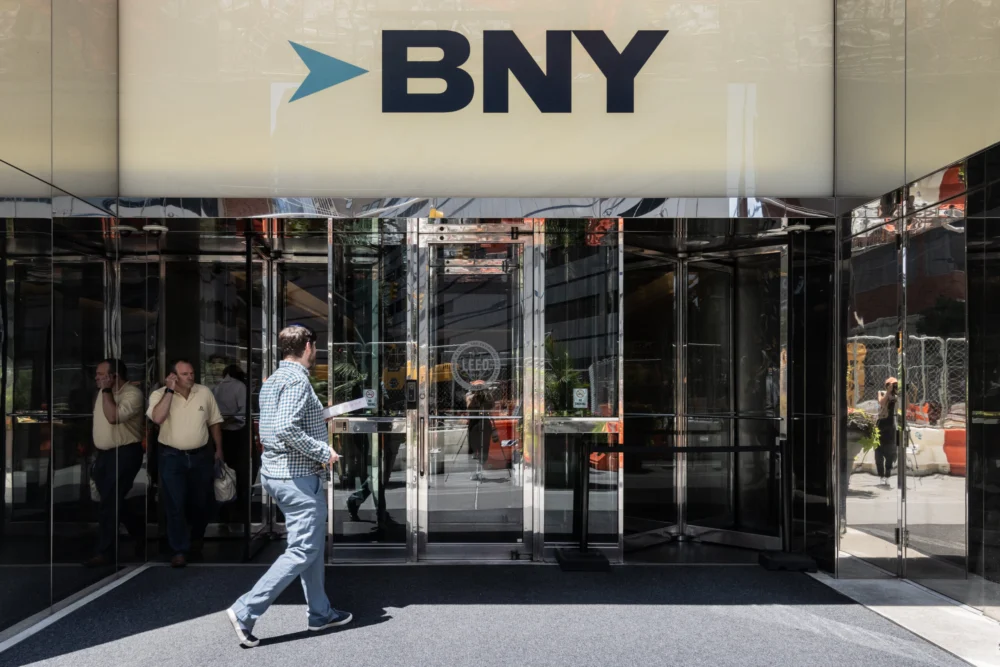
BNY Mellon, America’s oldest bank, is making a significant investment in artificial intelligence, evidenced by its deployment of 134 "digital employees" and a robust program to upskill its human workforce. These digital employees, unlike their human counterparts, do not require sleep, do not take sick days, and are evaluated based on their performance in specific, often repetitive tasks. This strategic move is part of a broader initiative to enhance productivity and unlock new avenues for growth, rather than solely focusing on cost reduction through headcount reduction.
Rachel Lewis, who heads payment operations for BNY Mellon and oversees nine digital employees in addition to thousands of human staff, highlighted the 24/7 operational capacity of these AI-powered workers. She explained that their focus on specific, repetitive tasks allows human employees to engage in more complex, engaging, and "human-intensive" roles. This division of labor aims to optimize the utilization of both digital and human talent within the organization.
BNY Mellon currently employs 48,100 individuals, a decrease from approximately 53,400 in 2023, according to a recent earnings presentation. However, CFO Dermot McDonogh clarified during the firm’s fourth-quarter earnings call that the slight decline in human headcount is not directly attributable to AI adoption at this stage. Instead, he emphasized that AI is viewed internally as a tool for "unlocking capacity" and is not being approached with a narrow definition of efficiency. The firm’s strategic focus is on leveraging AI to foster growth with clients, increase revenues, and optimize the potential of its employees.
Across the financial industry, analysts and investors are increasingly scrutinizing the return on investment for AI-related expenditures, seeking tangible improvements in efficiency and profitability. BNY Mellon’s commitment to technology is substantial, with an investment of $3.8 billion in technology in 2025, representing approximately 19% of its revenue. This proportion is the highest among its large-bank peers, according to data compiled by CNBC.
Mike Mayo, a Wells Fargo analyst, described the current landscape as an "AI arms race" in which banks are active participants. However, he cautioned that success should not be measured by spending volume but by the quality of results. Mayo also suggested that, in general, technology spending in the sector can sometimes resemble a "spraying and praying" approach.

Despite the broader market dynamics, BNY Mellon has been identified as a company poised to reap significant benefits from AI. Research from Goldman Sachs, which screened the Russell 1000 index for potential productivity gains based on labor costs and wage exposure to AI automation, ranked BNY Mellon near the top of its list. The firm projected that BNY Mellon could experience a potential 19% increase in earnings per share due to AI adoption.
Executives at BNY Mellon have consistently asserted that their extensive technology investments will not come at the expense of their human employees. Michelle O’Reilly, BNY Mellon’s global head of talent, reframed the narrative, suggesting that the focus should be on "unlocking productivity" and "enabling all employees to be productive."
In parallel with the development of digital employees, BNY Mellon is actively engaged in upskilling its human workforce. Following the release of ChatGPT in late 2022, the bank established its AI Hub, recognizing the transformative potential of AI. Leigh-Ann Russell, BNY Mellon’s chief information officer and global head of engineering, stated that this period marked a significant commitment to understanding and integrating AI. The initial priority was "enablement," which involved rolling out training to all employees across the bank.
BNY Mellon has developed a proprietary platform named Eliza, which integrates various open-source and commercially available AI models with the firm’s internal data and compliance frameworks. Almost the entire BNY Mellon workforce has completed a 10-hour training program for Eliza. Furthermore, thousands of employees have participated in a multi-day AI bootcamp designed to equip non-engineers with the skills to identify and automate aspects of their jobs creatively.
The naming of the platform, Eliza, is a tribute to Elizabeth Schuyler Hamilton, the wife of Alexander Hamilton, the bank’s founder and the first U.S. Secretary of the Treasury. This historical nod underscores the bank’s deep roots while embracing cutting-edge technology. Russell highlighted the "democratization of this technology" as a key element of their success, finding a powerful juxtaposition between the institution’s 241-year history and its position at the forefront of AI innovation, serving as a reminder of technological evolution through the centuries.